Quick Answer
For travel, prioritize a self-folding stroller with a compact fold, lightweight frame, and one-hand operation—like the Evenflo Gold Otto Self-Folding Stroller—to keep airport and city trips manageable.
Why Fold Size and Weight Matter More Than You Think
When you're juggling a carry-on, a diaper bag, and a sleepy toddler, every extra pound and inch of folded stroller feels heavier. A compact fold that stands on its own can fit in overhead bins or under seats, while a heavier frame might be fine for neighborhood walks but a burden through terminals.
Self-folding mechanisms add convenience, but they also add mechanical parts. That means a slightly higher weight compared to a manual umbrella stroller. The trade-off is speed and ease: you can fold with one hand while holding your child, which is a lifesaver in busy transit hubs.
One-Hand Operation: The Real Travel Game-Changer
Not all self-folding strollers are created equal. Some require a two-step process, while others fold with a single trigger. If you're often alone with your baby, a true one-hand fold—where you activate the mechanism and the stroller collapses itself—saves you from putting your child down on a dirty floor.
The Evenflo Gold Otto Self-Folding Stroller is designed for exactly this scenario: one hand activates the automatic fold, leaving your other hand free to hold your baby. That's a feature you'll appreciate every time you deplane or hop on a bus.
What About Everyday Use?
A travel stroller isn't just for airports. If you plan to use it for daily errands, look for a comfortable seat, a decent canopy, and a smooth ride. Self-folding strollers often prioritize convenience over plushness, so test the push and recline before committing.
The Otto's luxe design and stylish look make it a viable option beyond travel, blending smart innovation with a premium feel. But if you need a full-featured stroller with a bassinet or all-terrain wheels, you might be better served by a modular system.
Self-Folding Stroller Trade-offs to Weigh
- Fold Speed vs. Weight: Self-folding mechanisms add a few pounds compared to manual strollers. If you'll be lifting the stroller often (stairs, buses), a lighter manual fold might be easier on your back, but you'll lose the one-hand convenience. Weigh the stroller yourself before buying; specs don't tell you how it feels after ten minutes of carrying.
- Compact Fold vs. Full Features: A compact fold often means a smaller seat and less under-seat storage. If you need a roomy basket for diaper bags or a larger canopy for sun protection, check those dimensions—they're not guaranteed by the self-folding feature. Measure your car trunk or overhead bin space against the folded dimensions before purchase.
- One-Hand Operation vs. Learning Curve: Some self-folding strollers require practice to master the release and lock. The Otto's automatic fold simplifies this, but any mechanical system needs a few test runs at home before you rely on it in a busy airport. Practice folding at home until it becomes muscle memory; don't wait until you're at the gate.
Product Spotlight
-
Otto Self-Folding Lightweight Travel Stroller Support: The Evenflo Gold Otto Self-Folding Stroller lets you use one hand to activate the automatic folding operation while using the other to hold your baby. This one-hand fold is critical for parents who travel alone with a child, as it keeps your baby secure and your hands free.
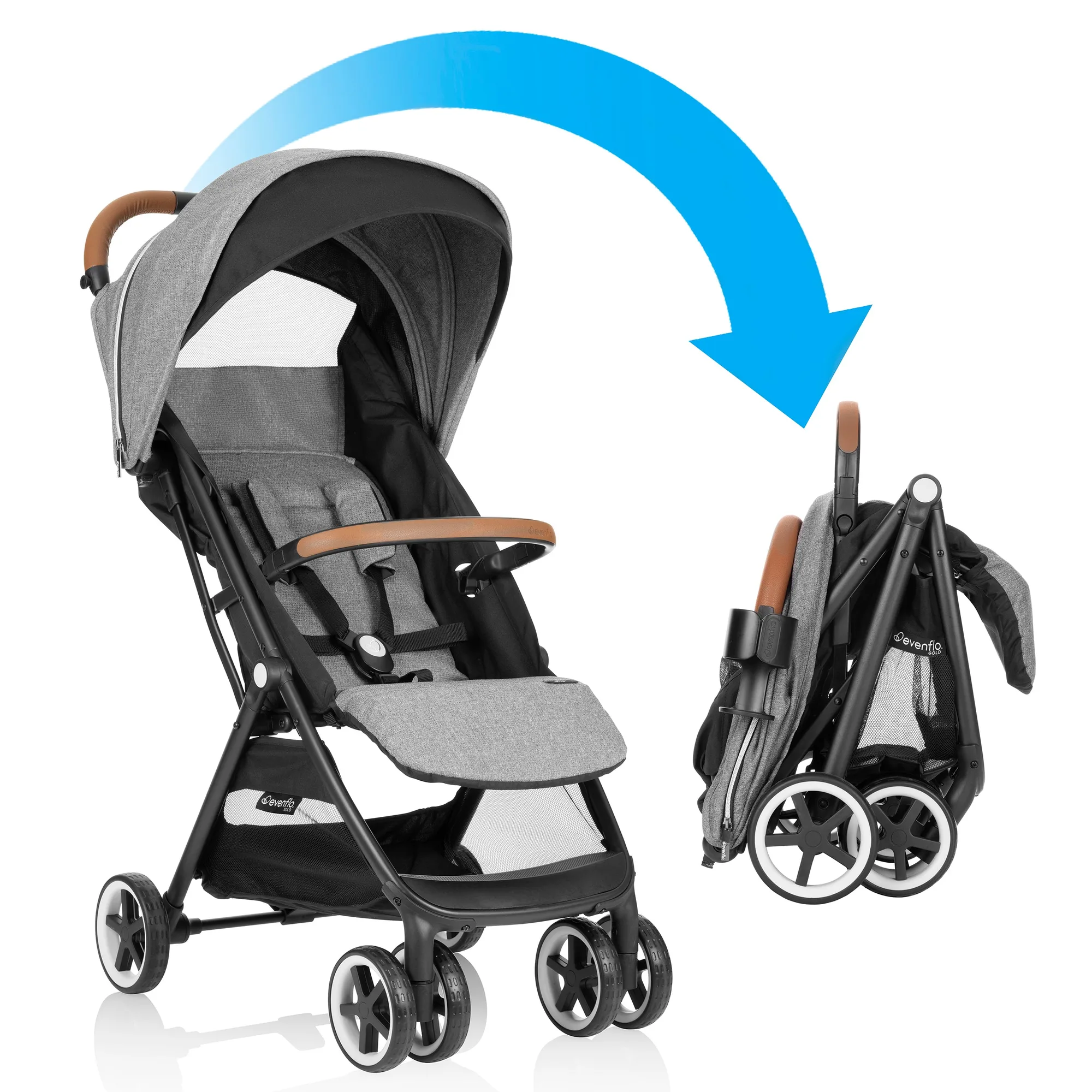
Otto Self-Folding Lightweight Travel Stroller Support
Who Should Choose a Self-Folding Stroller
Best for
- Parents who travel frequently and need a quick, one-hand fold while holding their child
- City dwellers who navigate public transit or tight spaces and value convenience over ultra-light weight
Not for
- Families needing a full-featured stroller with a bassinet, large storage, or all-terrain capability
- Budget-focused buyers who prefer a simpler, lighter manual umbrella stroller