Quick answer
Sensory hanging squares are soft, reversible panels with high-contrast patterns and textures that clip onto strollers, play gyms, or car seats to stimulate your baby’s vision and touch from birth onward.
Why use sensory hanging squares instead of a mobile or toy bar?
Unlike fixed mobiles, hanging squares are portable and can be moved from the play mat to the stroller or car seat. They also offer two sides: black-and-white patterns for newborns (0–4 months) and colorful prints for older babies (5+ months), so one set lasts through multiple developmental stages.
The reversible design means you don’t need to buy separate toys as your baby grows. Just flip the square to introduce new visual complexity.
When to introduce each side
Newborns see high-contrast black-and-white patterns most clearly. Use that side from birth to about 4 months. Around 5 months, as color vision sharpens, switch to the colorful side to maintain engagement.
Watch for cues: if your baby looks away or fusses, the pattern may be too stimulating. Try the simpler side or take a break.
How to use sensory hanging squares (step by step)
- Clip onto a play gym or activity arch: Attach the squares to the crossbar of a play gym or a tummy time mat arch, positioning them about 8–12 inches from your baby’s eyes. Rotate the squares every few days so your baby sees different patterns. Avoid hanging them directly above the face—place them slightly to the side to encourage neck turning.
- Use during tummy time for motivation: Lay the squares flat on the floor just beyond your baby’s reach, or clip them to a low arch. The high-contrast patterns give your baby a visual goal to lift their head toward. If your baby gets frustrated, move the squares closer or prop them at an angle so they’re easier to see.
- Attach to a stroller or car seat for on-the-go play: Use the included clips to fasten the squares to the canopy or handle of a stroller, or to the carry handle of a car seat. Keep one square in your diaper bag for restaurants or waiting rooms. Never leave the squares loose in a car seat—always clip them securely so they can’t shift near your baby’s face.
- Switch sides when your baby reaches 5 months: Flip the squares to the colorful side once your baby starts showing interest in bright hues and more detailed patterns. You can also combine one black-and-white square with one colorful square for contrast. Don’t rush the switch—if your baby still prefers the black-and-white side, keep using it for another few weeks.
- Incorporate the mirror for self-discovery: Position the square with the mirror at eye level during tummy time or while your baby is lying on their back. Babies are naturally drawn to their own reflection, which supports social-emotional development. Make sure the mirror is clean and free of smudges so your baby gets a clear reflection.
Product spotlight
-
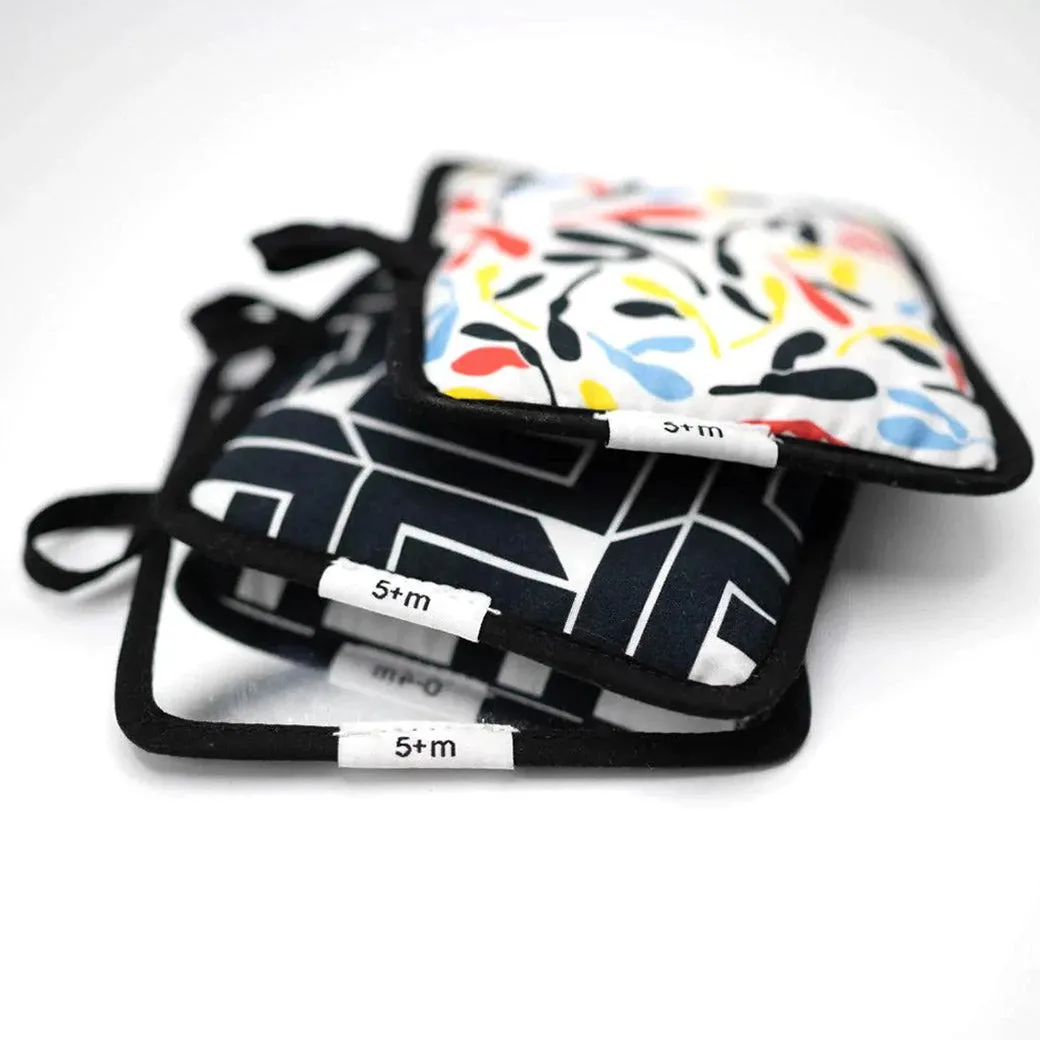
Sensory Hanging Squares (3-pack): The Etta Loves Sensory Hanging Squares 3-pack includes a mirror, three black-and-white prints for infants 0–4 months, and two colorful prints for babies 5+ months. This means one set adapts to your baby’s changing vision, saving you from buying separate toys for each stage.
Sensory Hanging Squares (3-pack)