Quick answer
The best serving platter depends on what you serve and how you plan to use it. For versatile everyday plating and entertaining, a set of two curved platters in different sizes works for everything from appetizers to whole fish. For specific dishes that require flipping, like tahdig or maqluba, choose a platter designed for that purpose.
Platter shapes and their uses
Rectangular platters are ideal for main courses like roasted meats, whole fish, or large vegetable dishes. Their long shape fits neatly on a table and makes carving easier. Oval platters are a classic choice for roasts and can also work for salads or cheese boards. Round platters are best for sharing dishes like dips, tapas, or small bites, as guests can reach from all sides. Curved or uniquely shaped platters add visual interest and can double as serving pieces for specific cuisines.
Size considerations
A small platter (roughly 10–12 inches) works for appetizers, sides, or individual servings. A medium platter (13–15 inches) suits most main courses for 2–4 people. A large platter (16 inches or more) is best for family-style meals or entertaining a crowd. If you entertain often, having two different sizes gives you flexibility. Stackable platters save storage space and let you mix and match for different occasions.
Material and durability
Ceramic platters are popular for their heat retention and elegant look. Look for a glossy interior finish, which resists scratches from knives and utensils, and a satin exterior for a modern feel. Stoneware and porcelain are also durable and oven-safe for warming dishes. Avoid porous materials if you plan to serve acidic foods or sauces, as they can stain. Always check if the platter is dishwasher safe for easy cleanup.
How to choose your platter
- Start with your most common use: If you mostly serve appetizers and sides, a small platter is enough. For main courses or entertaining, go with a medium or large size. A set with two sizes covers both. A two-size set is the most versatile starting point.
- Match shape to the dish: Use rectangular platters for roasts and whole fish, round for dips and shared plates, and oval for salads or cheese. Curved platters work well for specific cuisines or as statement pieces. Shape affects both function and presentation.
- Consider storage and stacking: Stackable platters save space. If your kitchen is small, look for sets that nest neatly. Non-stackable platters may require more cabinet room. Stackable designs are best for compact kitchens.
- Check material and care: Ceramic with a glossy interior resists scratches and stains. Stoneware and porcelain are oven-safe. Always confirm dishwasher safety if you prefer low maintenance. Glossy ceramic interiors offer the best balance of durability and ease.
Our Place platters at a glance
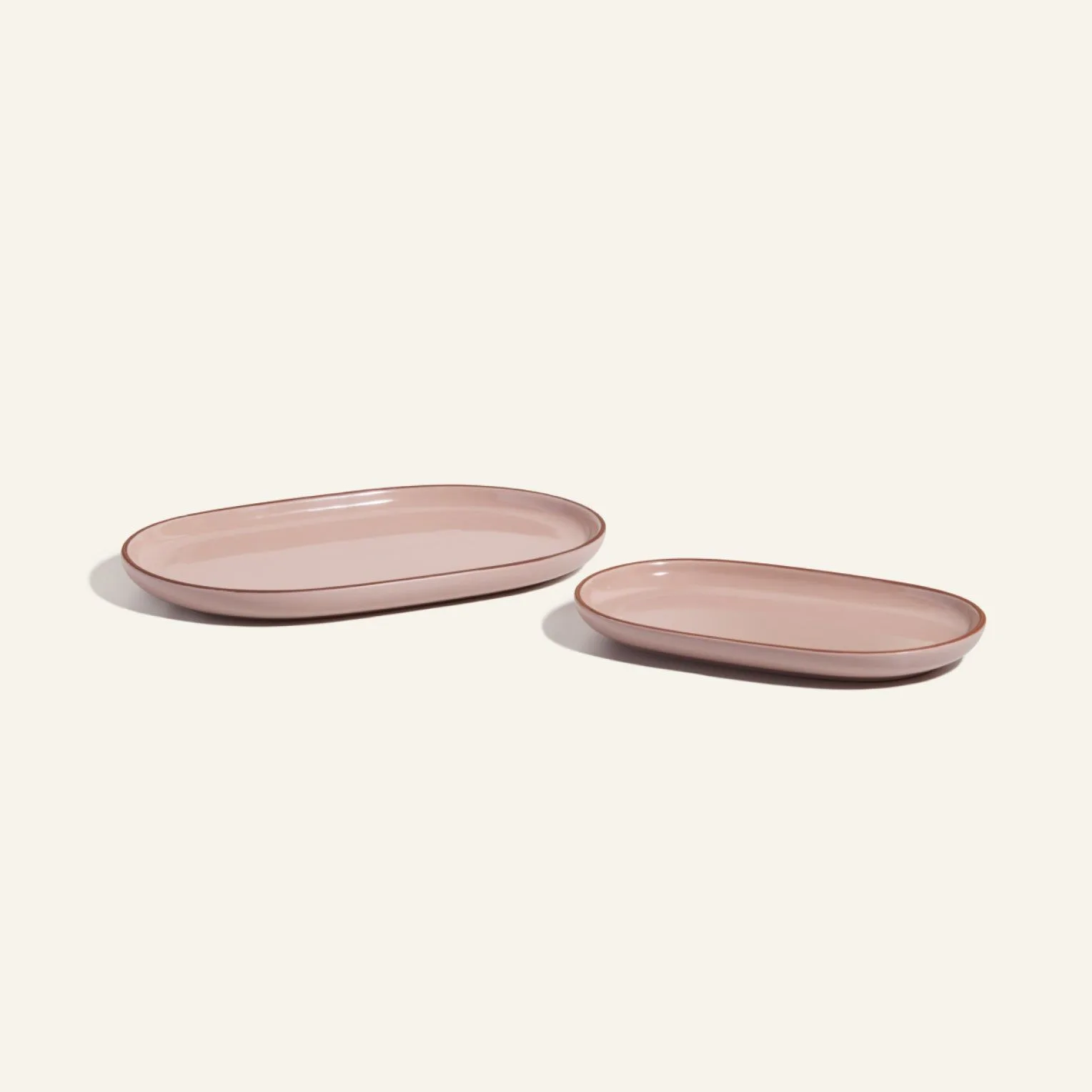
- Serving Platters: A set of two curved platters (one small and one large) for plating anything from apps to whole roasted fish. Made from the earth, this ceramic set features a glossy interior for scratch resistance and a satin exterior finish. They stack neatly and are part of the larger Tableware ecosystem, doubling as a chip and dip setup with the Midi Bowls and Demi Bowls. This set gives you two sizes in one purchase, saving cabinet space while covering both everyday meals and entertaining. The scratch-resistant interior is practical for serving dishes that require cutting at the table.
- Flipping Platter: The world's first platter designed for flipping tahdig, maqluba, concón, and every other recipe that calls for a 180°. It nests easily onto your Always Pan or Perfect Pot and is a must-have add-on to up your cooking game. If you cook layered or rice dishes that need a clean flip, this platter eliminates the guesswork. Its design ensures a stable, even flip without spills, making it a specialized tool rather than a general serving piece.
Which platter fits you?
Best for
- Home cooks who want a versatile, stackable set for everyday meals and casual entertaining
- Anyone who frequently serves layered or flipped dishes like tahdig, maqluba, or concón
Not for
- Those who need a single large platter for a specific presentation and don't want a set
- Cooks who rarely serve dishes that require flipping and prefer a standard serving shape