Quick answer
Start with a broadcast microphone like the Rode PROCaster, then choose between the Rode RODECASTER PRO for an all-in-one production console or the Zoom H5 for portable recording. Add the Rode Wireless PRO for mobile interviews or backup audio.
Console vs. portable recorder: which fits your workflow?
The Rode RODECASTER PRO is a dedicated podcast production console with four XLR inputs, programmable sound pads, and built-in APHEX processing. It handles mix-minus for phone calls and records directly to a microSD card or computer. This is the centerpiece for a fixed studio where you want to control every element live.
The Zoom H5 Handy Recorder is a portable field recorder with interchangeable microphone capsules. It works well for on-location interviews, field reporting, or as a backup recorder in a studio. Its strength is mobility, not live production. You cannot route phone calls or trigger sound effects without additional gear.
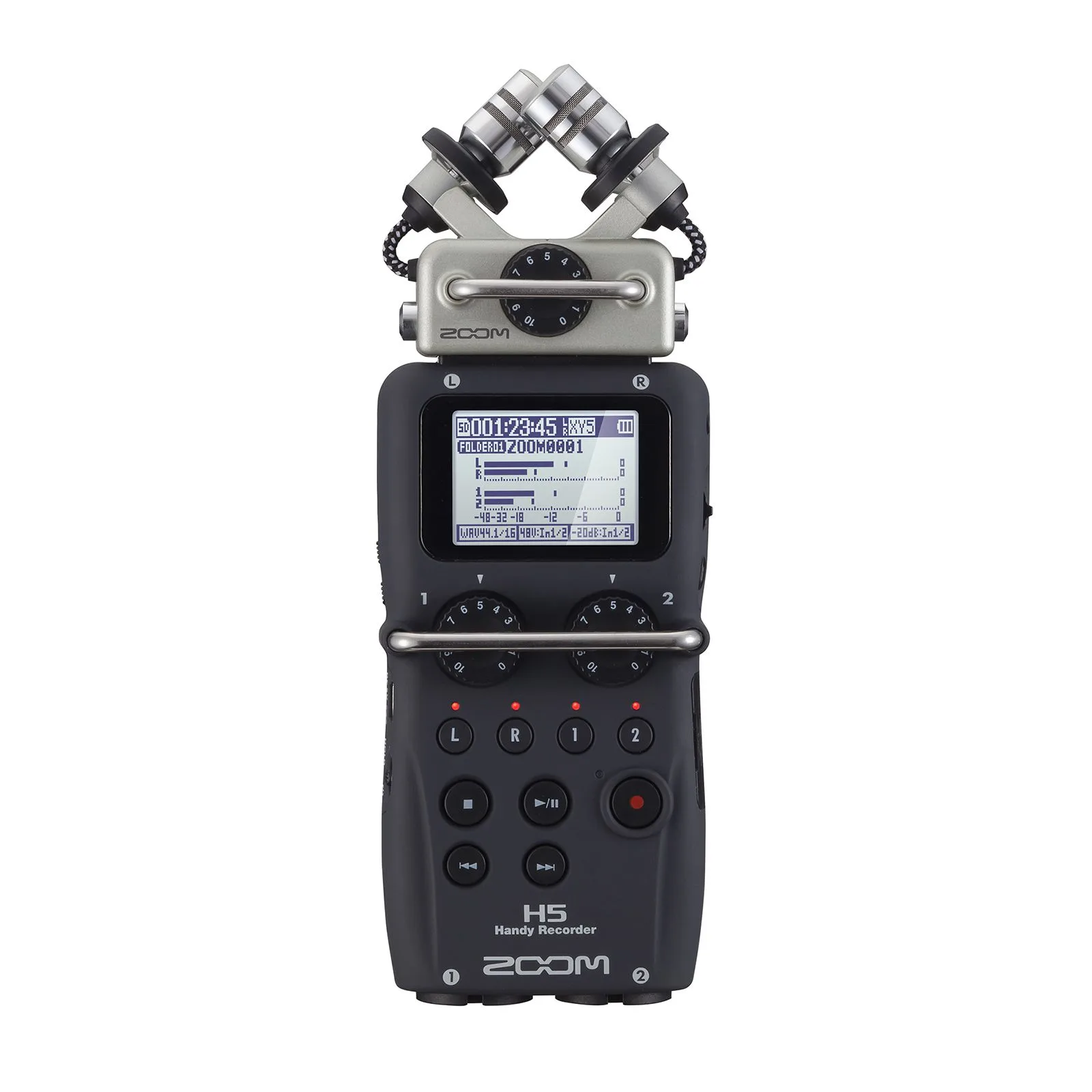
Zoom H5 Handy Recorder
If you produce a weekly show from one desk, the RODECASTER PRO saves time. If you record interviews in different locations or need a compact backup, the Zoom H5 is the better fit.
Microphone choice matters more than you think
The Rode PROCaster is a broadcast dynamic microphone with a high-output capsule and internal pop filter. It rejects room noise and plosives naturally, making it ideal for untreated rooms. Its balanced XLR output works directly with the RODECASTER PRO or any audio interface.
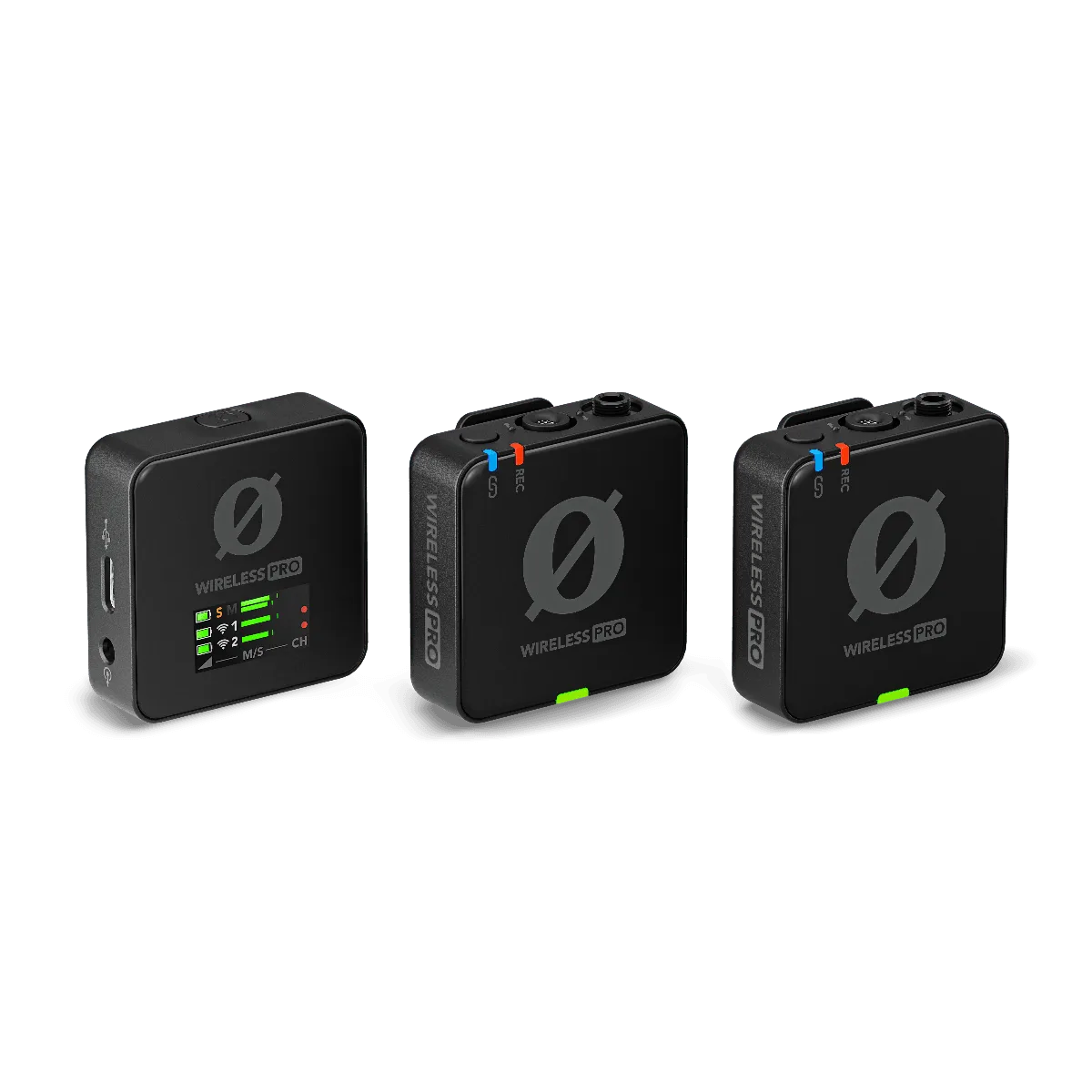
For mobile recording, the Rode Wireless PRO is a dual-channel wireless system with 32-bit float on-board recording. This means you can recover clipped audio in post-production. It also includes timecode for syncing with video, which is useful for podcasters who record video simultaneously.
A dynamic mic like the PROCaster is best for spoken word in a home studio. A wireless lavalier system like the Wireless PRO suits interviews where guests move around or share a space.
Decision rules for your podcast studio
- Choose the Rode RODECASTER PRO if: You host a regular show with multiple guests, need live sound effects, and want to manage phone calls without extra gear. It handles four XLR mics and records directly.
- Choose the Zoom H5 if: You record interviews on location, need a portable backup recorder, or want interchangeable mic capsules for different scenarios. It is not a live production console. The Zoom H5 lacks mix-minus and sound pads, so it is not a substitute for a console in a fixed studio.
- Choose the Rode PROCaster if: You want a broadcast-quality dynamic mic that rejects background noise and plosives in an untreated room. Its XLR output works with any interface or console.
- Choose the Rode Wireless PRO if: You need wireless freedom for guests or mobile recording, and you want the safety of 32-bit float recording to fix audio issues later. The Wireless PRO is not a substitute for a studio condenser or dynamic mic; it is a supplement for mobility.
Product facts
-
Rode RODECASTER PRO Integrated Podcast Production Console: 4 XLR inputs, 8 programmable sound pads, APHEX processing, mix-minus for phone calls, records to microSD or computer. You can run a multi-guest show with live effects and call-ins without needing extra mixing gear or software.
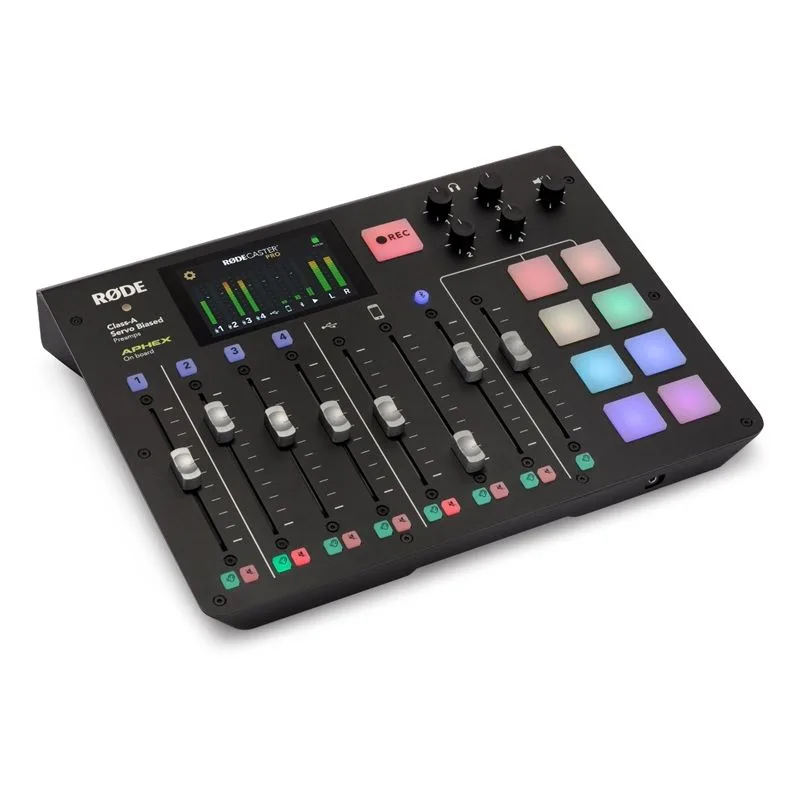
Rode RODECASTER PRO Integrated Podcast Production Console
-
Rode Wireless PRO Dual-Channel Compact Wireless Microphone System: Dual-channel wireless system with Series IV 2.4 GHz transmission, 32-bit float on-board recording, and timecode sync. 32-bit float recording lets you recover distorted audio in post, and timecode simplifies syncing with video footage.
Who should buy what?
Best for
- Solo or duo podcasters who want an all-in-one console: Rode RODECASTER PRO
- Field reporters or mobile interviewers: Zoom H5 and Rode Wireless PRO
- Home studio hosts with untreated rooms: Rode PROCaster microphone
Not for
- Musicians recording instruments: consider a multi-track audio interface instead
- Video-first creators who need seamless camera integration: look for an audio interface with HDMI or USB-C video sync