Quick Answer
Set up your Kreg 4x8 Face-Framing Table by leveling the frame, adjusting the four clamping cylinders, and squaring the retractable fence before securing your cabinet door panels.
Why the 4x8 Face-Framing Table Works for Cabinet Doors
The 4' x 8' Face-Framing Table is designed to hold large panels upright, which prevents back strain and saves floor space compared to a flat table. Its four adjustable clamping cylinders let you grip cabinet door frames securely without shifting, and the retractable squaring fence helps maintain consistent alignment across multiple doors.
Before You Start: Tools and Space
You will need a level, a square, and a helper to lift the table frame into position. Clear a floor area at least 5' x 9' to allow room for assembly and movement around the table. The table ships partially assembled, so check that all bolts and hardware are included before beginning.
Step-by-Step Setup Process
- Assemble the frame and level the table: Bolt the upright frame together according to the manual. Use a level on the base rails and adjust the leveling feet until the frame is plumb and stable. A wobbling table will cause misaligned joints. Check level in both directions before tightening all bolts.
- Install and adjust the clamping cylinders: Mount the four clamping cylinders onto the frame rails. Adjust each cylinder's height so the pads contact the cabinet door panel evenly across its face. Uneven pressure can warp the door or cause it to slip. Test with a scrap panel before clamping your actual door.
- Attach and square the retractable fence: Slide the retractable squaring fence onto its mounting track. Use a carpenter's square to set the fence exactly 90 degrees to the clamping surface. Tighten the fence locks. A crooked fence will produce out-of-square door frames. Recheck square after tightening—bolts can shift the fence slightly.
- Position the first cabinet door panel: Place the cabinet door panel against the clamping cylinders with its bottom edge resting on the fence. Engage the cylinders one at a time, starting from the bottom, to hold the panel firmly. Over-tightening can dent the wood. Apply even pressure—listen for the cylinders to seat without squeaking.
- Verify alignment before assembly: Use a straightedge across the panel face to confirm it lies flat against the cylinders. Check that the fence is still square and the panel is not twisted. Correct any misalignment now; it is harder to fix after glue or fasteners are applied. Spend an extra minute on alignment—it saves rework later.
Product Facts
-
4' x 8' Face-Framing Table: Four clamping cylinders that can be adjusted You can fine-tune the grip pressure for different door thicknesses without marring the wood.
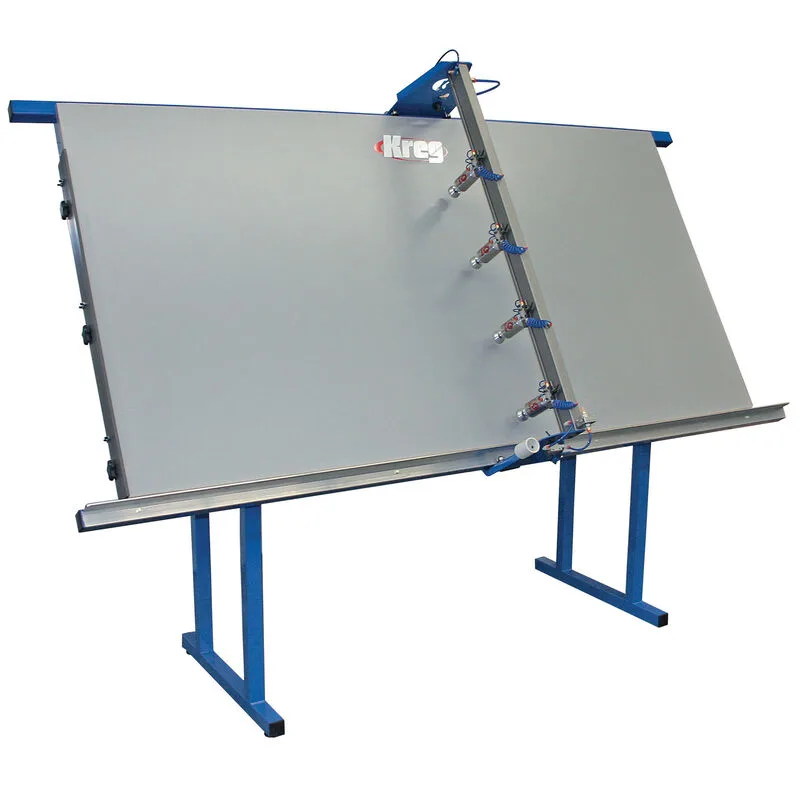
4' x 8' Face-Framing Table
-
4' x 8' Face-Framing Table: Uses less floor space than a flat table The vertical orientation fits into tighter workshops and leaves room for material carts or assembly stations.
-
4' x 8' Face-Framing Table: Prevents back pain by allowing worker to stand upright You avoid hunching over a flat surface, which reduces fatigue during long cabinet door runs.
-
4' x 8' Face-Framing Table: Retractable squaring fence It provides a repeatable reference edge so every door frame stays square during assembly.