Quick answer
Sew the Pink Stork Scissor Iron-On Patch onto your quilt jacket using a whipstitch for a secure, lasting hold that won't peel off in the wash.
Why sew instead of iron?
Iron-on patches are convenient, but they can peel off after repeated washing, especially on quilt jackets that see heavy use. Sewing adds mechanical strength that outlasts adhesive alone. For a quilt jacket you'll wear often, hand-sewing is the better long-term choice.
Choosing your thread and needle
Use a strong polyester or cotton thread that matches the patch's edge color. A sharp embroidery needle works best for dense patch fabric, while a denim needle helps if your quilt jacket has thick seams. Test your needle on a hidden spot first.
Step-by-step sewing instructions
- 1. Position and pin the patch: Place the stork scissor patch on your quilt jacket where you want it. Use dressmaker pins to hold it in place, checking alignment from a few feet away. Common mistake: placing the patch too close to a seam or button. Leave at least 1 inch of clearance for easy sewing.
- 2. Thread your needle and knot the end: Cut about 18 inches of thread. Thread the needle and tie a small knot at the end. A double strand gives extra strength for heavy-use jackets. Checkpoint: if the thread tangles, cut and start fresh. A tangled thread creates weak stitches.
- 3. Start with a hidden knot: Insert the needle from the inside of the jacket, coming out just at the patch edge. Pull the knot through the fabric so it's hidden underneath the patch. Common mistake: knot showing on the outside. Always start from the wrong side of the jacket.
- 4. Whipstitch around the patch edge: Bring the needle up through the jacket fabric close to the patch edge, then over the edge and back down. Space stitches about 1/8 inch apart for a secure hold. Checkpoint: keep stitches even and not too tight to avoid puckering the quilt jacket fabric.
- 5. Secure the final stitch: After completing the circle, make a small backstitch on the inside of the jacket. Cut the thread close to the knot. Common mistake: skipping the backstitch. Without it, the thread can unravel over time.
- 6. Press to set the stitches: Place a pressing cloth over the patch and iron on medium heat for 10 seconds. This flattens any puckers and helps the patch lie smooth. Checkpoint: never iron directly on the patch—the adhesive can melt and stick to the iron.
Product used in this guide
-
Pink Stork Scissor Iron-On Patch: OEKO-TEX Standard 100 certified and manufactured ethically in China. You can sew this patch onto a quilt jacket with confidence that it's free from harmful substances, even for garments worn close to the skin.
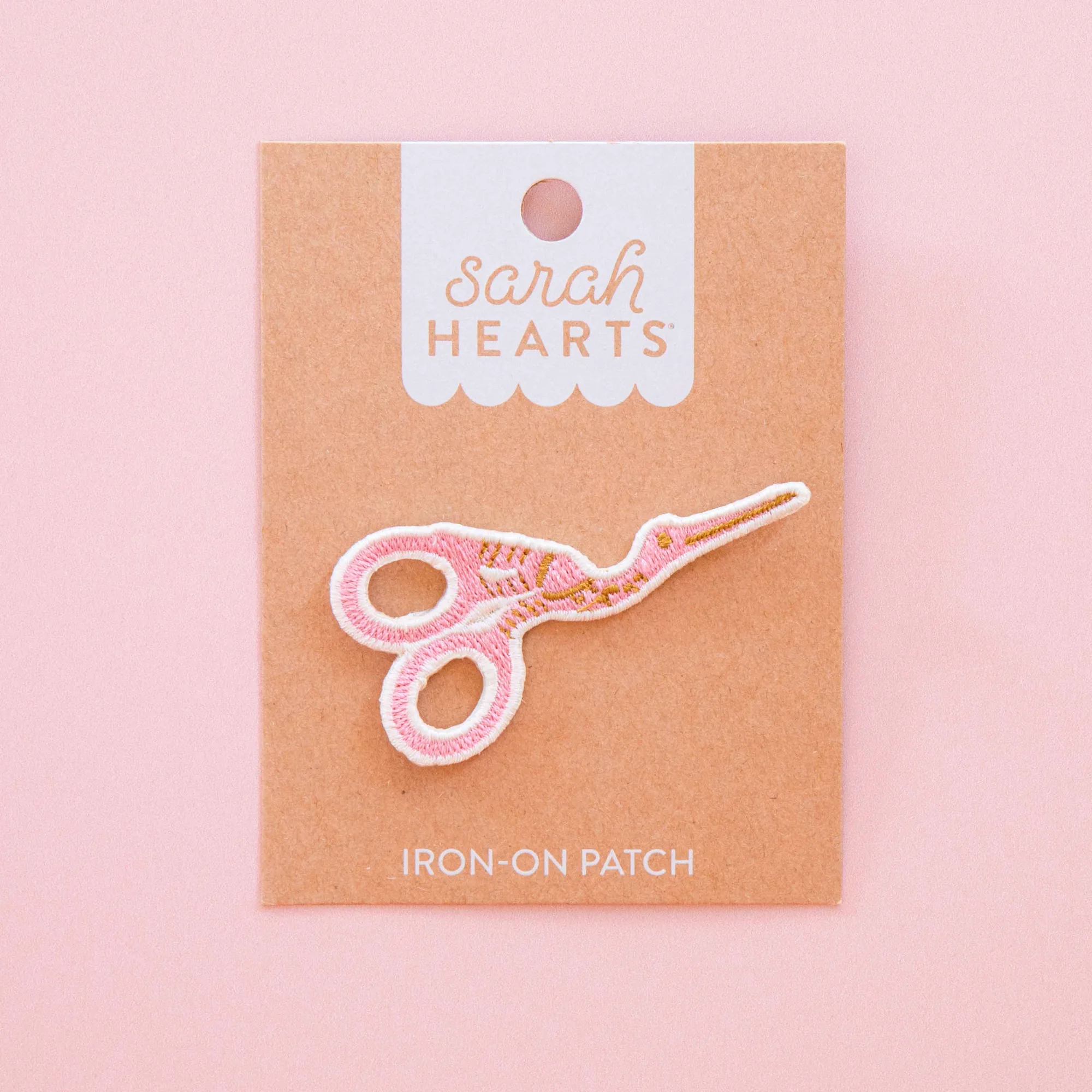
Pink Stork Scissor Iron-On Patch