Quick Answer
Replace gears when the noise changes pitch under load rather than just getting louder, when you find metallic paste or chips in the housing, or when teeth show a sharp lip, pitting, or a hooked profile. On a crawler, most gear wear starts at the pinion, so inspect and replace the cheapest part first before condemning a whole axle set.
Gear wear on an RC crawler rarely announces itself with a bang. It shows up as a slightly different sound on a climb, a drivetrain that feels notchy when you roll the truck by hand, or a fine gray paste in the housing that you assume is just old grease.
The trick is separating normal gear mesh noise from the sounds and textures that mean a worn RC gear set is on its way out. This guide walks through the symptoms, the likely causes, the corrective action, and the point where you should stop replacing parts and change your approach instead.
Symptom: Noise That Changes Pitch Under Load
A healthy crawler drivetrain has a steady, familiar whine. A worn set usually changes character instead of just volume. If the tone rises sharply when you load the front axle on a ledge, or if the sound cycles once per pinion revolution rather than once per tire revolution, the mesh is the suspect. Cyclic noise tied to wheel speed often points to the ring or axle gear, while a fast chatter points to the pinion.
Record a short clip on your phone before and after a run. Comparing the two is far more reliable than trying to remember how it sounded last weekend.
- Noise that appears only under torque points to mesh or bearing play, not to a bent shaft.
- A whine that follows vehicle speed rather than motor RPM usually lives in the axle, not the transmission.
Symptom: Metallic Paste or Chips in the Housing
When you open a housing for routine service, fresh grease looks smooth and slightly translucent. A worn RC gear set leaves behind a fine gray or black paste, and in worse cases, visible chips or glitter. That material is gear material that used to be part of a tooth surface. Wipe the housing clean, inspect the teeth with a light and a magnifier, and look for pitting, a sharp lip on the drive side, or a hooked profile on the coast side.
If you find chips, do not simply re-grease and run it. The debris has already circulated through the bearings, so plan to flush the housing and check bearing smoothness at the same time.
- A small amount of dark grease is normal; visible metallic flakes are not.
- Check the pinion first, since it usually wears before the ring gear on a crawler.
Symptom: Notchy or Binding Roll by Hand
With the driveshaft disconnected, roll each axle by hand. It should feel smooth with light, even resistance. A worn set often feels notchy, catches at one spot per revolution, or has noticeable in-and-out play at the pinion. That play can come from a worn pinion gear, a worn bearing, or a loose set screw allowing the pinion to walk on the shaft.
Before you order parts, check the cheap items: pinion set screw torque, bearing seat condition, and shim stack. A loose pinion can mimic a worn gear set and will destroy a new gear if you install it without fixing the cause.
- Mark the pinion and ring with a paint pen, rotate one full turn, and look for a tight spot.
- If the notch disappears when you back off the mesh, the gear may still be usable with a proper reset.
Symptom: Accelerated Wear After a Power or Tire Change
Gears that were fine for a season can start wearing fast after you add torque, taller tires, or more grip. The gear itself did not change, but the load did. In that case the fix is not just a replacement gear set; it is a gearing and setup review. A lower-tooth pinion changes the ratio and the load on each tooth, and hardened steel pinions hold up better under that added stress than soft stock parts.
If you keep replacing the same gear every few runs, stop and treat it as a setup problem rather than a parts problem.
- Log your pinion tooth count and tire size so you can compare wear across changes.
- Hardened steel pinions are a reasonable upgrade when you have already confirmed the mesh is correct.
Diagnosis: Symptom, Cause, Action, Stop Point
- Pitch changes under load: Likely cause is mesh wear or bearing play at the pinion. Corrective action is to reset mesh, check shims, and replace the pinion if teeth show a lip or pitting. If the noise returns within a few runs after a correct reset, replace the gear set rather than shimming again.
- Metallic paste or chips in the housing: Likely cause is advanced tooth wear shedding material. Corrective action is to flush the housing, inspect and replace affected gears, and check bearings for roughness. Stop and replace once you see chips; re-greasing a chipped gear only spreads debris into the bearings.
- Notchy roll by hand: Likely cause is a tight spot, a loose pinion set screw, or a worn bearing. Corrective action is to check set screw torque and bearing condition before ordering gears. If the notch remains after a correct mesh and new bearings, the gear set is the problem and should be replaced.
- Repeat failures after power or tire changes: Likely cause is increased load rather than a defective gear. Corrective action is to review ratio, tire size, and housing stiffness, and consider a hardened pinion or a stiffer axle assembly. If the same gear fails a third time, stop buying gears and change the setup instead.
Parts That Address Common Wear Points
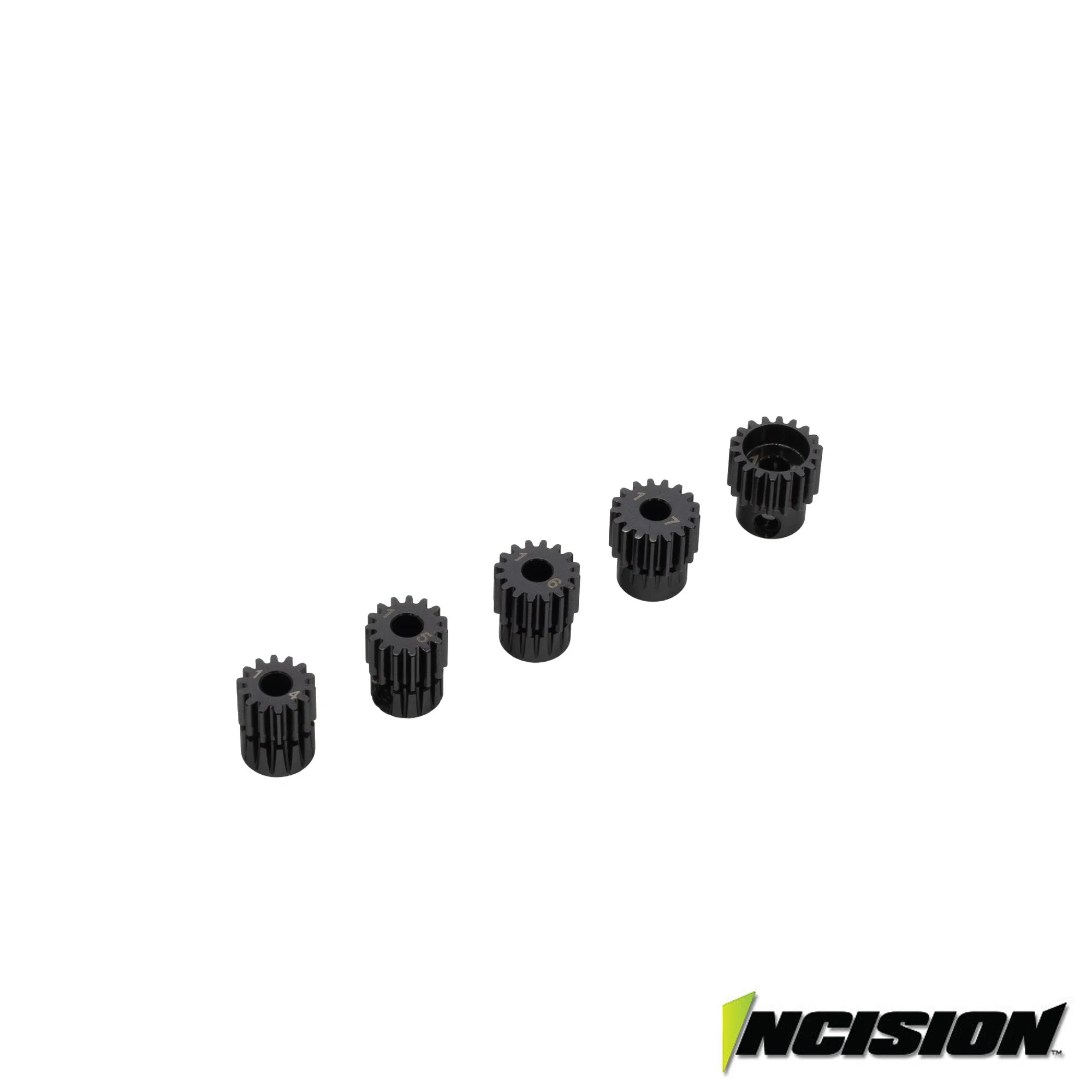
- 48p Hardened Steel Pinion Gear: The Incision 48p Hardened Steel Pinion Gear is a machined pinion for 48-pitch setups with a 1/8 inch bore, available in 14T, 15T, 16T, 17T, and 18T, and includes the pinion and an M3 set screw. If your wear is concentrated at the pinion, replacing it with a hardened steel part and a fresh set screw is a low-cost fix that also lets you adjust the ratio while you are in there.
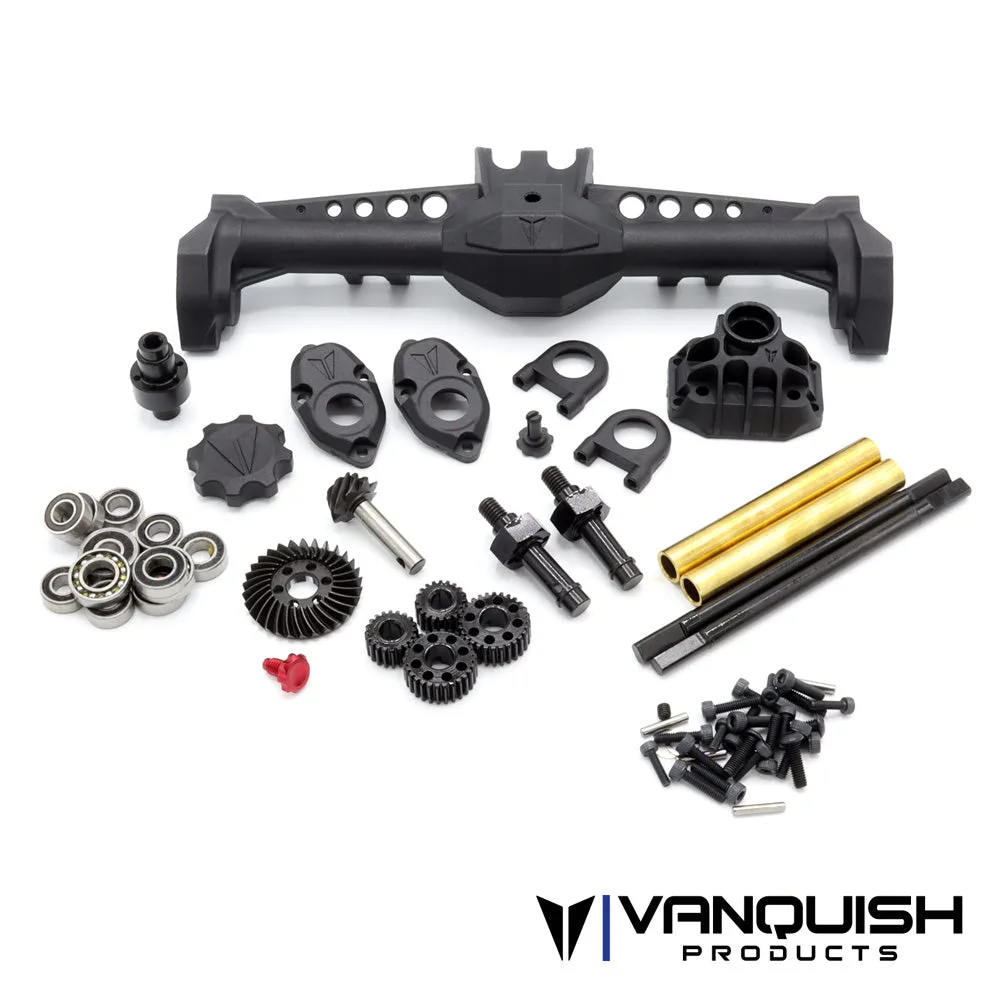
- F10 Portal Rear Axle Set: The F10 Plastic Molded Portal axles use an ultra rigid design with an integrated truss tying both ends together, plus brass inner reinforcement tubes that add strength and place weight low on the vehicle. When repeated gear failures come from housing flex rather than the gears themselves, a stiffer axle assembly is the more durable long-term answer than another set of gears in a flexing housing.
Gear wear is a diagnosis, not a guess. Chase the cheapest and most likely cause first, confirm it with a clean roll by hand and a look inside the housing, and only then buy parts. When the same failure keeps coming back, the gears are telling you the setup needs to change, not just the part.