Quick answer
Choose a silk robe for a fitted, glamorous silhouette that stays closed, or a kimono for an open, relaxed layer that's easy to throw on. The right choice depends on whether you want structure or ease.
Fit and silhouette: structured vs relaxed
A silk robe typically has a defined waist, often with a tie belt, and sleeves that are cut to follow the arm. This creates a more tailored, body-skimming shape that works well over lingerie or as a dressing gown. The Sienna Silk Robe, for example, uses sumptuous silk and appliquéd lace that is hand cut away from the fabric, giving it a refined, feminine structure.
A kimono, by contrast, has a straight, T-shaped cut with wide sleeves and no waist definition. It drapes loosely from the shoulders and is worn open or loosely tied. This makes it ideal for lounging without any feeling of restriction, but it won't provide the same polished, put-together look.
Closure and coverage: belt vs open front
The closure method is a major practical difference. A silk robe uses a fabric belt or sash to cinch the waist, keeping the front panels closed. This means you can move around without the robe falling open, which is helpful when you're wearing it over delicate lingerie or when you want to answer the door.
A kimono usually has no belt or a very loose tie, so the front remains open. This makes it quicker to slip on and off, but it offers less coverage. If you prefer a piece that stays in place without constant adjustment, a silk robe is the more practical option.
Material and craftsmanship
Both styles can be made from silk, but the construction differs. A silk robe often features finer lingerie techniques such as hand-cut lace appliqué, as seen in the Sienna Silk Robe, which demonstrates true craftsmanship. The silk is cut to follow the body's curves, requiring more pattern pieces and skilled sewing.
A kimono uses fewer pattern pieces and simpler seams, which can make it lighter and less expensive. However, a well-made silk kimono still requires careful fabric handling and finishing. The trade-off is that you get a more intricate, luxurious garment with a silk robe, while a kimono prioritises ease and airiness.
Silk robe vs kimono: trade-offs at a glance
- Silk robe (e.g., Sienna Silk Robe): Fitted silhouette with a belt closure. Stays closed, shaping the waist and covering the front. Requires more pattern pieces and skilled construction, often featuring hand-cut lace. Best when you want a polished, glamorous look that stays in place.
- Kimono: Loose, T-shaped cut with wide sleeves and no waist definition. Worn open or with a loose tie. Simpler construction, fewer seams, and generally lighter feeling. Best when you want an effortless, airy layer that's easy to slip on and off.
- Decision rule: Choose a silk robe if you need coverage, structure, and a decorative piece that complements your lingerie. Choose a kimono if you prioritise ease, breathability, and a relaxed silhouette for lounging.
Featured product
-
Sienna Silk Robe: Sumptuous silk adorns the figure in this classic Fleur of England piece, set to complete any luxurious silk lingerie look. Appliquéd lace is hand cut away from the silk demonstrating true craftsmanship. If you value a fitted, decorative robe that feels as refined as the lingerie beneath it, the Sienna Silk Robe delivers that tailored elegance with hand-finished lace details.
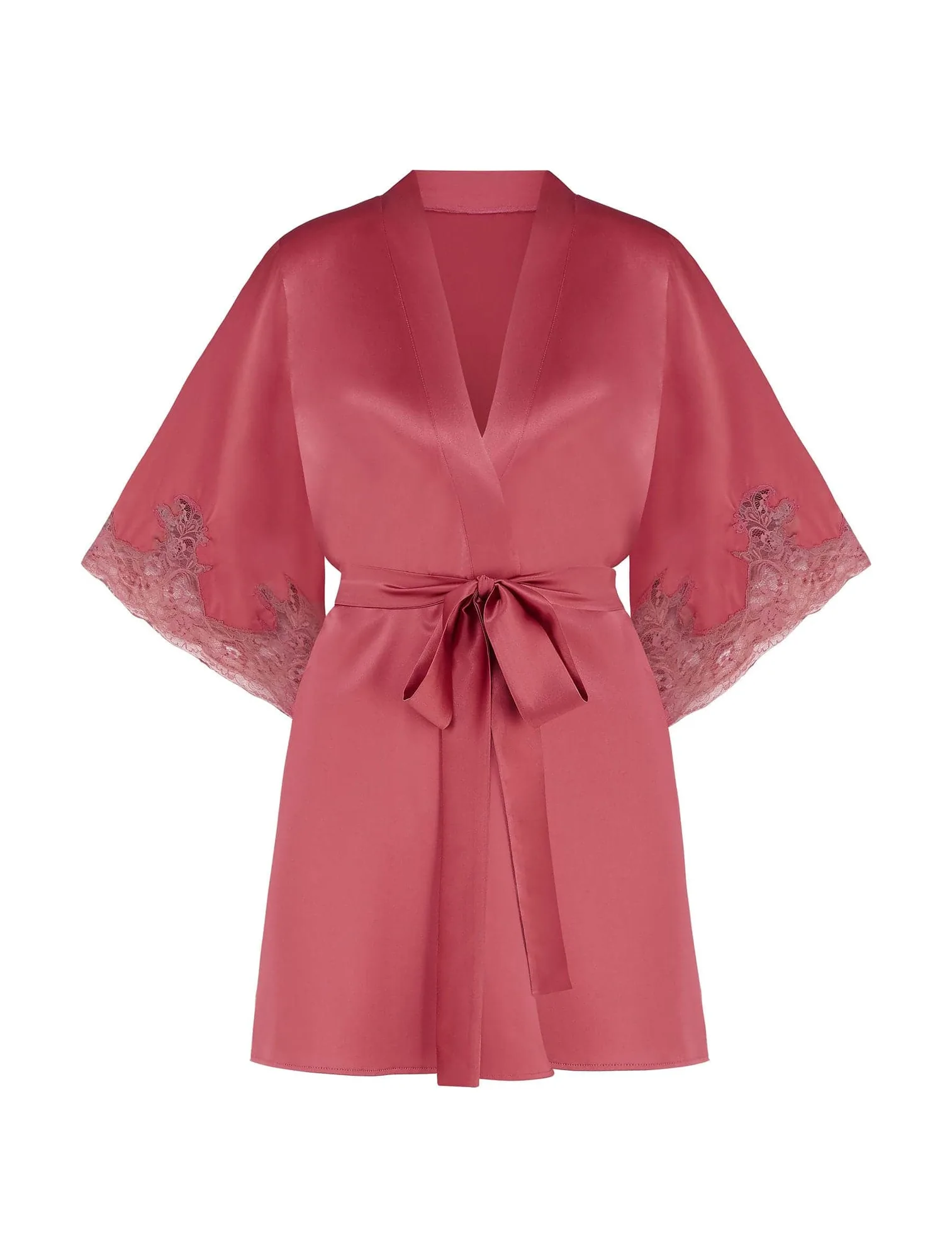
Sienna Silk Robe
Which one fits your loungewear style?
Best for
- Anyone who wants a fitted, glamorous robe that stays closed and shows off intricate lace details
- Those who wear lingerie sets and want a robe that complements rather than hides them
Not ideal for
- If you prefer an open, unstructured layer that you can toss on without tying a belt
- If you want a lightweight, airy piece that doesn't add bulk or warmth