Quick answer
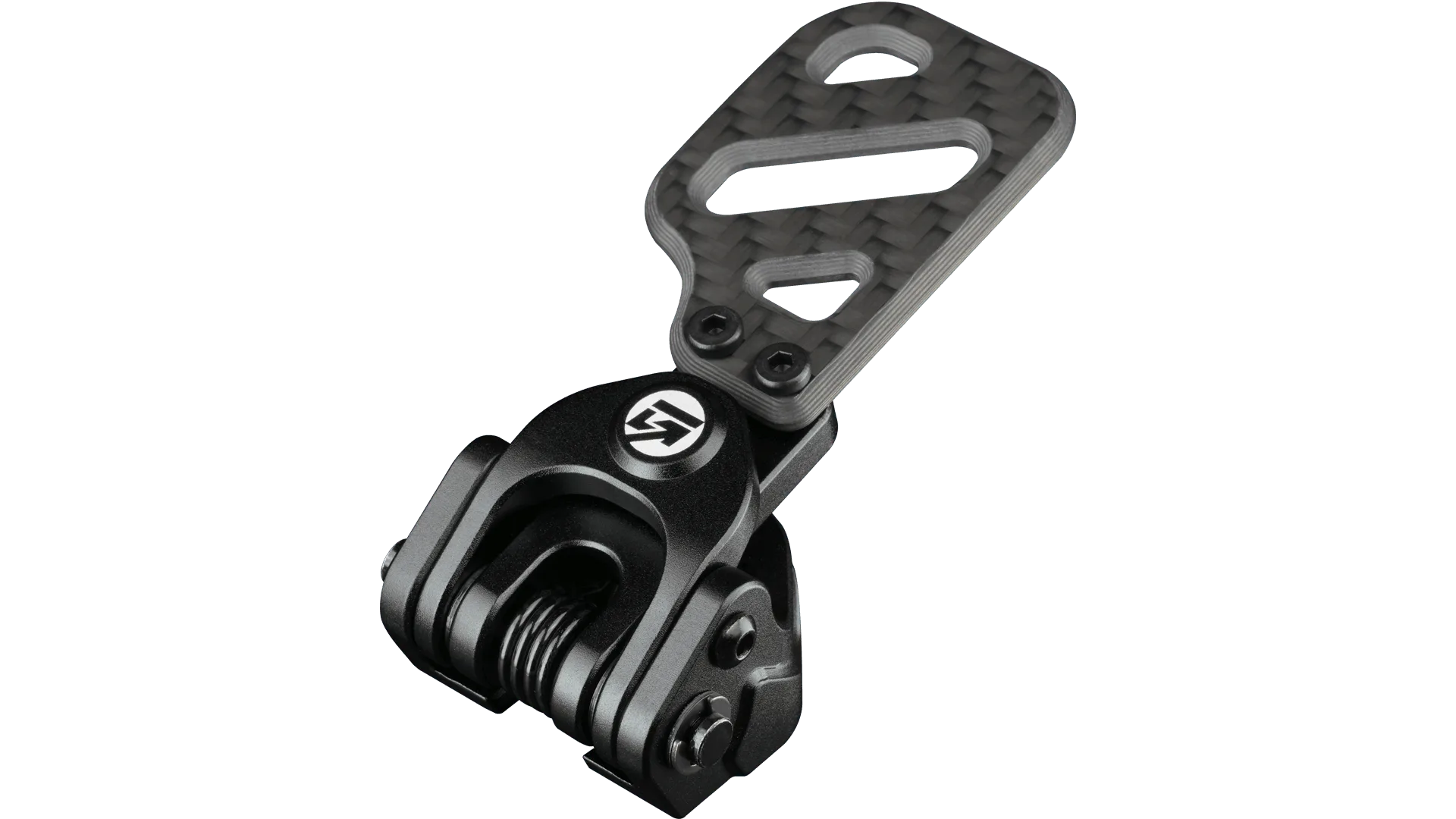
Match your hardware to the base and plate: use the bolt pattern and length the base maker specifies, mount to a plate thick enough to resist flex, and tighten to the base maker's torque figure rather than guessing. If you run a Simucube direct drive base, the Simucube Quick Release Wheel Side Kit lets GSI install the wheel-side quick release at the factory so the wheel arrives ready to bolt on.
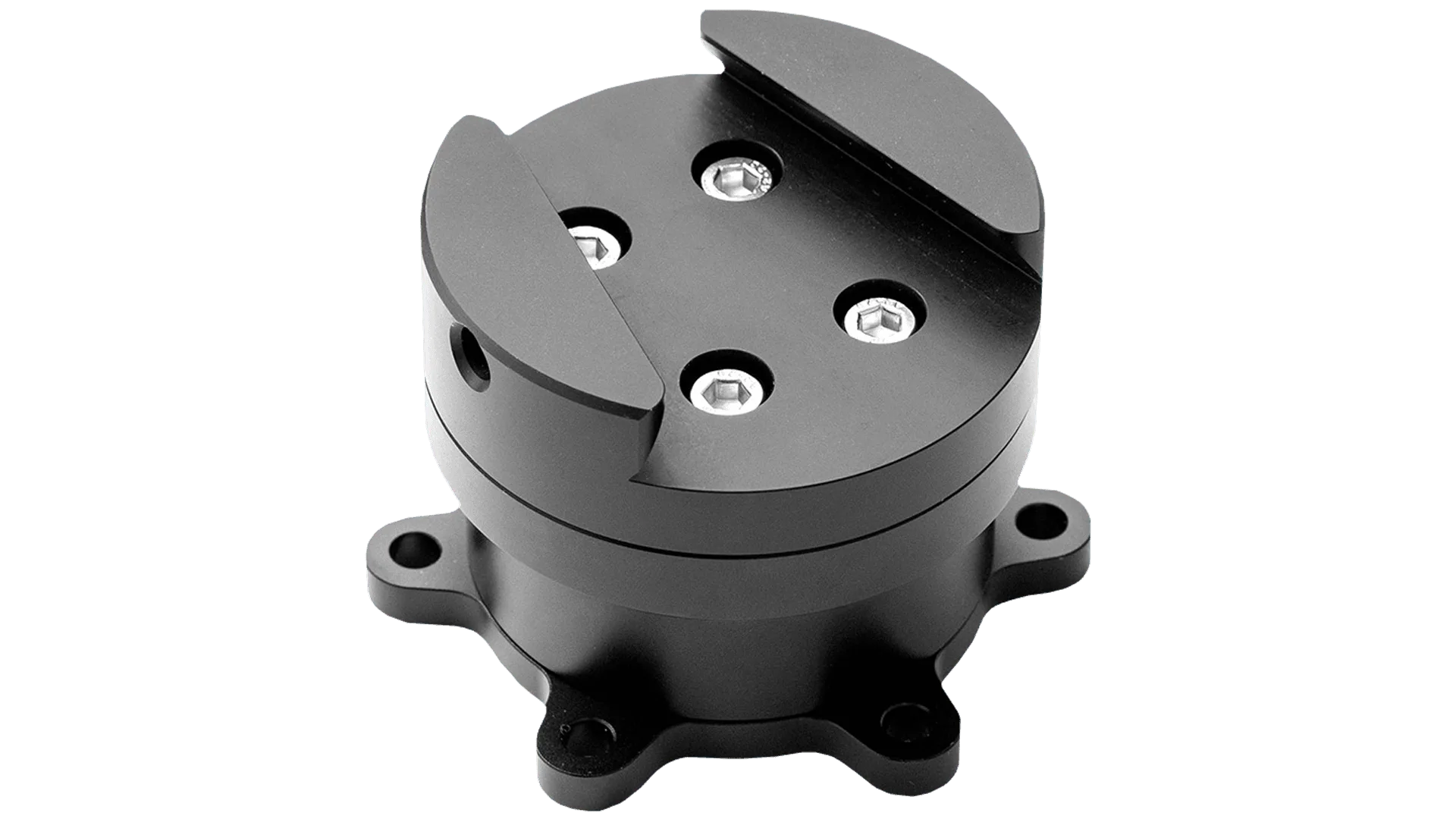
Simucube Quick Release Wheel Side Kit
Most mounting problems in sim racing are not caused by the wheel or the base. They come from the wrong bolt length, a plate that flexes, or a torque value nobody checked. This FAQ answers the questions that come up most often when people mount a direct drive wheel to a rig.
The answers below stay practical: what to measure, what to tighten, and where to stop. Where a specification depends on your exact base or rig, the answer says so instead of inventing a number.
What bolts should I use for a direct drive wheel base?
Use the bolt size, thread pitch, and length specified by your wheel base manufacturer. Direct drive bases are often mounted with M6 or M8 hardware, but the correct size is base-specific, so treat any general number as a starting point and confirm it against your base's manual or mounting template.
Bolt length matters more than most people expect. A bolt that is too long can bottom out inside the base before the head seats, which means the base is not actually clamped even though the bolt feels tight. A bolt that is too short engages too few threads. Measure the plate thickness plus the base's mounting depth, then choose a length that gives full thread engagement without bottoming out.
- Check thread engagement: you want the bolt to pass through the plate and thread fully into the base without protruding inside the housing.
- Use washers only if the base manufacturer allows them; they change the effective bolt length.
How thick should a wheel mounting plate be?
Thick enough that it does not flex under steering torque. A plate that bends or rings under load turns every force you apply into movement instead of steering input, and it can also loosen bolts over time. Steel or thick aluminum plates are common for direct drive because they resist deflection better than thin sheet material.
There is no single correct thickness, because stiffness depends on the material, the span between mounting points, and how the plate is supported by the rig. A short, well-supported plate in stiff material can be thinner than a long unsupported plate. If you can flex the plate by hand before mounting the base, it is not stiff enough for a high-torque direct drive unit.
- Support the plate along its edges or with a brace rather than only at the corners.
- If bolts keep loosening, check plate flex before blaming the bolts.
What torque should I tighten mounting bolts to?
Use the torque figure from your wheel base manufacturer, not a generic value from a forum. The correct figure depends on bolt size, thread material, and what the bolt threads into. Tightening beyond spec can strip threads in the base housing or crush a soft mounting plate, and both are expensive to fix.
If no figure is published, tighten in a cross pattern in stages until the base is firmly seated with no movement, then stop. A torque wrench is worth owning for this job because feel is unreliable, especially on small bolts. Recheck torque after the first few sessions, since new mounts often settle.
- Tighten in a star or cross pattern so the base seats evenly.
- Recheck after the first few hours of use, then periodically.
How does quick release mounting change things?
A quick release adds a joint between the wheel and the base, so it introduces its own fit and torque considerations. The wheel-side and base-side halves must be the correct match for each other, and the release mechanism needs to lock fully with no play. Any wobble at the quick release shows up as a vague feeling through the rim.
If you want to avoid assembling the wheel-side quick release yourself, GSI can install the Simucube wheel side QR at the factory when you order it with a GSI wheel. That means the wheel arrives with the quick release already fitted, so you are only dealing with the base side and the mounting plate.
- Confirm both halves of the quick release are the same standard before ordering.
- Check for play at the release after mounting; a locked release should feel solid.
Do I need a front-mount or bottom-mount plate?
It depends on the base and how your rig is built. Front-mount plates hold the base by its front face, which can place the wheel closer to the driver and often suits formula-style seating positions. Bottom-mount plates bolt through the underside of the base, which is common on aluminum profile rigs and easier to adjust for height.
Neither is universally better. The right choice is the one your base supports and your rig can hold rigidly. If your rig flexes at the plate, changing the mounting style will not fix it; you need more structure, not a different bolt pattern.
- Match the plate to the base's available mounting faces.
- Prioritize rigidity over convenience if you run high torque.
Why do my mounting bolts keep coming loose?
The usual causes are insufficient torque, plate flex, or a mismatch between bolt length and mounting depth. If the plate moves under load, it works the bolts loose no matter how tight they were at the start. Vibration from a direct drive base accelerates that process.
Work through it in order: check plate stiffness, confirm bolt length and engagement, then torque to spec and recheck after use. Threadlocker can help on bolts that thread into metal, but do not use it where the manufacturer advises against it, and never rely on it to compensate for a flexing plate.
- Fix flex first; threadlocker is not a substitute for a stiff mount.
- Re-torque after the first sessions and after any rig adjustment.
Mounting hardware checklist
Bolt size and length
Confirm the base manufacturer's bolt size, thread pitch, and required length before buying hardware. A bolt that bottoms out is not actually clamping the base.
Plate stiffness
Check that the mounting plate does not flex by hand and is supported beyond the corners. Flex is the most common cause of loosening bolts.
Torque and recheck
Tighten to the base maker's figure in a cross pattern, then recheck after the first sessions. New mounts settle; a single tightening is not enough.
Quick release fit
Verify both halves match, the release locks fully, and there is no play at the joint. Factory-installed wheel-side QR removes one variable from the assembly.
Mounting-relevant product facts
- Simucube Quick Release Wheel Side Kit: GSI can install the Simucube wheel side QR at the factory when you buy it with a GSI wheel. Removes one assembly step from quick release mounting and reduces the chance of a poorly seated wheel-side joint.
- https://gomezsimindustriesem.com/products/interlock-base-module-rim-prime-simucube-2-pro-bundle-6ff1d1d50f3c665cb2d3ffba-1687152Interlock Base Module + Rim / Prime + Simucube 2 Pro Bundle: The Interlock Base Module + Rim pairs the modular core with a GSI rim, with options to add paddle shifters, clutches, or the LED Matrix. A bundled wheel-and-base starting point means fewer separate mounting decisions, and the modular design lets you expand later without replacing the whole assembly.
- Interlock Base Module + Simucube 2 Pro Bundle: The Interlock Base Module + Rim is described as the most straightforward way to start with Interlock, pairing the modular core with a GSI rim. If you want a single mounting target rather than mixing parts from different makers, this bundle keeps the wheel side consistent.
Mounting hardware is a small part of a sim racing setup, but it decides whether the wheel and base behave as one unit. Get the bolts right, stiffen the plate, torque to spec, and recheck after use. If you want the wheel-side quick release handled for you, ordering the Simucube Quick Release Wheel Side Kit with a GSI wheel lets the factory fit it before shipping.