Quick answer
For most toddlers, a straw cup offers better oral development support and easier transition to open cups, while a soft-spout sippy cup like The Sippy Cup (9oz) can be ideal for younger babies still transitioning from bottle feeding.
Key differences between sippy cups and straw cups
Sippy cups typically use a spout that requires sucking, similar to a bottle, while straw cups encourage a more mature drinking pattern. The spout design can affect how your child's tongue and mouth muscles develop. Straw cups generally promote a more natural swallowing motion and may reduce the risk of dental issues associated with prolonged spout use.
Spill resistance also differs. Many sippy cups use a valve or cross-cut design to prevent leaks, while straw cups often have a straw that stays in liquid. The Sippy Cup (9oz) features a cross-cut spout that minimizes spills without a hard valve, making it gentler on gums.
When a sippy cup works best
Sippy cups are often the first choice for babies moving from bottle to cup around 9 months. The familiar sucking motion can make the transition smoother. The Sippy Cup (9oz) uses extra soft, medical-grade silicone spout that mimics bottle feeding, which has earned multiple awards for ease of transition.
However, sippy cups with hard spouts or complex valves can frustrate some toddlers or encourage improper tongue placement. Look for a soft, flexible spout without hard plastic parts.
When a straw cup is the better choice
Straw cups are generally recommended for older toddlers (12+ months) who have better oral motor control. Drinking from a straw strengthens the cheek muscles and promotes a more mature swallowing pattern. Many speech therapists prefer straw cups over sippy cups for this reason.
The trade-off is that straw cups can be harder to clean thoroughly, and some toddlers may bite through softer straws. Also, not all straw cups are truly spill-proof when tipped over.
Sippy cup vs straw cup: trade-offs at a glance
- Oral development: Straw cups encourage a more mature swallowing pattern and better tongue positioning. Sippy cups with soft spouts can delay this transition if used too long. Use straw cups for toddlers over 12 months; reserve sippy cups for early transition.
- Ease of transition from bottle: Soft-spout sippy cups like The Sippy Cup (9oz) mimic bottle feeding, making the switch less jarring for younger babies. Straw cups require a new sucking technique. Start with a soft-spout sippy cup around 9 months, then introduce a straw cup around 12 months.
- Spill resistance: Sippy cups with cross-cut or valve designs tend to be more spill-proof than most straw cups, which can leak if tipped. The Sippy Cup (9oz) uses a cross-cut spout that reduces spills without a hard valve. Choose a sippy cup for car rides or diaper bags; use straw cups at home where spills are less stressful.
- Cleaning and maintenance: Straw cups have more parts (straw, valve) that need thorough cleaning to prevent mold. Sippy cups with simple spouts are easier to clean. If you prefer low-maintenance cleaning, a soft-spout sippy cup may be more practical.
Product spotlight
-
The Sippy Cup (9oz) - Lt. Green: The Sippy Cup (9oz) features an extra soft, medical-grade silicone spout with a cross-cut design that minimizes spills. This makes it a gentler option for babies transitioning from bottle feeding, reducing frustration while still offering spill resistance.
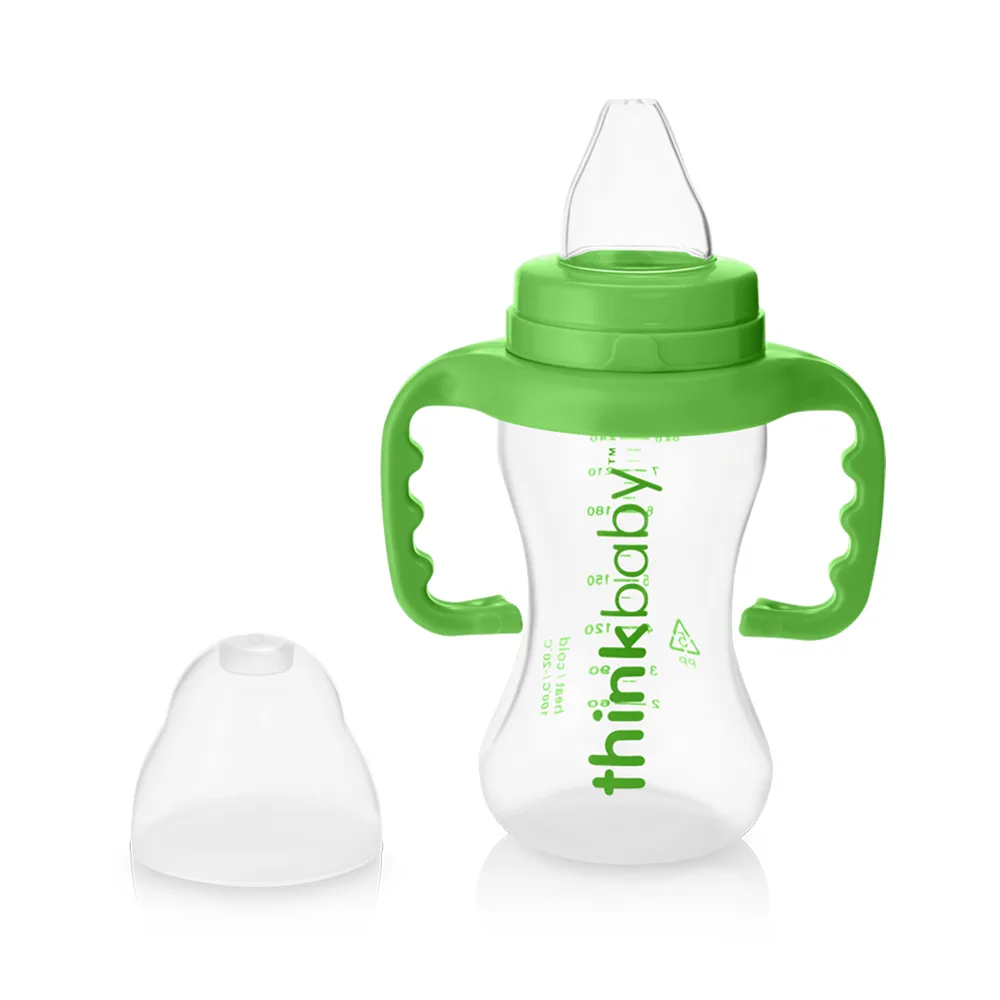
The Sippy Cup (9oz) - Lt. Green
Which cup is right for your toddler?
Best for
- Babies 9-12 months transitioning from bottle to cup who need a familiar sucking motion
- Parents who prioritize spill resistance for on-the-go use
- Toddlers who struggle with straw drinking and need a gentler introduction
Not ideal for
- Toddlers over 12 months who need to develop mature oral motor skills
- Parents seeking a cup that supports speech development and proper tongue placement
- Children who have already mastered straw drinking and need an open cup next