Quick answer
Store your Leatherman Skeletool RX clean and dry, oil the pivot points lightly, and keep it in a dedicated pouch inside your first aid kit. Address rust or stiffness early with simple cleaning and lubrication.
Why the Skeletool RX needs different care than other kit items
The Skeletool RX is a tool, not a consumable. Its 154CM deeply serrated blade and carbide glass break bit are built for emergency use, but they can corrode or dull if left dirty or damp. Unlike bandages or gloves, you won't replace it after each use—so a few minutes of maintenance keeps it dependable for years.
A first aid kit often sits in a car, backpack, or closet where temperature and humidity fluctuate. That makes rust prevention and blade protection especially important.
The trade-off: accessibility vs. protection
Keeping the tool immediately accessible can conflict with protecting it from moisture and dirt. A pouch or sheath inside the kit balances both: it keeps the Skeletool RX within reach while shielding it from loose items that could scratch the blade or trap moisture.
If your kit is exposed to frequent wet conditions, consider a small desiccant pack nearby—but never let it touch the tool directly.
Diagnose and fix common Skeletool RX issues
- Rust spots on blade or handles: Symptom: small orange or brown spots. Likely cause: moisture left on the tool after use or storage in a damp environment. Corrective action: clean with a damp cloth and mild soap, dry thoroughly, then apply a thin coat of multi-tool oil or a rust-inhibiting wipe. Stop if rust has caused pitting or stiffness—replace the tool rather than risk failure.
- Stiff or gritty pivot action: Symptom: pliers or blade are hard to open. Likely cause: dirt, sand, or dried lubricant in the pivot. Corrective action: rinse with clean water, work the joint open and closed, dry with a cloth, and apply a drop of light oil. If stiffness persists after cleaning and oiling, the pivot may be damaged—consider professional service or replacement.
- Dull or damaged serrated blade: Symptom: blade snags or tears instead of slicing. Likely cause: cutting abrasive materials or improper cleaning. Corrective action: clean the serrations with a small brush, then sharpen with a serrated sharpener following the original tooth angle. If teeth are chipped or missing, stop using the blade for critical tasks and replace the tool.
- Glass break bit loose or worn: Symptom: bit wobbles or fails to score glass. Likely cause: wear from repeated use or improper storage that damaged the tip. Corrective action: inspect the carbide tip for chips; if worn, replace the bit if replacement parts are available. If the bit is integral and damaged, the tool may no longer be reliable for glass breaking—choose another option.
- Tool stored wet or dirty: Symptom: moisture or debris inside the pouch. Likely cause: putting the tool away without drying or cleaning. Corrective action: always wipe the tool dry after use, shake out the pouch, and let both air-dry before closing the kit. If the kit itself is wet, dry it completely before returning the tool.
Product facts
-
Leatherman Skeletool RX: 154CM deeply serrated blade for more cutting surface on clothing or fibrous materials. The serrations can trap lint and fabric fibers, so brush them out after use to keep cutting performance intact.
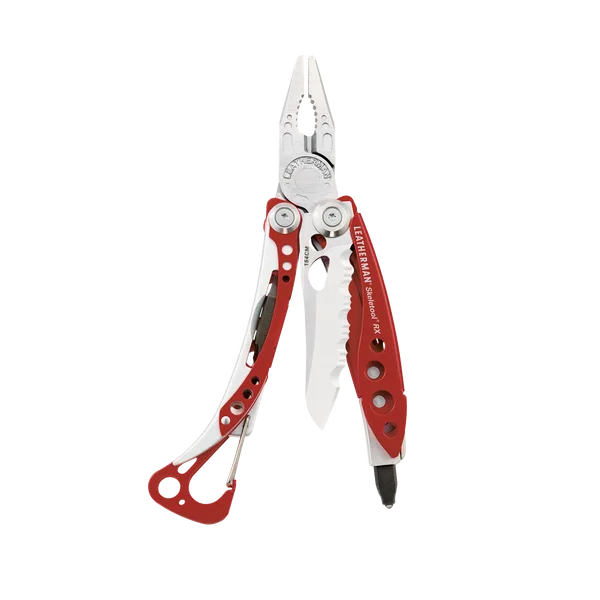
Leatherman Skeletool RX