Quick answer
A slow feeder bowl insert slows eating more effectively than a regular bowl because its obstacles force your dog to navigate around them for every bite. If your dog inhales food, the Slow Feeder Bowl Insert is the practical choice. If your dog already eats at a steady pace, a regular bowl is simpler and easier to clean.
How a slow feeder bowl insert changes the mechanics of eating
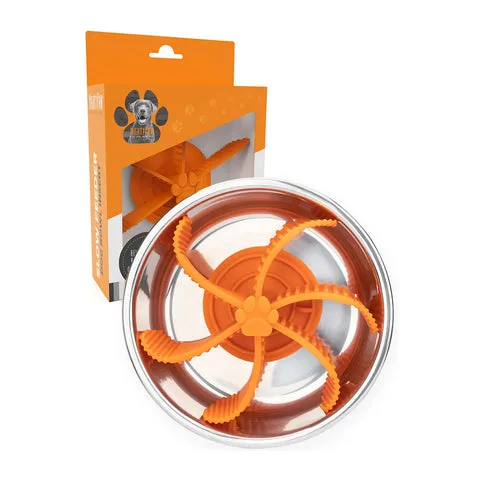
A regular bowl offers a wide, open surface. A fast eater can take large mouthfuls with little effort, finishing a meal in seconds. A slow feeder bowl insert adds physical barriers. The Slow Feeder Bowl Insert uses six interactive floppy fins and two unique textures. Your dog must work around those fins to reach kibble, which turns one quick gulp into many smaller bites. That extra effort is what slows eating. It also adds mental stimulation, because your dog has to problem-solve the bowl instead of just vacuuming it.
Does a slow feeder work for every fast eater?
It depends on why your dog eats fast. If your dog bolts food from a regular bowl, a slow feeder insert is likely to help. The insert fits any bowl, so you can test it without buying a whole new feeding setup. But if your dog eats fast because of competition from another pet, a slow feeder alone may not fix the root cause. Feed dogs in separate rooms or use two bowls spaced apart. Also consider the food type. Large kibble moves through fins differently than small kibble, and wet food can smear into the textures. The insert is designed for dry food; if you feed wet food, expect more cleaning.
Cleaning and daily use: insert vs regular bowl
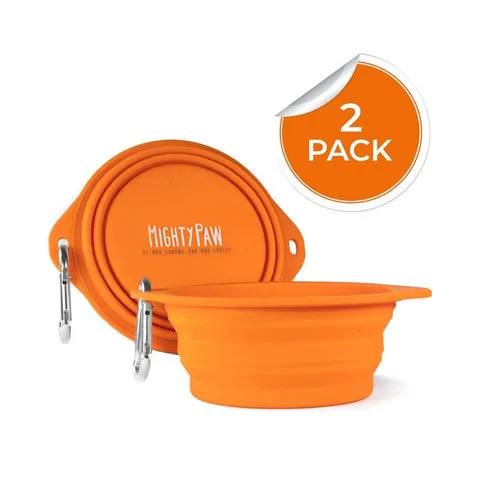
A regular bowl wins on simplicity. Rinse, wipe, done. A slow feeder insert has fins and textures that trap bits of kibble and saliva. You will need to rinse it thoroughly and check between the fins. The Slow Feeder Bowl Insert is still a small commitment compared with a full slow-feeder bowl, and it fits the bowls you already own. If you travel or feed on the go, pair it with the Collapsible Travel Bowl (2pk). That set gives you two lightweight, food-grade, BPA-free silicone bowls with carabiners, so you can clip them to a backpack or harness. The insert is not a travel product, but the collapsible bowls make it easier to keep a consistent feeding routine away from home.
Trade-offs: slow feeder insert vs regular bowl
- Slowing power: The Slow Feeder Bowl Insert adds six floppy fins and two textures that force your dog to eat around obstacles. A regular bowl has no barriers, so a fast eater can gulp food in seconds. Choose the insert if speed is the problem.
- Convenience and cleaning: A regular bowl is faster to rinse and dry. The insert has crevices that need more thorough cleaning after every meal. Choose a regular bowl if you want the lowest-maintenance option and your dog eats slowly.
- Fit and flexibility: The Slow Feeder Bowl Insert fits any bowl, so you can keep your current setup. A regular bowl is already the baseline, but it offers no adjustability for eating pace. The insert is the flexible upgrade; the regular bowl is the simple default.
Product facts
- Slow Feeder Bowl Insert: Slow Feeder Bowl Insert has six interactive floppy fins and two unique textures, and fits any bowl. The fins create obstacles that slow eating, while the universal fit means you can use it with bowls you already own instead of replacing them.
- Collapsible Travel Bowl (2pk): Collapsible Travel Bowl (2pk) is made from food-grade, BPA-free silicone, is tear-resistant, and includes carabiners for clipping onto a belt, backpack, or harness. If you feed your dog away from home, these bowls keep mealtime consistent and pack flat, so a slow-feeding routine is easier to maintain on the go.
Which should you choose?
Best for
- Dogs that gulp food and finish a regular bowl in seconds
- Owners who want to keep their current bowl and add slowing power
- Dogs that need mental stimulation at mealtime
Not for
- Dogs that already eat at a calm, steady pace
- Owners who want the easiest possible cleanup
- Dogs that eat mostly wet food, which can smear into the insert's textures