Quick answer
Choose a smart pet tag if you want a customizable digital profile that anyone with an NFC-enabled phone can read by holding it near the tag, and you accept that the finder needs a charged phone. Choose a traditional engraved ID tag if you want zero battery, zero app and zero phone dependence, because a stranger can read it instantly in any light. Many owners run both: a traditional tag for instant readability and a smart tag as a backup layer of contact detail.
How each tag actually gets read
A traditional ID tag works by sight. A finder looks at the metal, reads the phone number, and calls. Nothing has to be charged, downloaded or unlocked. That simplicity is its whole advantage, and it is why engraved tags have survived the smartphone era.
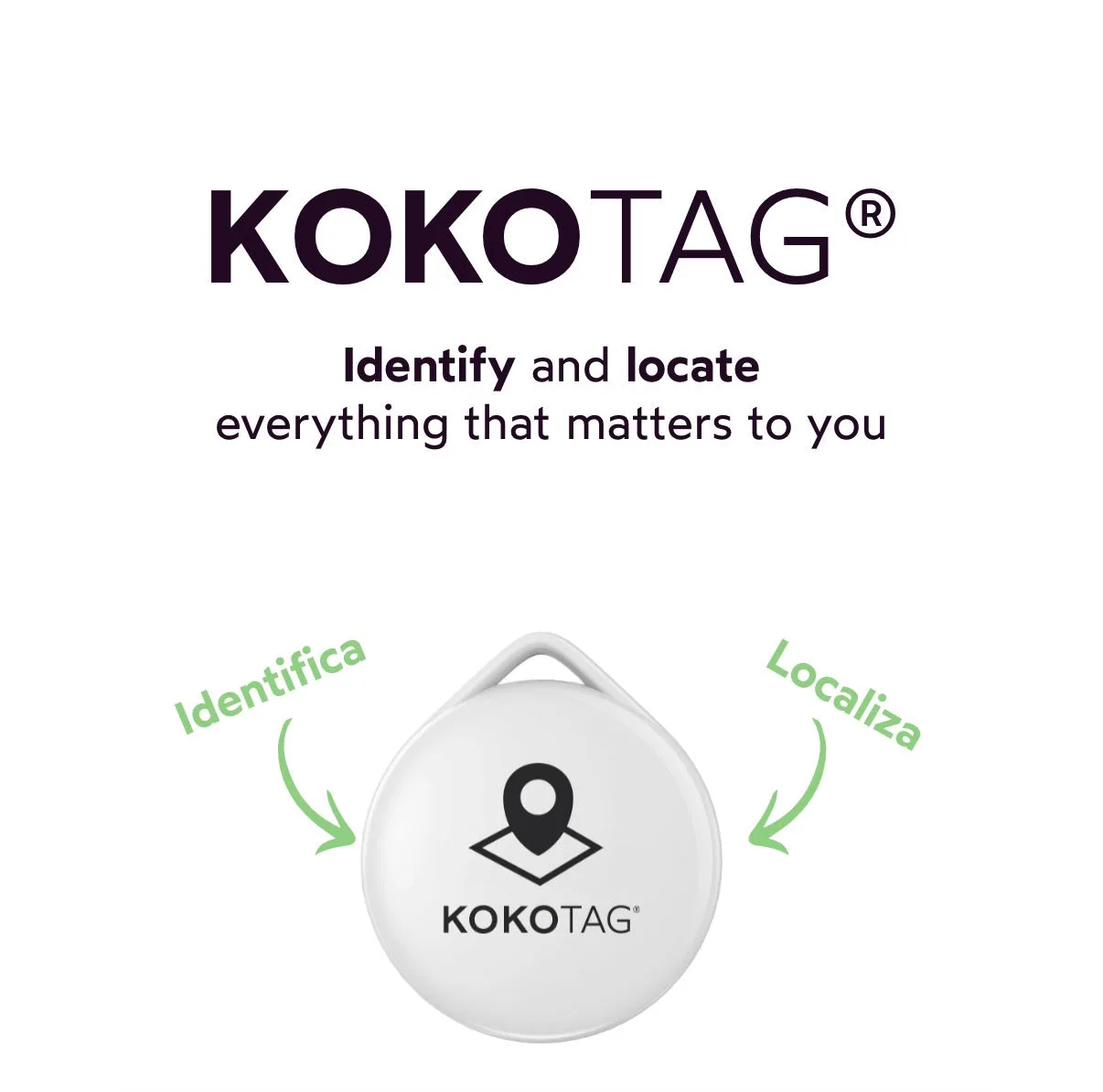
A smart tag works by proximity. The KOKO SmartTag stores a customizable digital profile with your pet's identification details and owner contact information, and a finder holds an NFC-enabled iPhone or Android phone near the tag to open it. The trade-off is immediate: you can fit far more information into a digital profile than onto a stamped tag, but only if the person holding your dog has a compatible phone and knows to try.
Where a smart tag earns its place
The real advantage is information depth. A stamped tag holds a name and one phone number. A digital profile can carry identification details and multiple owner contact points, and you can update it without buying a new tag when a number changes.
That makes a smart tag a useful second layer rather than a replacement. If your dog slips a collar in an unfamiliar neighborhood, a finder who taps the tag gets more ways to reach you than a single engraved line allows. If your dog is a known escape artist, this redundancy is worth more than the tag costs.
The visibility problem neither tag solves
Both tags only help after someone has already found your dog. Neither prevents the dog from being hit by a car at dusk, which is a separate safety problem solved by light, not by identification.
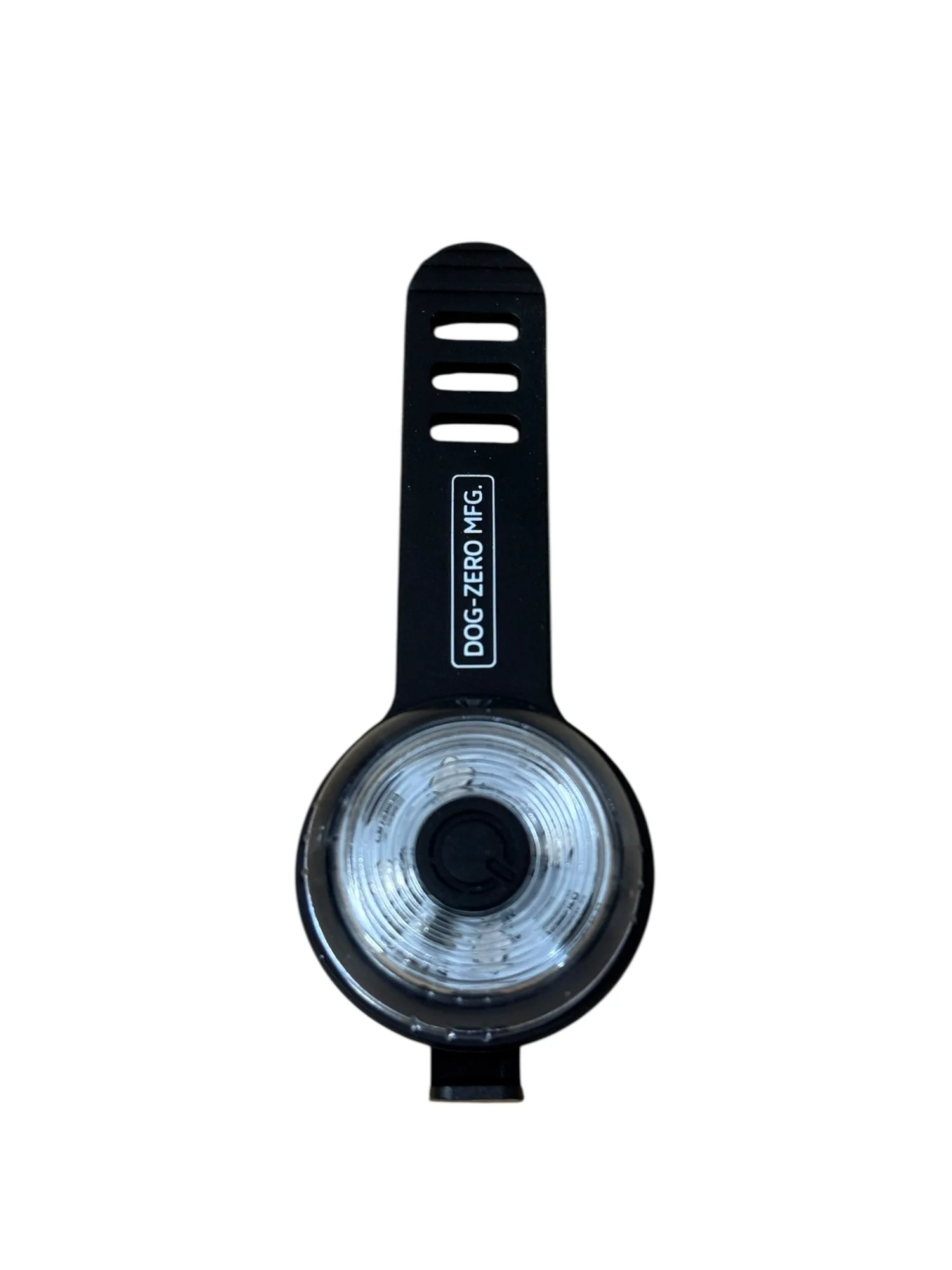
That is where a clip-on light changes the equation. The LED Pet Safety Light clips onto any collar, harness or leash in seconds and throws a 360° glow visible to drivers from up to 50 m / 165 ft away, rated IPX6 and running up to 50 hours. It is not an ID solution, but it addresses the risk that comes before identification ever matters.
What a smart tag is not
A smart tag is not a GPS tracker. The KOKO SmartTag uses NFC proximity reading, so it does not transmit a live location you can follow on a map. If you specifically want live tracking, you are shopping for a GPS dog tag alternative, which is a different product category with its own battery and subscription considerations.
It also is not a substitute for a microchip. A microchip is read by a vet or shelter scanner and cannot be removed by a thief; a tag hangs on the collar and can be lost with the collar. Treat the smart tag as a fast, information-rich layer, not as the whole identification plan.
Matching the tag to your dog's routine
For a dog that mostly walks the same quiet streets and comes when called, an engraved tag plus a microchip is enough, and a smart tag is optional insurance. For a dog that travels, visits dog parks, or has a history of bolting, the extra contact detail on a digital tag is cheap peace of mind.
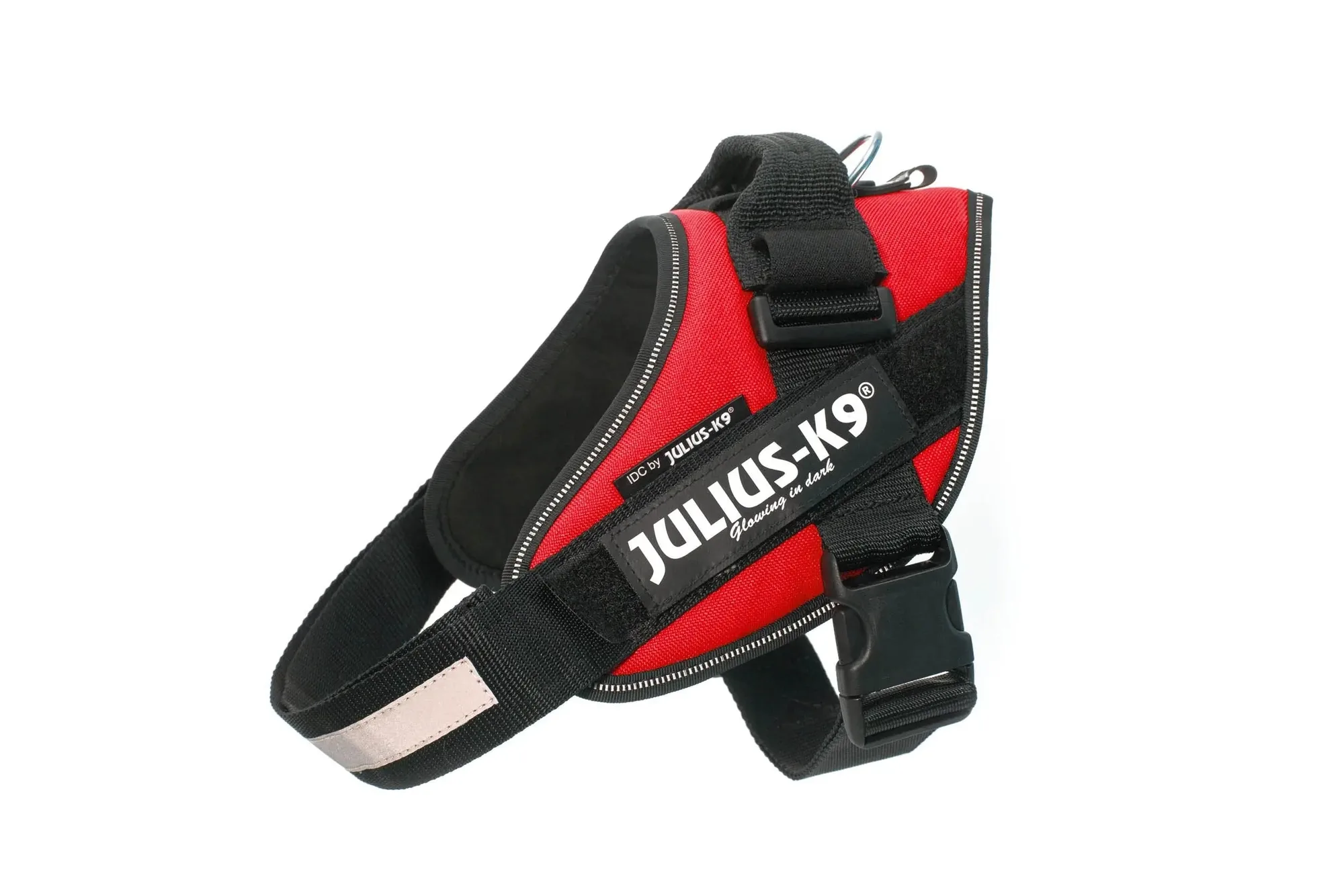
Whichever you pick, attach it where it will not interfere with the harness. On a Julius-K9® IDC® Powerharness, the top handle and chest strap already do the control work, so keep the tag on the collar or a dedicated attachment point rather than dangling it into the buckle path.
Smart tag vs traditional tag: the trade-offs
- Information depth: A digital profile holds identification details and owner contact information, while an engraved tag holds only what fits on the metal. Smart tag wins on detail; traditional tag wins on instant readability.
- Finder effort: A traditional tag is read by eye in any light. A smart tag requires the finder to hold an NFC-enabled iPhone or Android phone near it. If your neighborhood is not phone-heavy, keep a traditional tag too.
- Battery and updates: An engraved tag never needs charging and never changes. A digital profile can be edited any time, but depends on the finder's phone working. Update your digital profile whenever your phone number changes.
- Location tracking: The KOKO SmartTag uses NFC proximity reading and does not provide live GPS tracking. Want live tracking? That is a GPS dog tag alternative, not a smart ID tag.
Products that support this decision
- KOKO SmartTag: The OVZLA KOKOTAG Smart Pet ID & Finder creates a customizable digital profile with your pet's identification details and owner contact information, readable by holding an NFC-enabled iPhone or Android phone near the tag. More contact detail than an engraved tag, and you can update it without re-engraving, but the finder needs a compatible phone.
- LED Pet Safety Light: The IPX6-rated LED Pet Safety Light clips onto any collar, harness or leash in seconds and throws a 360° glow visible to drivers from up to 50 m / 165 ft away, running up to 50 hours. Solves the dusk-visibility risk that no ID tag, smart or traditional, can address.
- Julius-K9® IDC® Powerharness: The Julius-K9® IDC® Powerharness uses a one-click buckle, a pressure-distributing chest strap and a top handle for instant control, and is available in multiple sizes and colors. A secure harness reduces the chance of a slipped-collar escape in the first place, which is the cheapest identification strategy of all.
Which should you choose?
Choose a smart pet tag if
- You want a digital dog tag with a customizable profile and multiple contact options
- Your dog travels, visits dog parks or has escaped before
- You want to update contact details without buying a new tag
Choose a traditional ID tag if
- You want a tag any stranger can read instantly with no phone involved
- You do not want to depend on a finder's phone being charged and compatible
- You want live GPS location tracking, which a smart ID tag does not provide