Quick Answer
To set up a solar telescope safely, verify the solar filter is securely attached and certified before pointing at the Sun, then align and focus using the shadow method. Always follow the manufacturer's instructions and never look through an unfiltered scope.
Why Solar Safety Is Non-Negotiable
The Sun's intense light and heat can damage your eyes and equipment in seconds. Solar telescopes and filters must meet the ISO 12312-2 safety standard. Even a brief look through an unfiltered telescope can cause permanent vision loss. This guide focuses on the setup steps that keep you safe and help you get sharp views of sunspots, transits, and eclipses.
White Light vs. H-Alpha: Know Your Gear
White light solar telescopes, like the Celestron EclipSmart Travel Scope 50, show sunspots and the solar disk in natural light. H-alpha systems, such as the Lunt LS80MT, reveal solar prominences and surface detail by isolating a specific wavelength. Your setup steps are similar, but h-alpha scopes require extra attention to the filter and tuning. Confirm which type you own before you begin.
Step-by-Step Solar Telescope Setup
- Check the filter first: Before anything else, inspect the solar filter for scratches, holes, or looseness. For white light scopes, the filter must cover the front opening completely. For h-alpha scopes, confirm the etalon and blocking filter are properly installed. Common mistake: using a filter that is not rated for your telescope's aperture or that shows any damage. If the filter is damaged or not certified, do not use the telescope until it is replaced.
- Set up the tripod and mount: Place the tripod on solid, level ground. Attach the mount and telescope tube, then tighten all knobs. Balance the tube so it does not swing on its own. Common mistake: over-tightening the tripod legs on uneven ground, which makes the mount unstable. A stable mount is essential for keeping the Sun centered and avoiding accidental shifts.
- Align the finder scope: If your telescope has a finder, align it during the day with a distant object (never the Sun) before using it for solar viewing. On solar scopes, some finders are solar-safe, but verify this. Common mistake: assuming the finder is safe for the Sun when it is not. Use a certified solar finder or the shadow method instead of an optical finder unless you are certain it is safe.
- Use the shadow method to point at the Sun: Without looking through the eyepiece, move the telescope until the shadow of the tube is smallest and the shadow of the dew shield or finder is centered. This method is safe and effective. Common mistake: trying to find the Sun through an unfiltered finder or eyepiece. The shadow method prevents accidental direct viewing and helps you center the Sun quickly.
- Focus and observe: Once the Sun is in the field of view, use the focus knob to sharpen the image. For h-alpha scopes, adjust the tuning ring to bring out surface detail and prominences. Take short observing sessions and give your eyes breaks. Common mistake: forcing focus when the image is blank, which may mean the Sun is not centered. If you see only a bright glow, re-center using the shadow method before adjusting focus.
- Take down safely: After observing, point the telescope away from the Sun before removing the filter or covers. Store the filter in a padded case to protect it from scratches. Common mistake: leaving the scope pointed at the Sun while you remove the filter, which can expose eyes or equipment to direct sunlight. Always remove the filter or cover the objective before moving the telescope inside.
Solar Telescopes to Consider
-
EclipSmart Travel Scope 50 (22060): This dedicated solar scope has fully coated glass optics and an ISO-certified solar filter that complies with the ISO 12312-2 safety standard. It gives you a safe, ready-to-use white light system for sunspots and eclipses without needing to buy a separate filter.
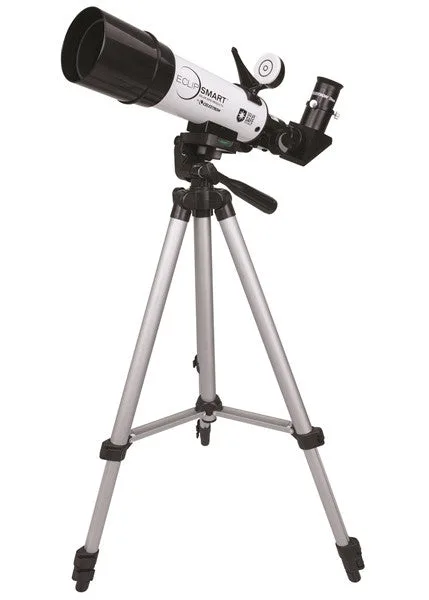
EclipSmart Travel Scope 50 (22060)
-
LS80MT Modular Telescope Observer Package: The LS80MT features professional-grade optics with a 5.6mm image size and a 0.65 angstrom bandpass (single stack), and it can be used with hydrogen-alpha, CaK, and white light filters. This h-alpha scope reveals fine solar detail like prominences, but it requires careful setup and tuning to get the best views.
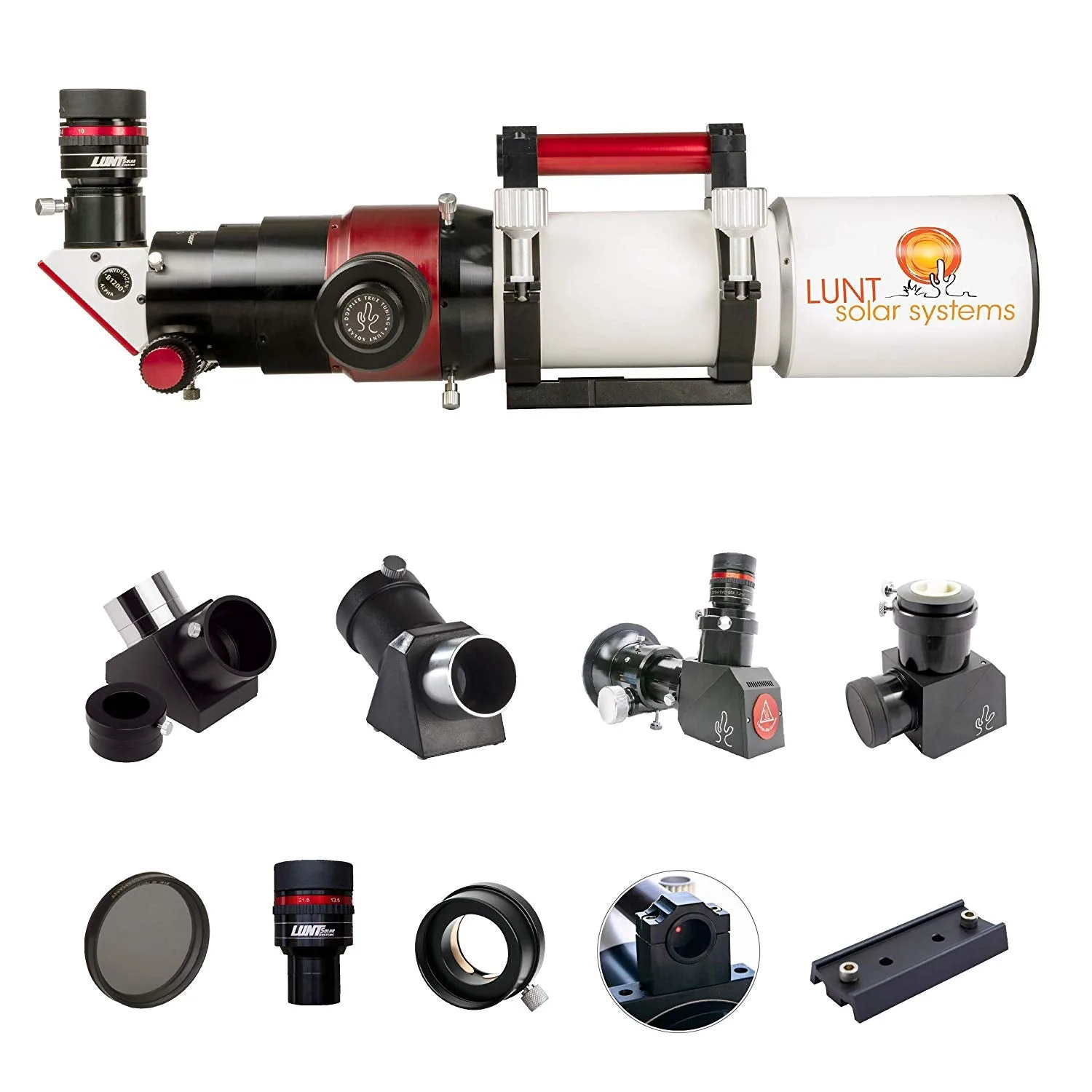
LS80MT Modular Telescope Observer Package