Quick answer
When the water still flows but the LEDs stay dark, the pump is fine and the fault sits in the solar panel, the rechargeable battery or the light sensor. Move the panel into uninterrupted sun for a full day first, because a partly shaded panel will run the pump on low demand but leave nothing in reserve for the lights. If the LEDs are still dead after a full sun day, test the panel output and the battery before assuming the whole feature has failed.
Start with the symptom, not the part
Solar water features fail in three distinct ways, and each one points at a different component. No water and no light means the panel is not collecting or the pump has stopped. Water but no light means the panel is collecting enough to drive the pump during the day but the battery is not holding charge for the evening. Lights that flicker or fade within an hour of dusk means the battery is charging but is near the end of its usable life. Decide which of the three you have before touching anything, because the fix is different in each case.
Panel placement and daylight hours
The panel needs direct sun, not bright shade, for most of the day. A panel that receives four hours of sun may still run the pump, because the pump draws very little, but it will not put enough back into the battery to carry the LEDs through the evening. Watch the panel across a full day rather than checking it once. A single overhanging branch or a fence that shades the panel after 3pm is enough to cause this exact symptom.
Angle matters too. A panel lying flat collects far less than one tilted towards the midday sun, and a panel behind glass collects less again because the glass filters the light. If you have moved the feature recently, or a shrub has grown since you installed it, that change alone can explain why the lights stopped.
- Move the panel to the sunniest spot available and leave it for one full day before testing again.
- Wipe the panel face with a damp cloth; dust and bird droppings cut output more than most owners expect.
- Check the cable run for a kink or a crushed section where it passes under a paving slab or through a border edge.
The battery is the usual culprit
Rechargeable batteries in solar features are consumables. They cycle every single day, and after a couple of seasons many will hold only a fraction of their original capacity. The tell-tale sign is a feature that works perfectly in strong summer sun and then fails as soon as the evenings draw in, even though the pump still runs during the day.
If your feature has a replaceable battery compartment, open it, check the contacts for corrosion or water ingress, and replace the cell with the same type and voltage printed on the old one. Do not fit a higher capacity cell hoping for longer runtime; the charging circuit is sized for the original, and an oversized cell may never reach full charge.
Light sensors and the dusk switch
Many solar features switch the LEDs on automatically when ambient light drops. That sensor can be fooled. A nearby porch light, a security lamp or even a bright window can keep the sensor reading daylight, so the LEDs never trigger. Cover the sensor briefly with your hand at dusk to see whether the lights come on. If they do, the problem is the light source nearby, not the feature.
The reverse also happens: a sensor that has fogged or taken on water can stay permanently in night mode, draining the battery so the pump runs weakly the next day. If the LEDs are on at noon, that is the fault to chase.
When the pump itself has stopped
A pump that has stopped is a separate problem from dead LEDs, and it is usually debris rather than electrics. Lift the pump out, remove the front cover, and clear any blanket weed, grit or snail shells from the impeller. Spin the impeller with a fingertip; it should turn freely with a faint magnetic resistance. If it is stiff or gritty, clean it and reassemble before you test anything electrical.
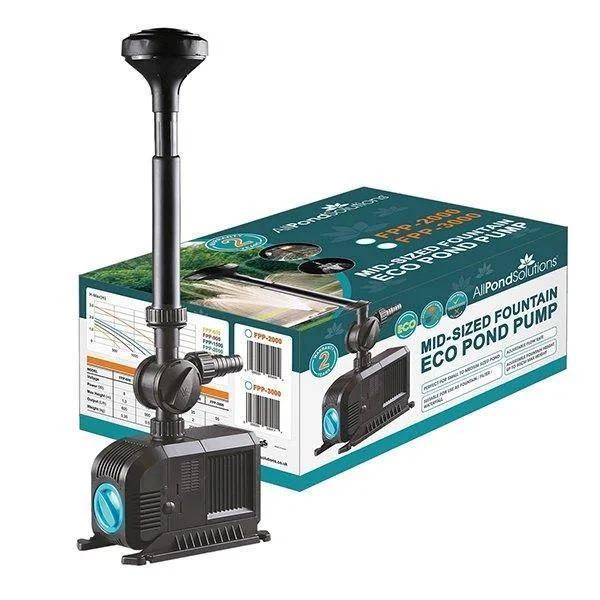
If you are running a larger display and the original pump has genuinely failed, the AllPondSolutions FPP-3000 L/H Fountain Pond Pump is the largest of the FPP low energy range and is sized for the biggest displays that range will drive. It comes with a selection of alternate fountain heads and a flow rate adjuster, so you can dial the output back to suit a smaller bowl feature rather than blasting water over the rim.
Keeping a solar feature alive through winter
Most solar feature failures trace back to a winter that was not planned for. Bring the panel and the pump indoors before the first hard frost, clean the bowls, and store the battery somewhere dry rather than leaving it in a frozen shed. A battery stored flat and cold for three months is the single most common reason a feature that worked last autumn does nothing in spring.
Diagnosis table: match the symptom to the fix
- No water and no light: The panel is not collecting or the pump has stopped. Clean the panel face, confirm it sits in direct sun for most of the day, then lift the pump and clear the impeller. If the pump spins freely and the panel is clean and unshaded, the panel or its cable has failed. Replace the panel rather than the whole feature if a replacement is available.
- Water runs but LEDs never come on: The battery is not holding charge for the evening. Give the panel one full sun day, then check the battery contacts for corrosion and replace the cell with the same type and voltage. If new cells still will not hold a charge, the charging circuit has failed. Stop here and replace the unit.
- LEDs come on at the wrong time: The dusk sensor is being fooled by a nearby porch light, security lamp or bright window, or it has taken on water and stuck in night mode. Cover the sensor by hand at dusk. If the lights respond, move the feature or the light source. If they stay on at noon, the sensor has failed.
- Lights fade within an hour of dusk: The battery is charging but is near the end of its usable life, which is normal after a couple of seasons of daily cycling. Replace the battery. If the feature has a sealed, non-replaceable battery, this is the point to replace the feature.
- Everything worked last autumn and now nothing does: The battery was left in a cold shed over winter, or the pump was stored wet and has seized. Bring the panel and pump indoors before the first frost each year, and store the battery dry.
Products that suit these fixes
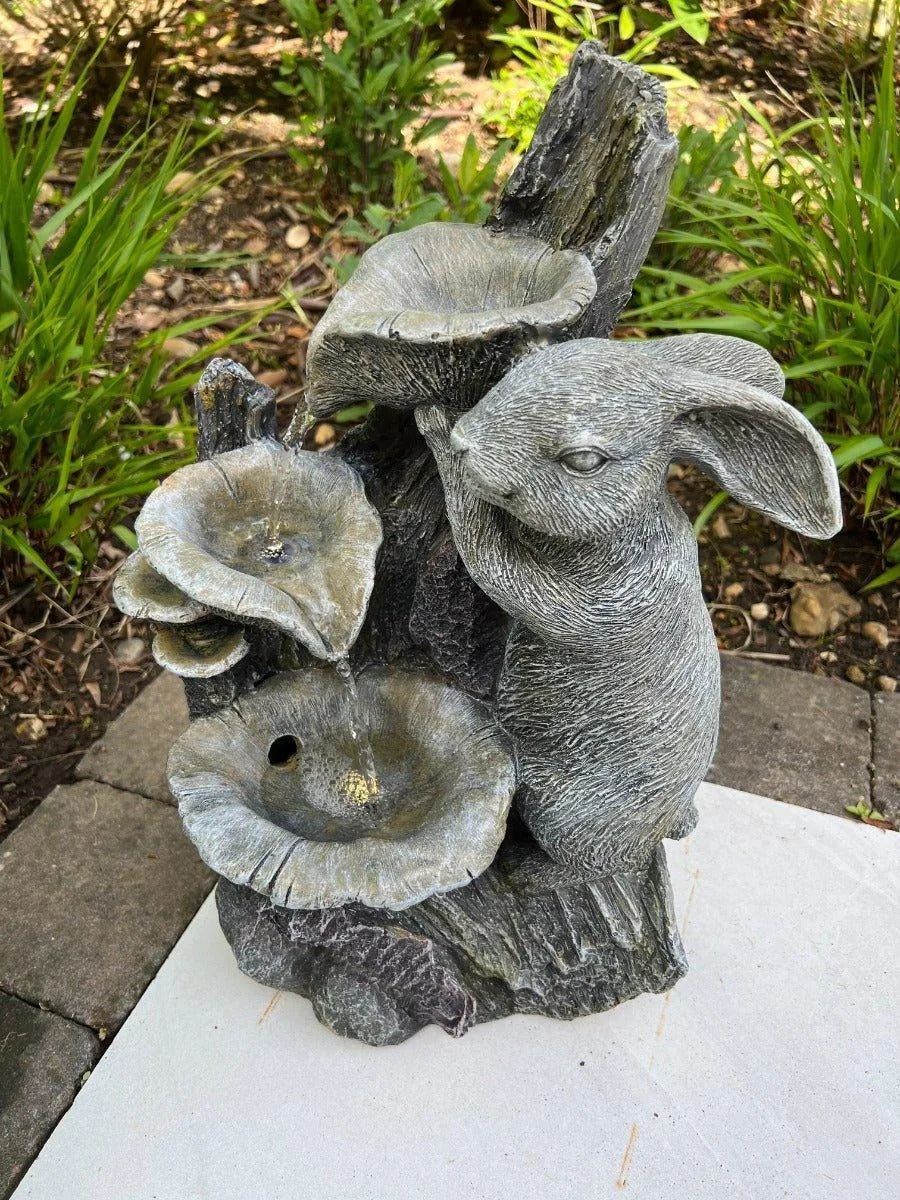
- Rabbit Waterfall Feature 3 Water Bowls with LED Lights - Solar Panel 46x32x26: The Rabbit Waterfall Feature 3 Water Bowls with LED Lights uses a solar panel and measures 46 x 32 x 26cm, with water stepping down through three bowls and LED lights that keep the display going after dark. Its three-bowl design means a weak battery shows up as uneven flow between bowls before the LEDs fail, so check the top bowl first when diagnosing a charging problem.
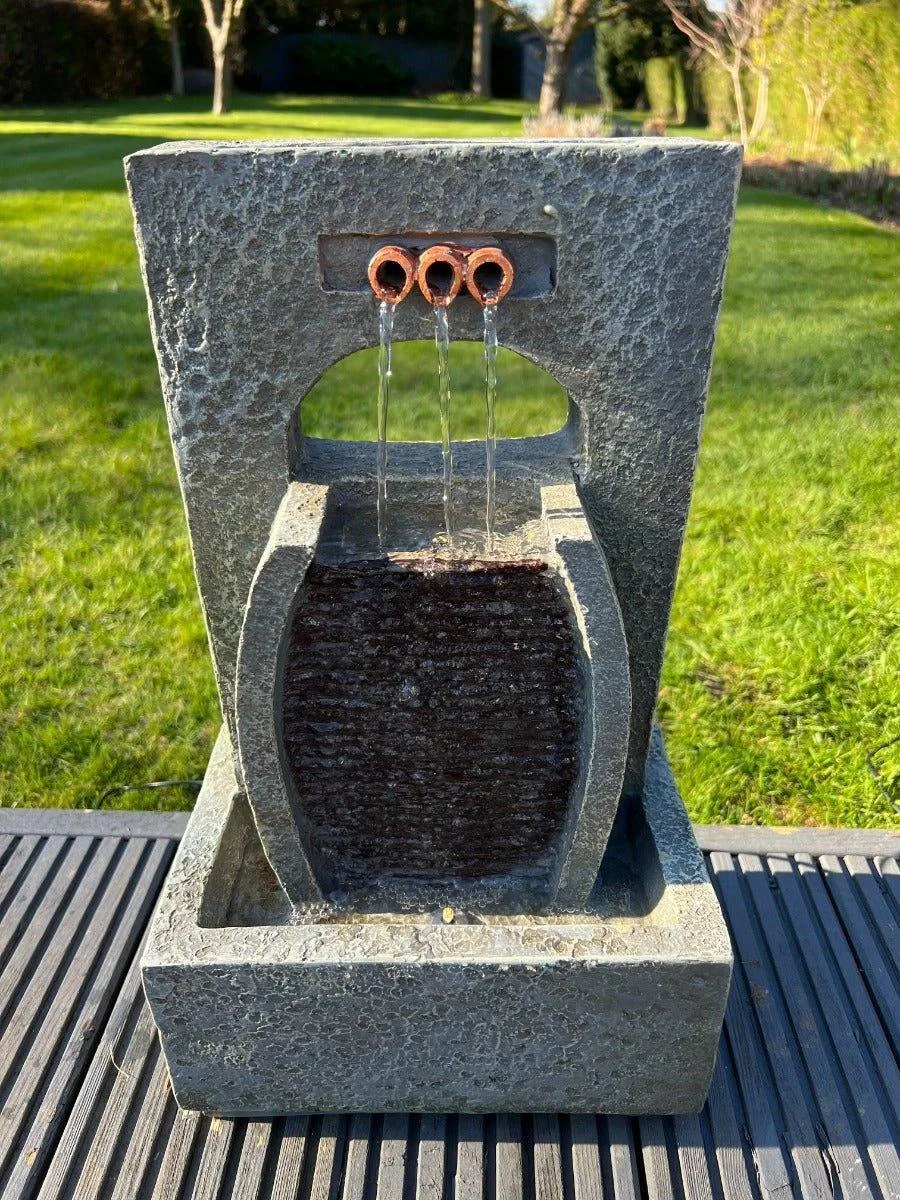
- 3 Outlets Tier Water Feature with LED Lights - Solar Powered 27x18x45cm: The 3 Outlets Tier Water Feature with LED Lights is solar powered, measures 27 x 18 x 45cm, and has a stone-look finish that suits contemporary and minimalistic planting. At 45cm tall it is easy to reposition the panel independently of the feature, which is the fastest test for a shading or daylight-hours problem.
- AllPondSolutions FPP-3000 L/H Fountain Pond Pump: The AllPondSolutions FPP-3000 L/H Fountain Pond Pump is the largest of the FPP low energy range, comes with a wide selection of alternate fountain heads, and includes a flow rate adjuster. If you replace a failed feature pump rather than the whole unit, the adjuster lets you match flow to a small bowl instead of overwhelming it.