Quick answer
A Soma cube is a 7-piece puzzle that assembles into a 3x3x3 cube over 240 ways. To solve it, first build the pieces, then combine them systematically using spatial reasoning.
What makes the Soma cube special
Invented in 1936 by Piet Hein, the Soma cube is a classic wooden brain teaser that challenges players of all ages, from 4 to 104. The seven pieces are made from small cubes joined at faces, and they can form a cube in hundreds of different configurations. This variety means there is no single solution, which keeps the puzzle fresh each time you try.
Tips for beginners
If you are new to the Soma cube, start by familiarizing yourself with each piece. Notice how they are shaped and how they can rotate. A common mistake is to force pieces into the wrong orientation, which can make the puzzle seem impossible. Instead, work slowly and try different combinations.
How to solve the Soma cube step by step
- Step 1: Identify the seven pieces: Lay out all seven pieces. Each is made of 3 or 4 small cubes. Notice their shapes: one is a straight line of 3 cubes, another is an L-shape, etc. Rotate them in your hands to understand how they fit together. Common mistake: Mixing up similar-looking pieces. Label them lightly with sticky notes if needed.
- Step 2: Build the base layer: Start by placing one piece flat on the table to form the bottom of the cube. Typically, the straight line piece works well as a base. Add another piece adjacent to it, ensuring they touch flush. The goal is to create a 3x3 footprint. Checkpoint: The base should be exactly 3 squares long and 3 squares wide. If it extends beyond, adjust the piece orientation.
- Step 3: Add the middle layer: Carefully place remaining pieces on top of the base, one at a time. Use pieces with protrusions to fill gaps. Rotate pieces to see if they fit without forcing. This layer will likely have some holes that get filled by the top layer. Common mistake: Trying to fill all gaps immediately. Some gaps are meant for the top layer.
- Step 4: Complete the top layer: With the bottom and middle layers in place, add the final pieces to form the top. The last piece should slide into the remaining cavity. If it does not fit, you may need to rearrange the middle layer. Checkpoint: The cube should be solid with no gaps. If a piece sticks out, revisit the middle layer arrangement.
- Step 5: Try alternative solutions: Since there are over 240 ways to form the cube, once you succeed, disassemble and try a different combination. This builds spatial reasoning and pattern recognition. Tip: Keep a record of successful configurations to track your progress.
About the puzzle
-
Soma Cube | Premium 7 Piece Puzzle for Kids: Invented in 1936 by Piet Hein, the Soma cube is versatile and interesting with appeal from ages 4 to 104. The 7 pieces will make a cube 240 different ways and also many other shapes. This means the puzzle is not only a great spatial reasoning tool but also offers near-limitless replay value, making it suitable for both kids and adults.
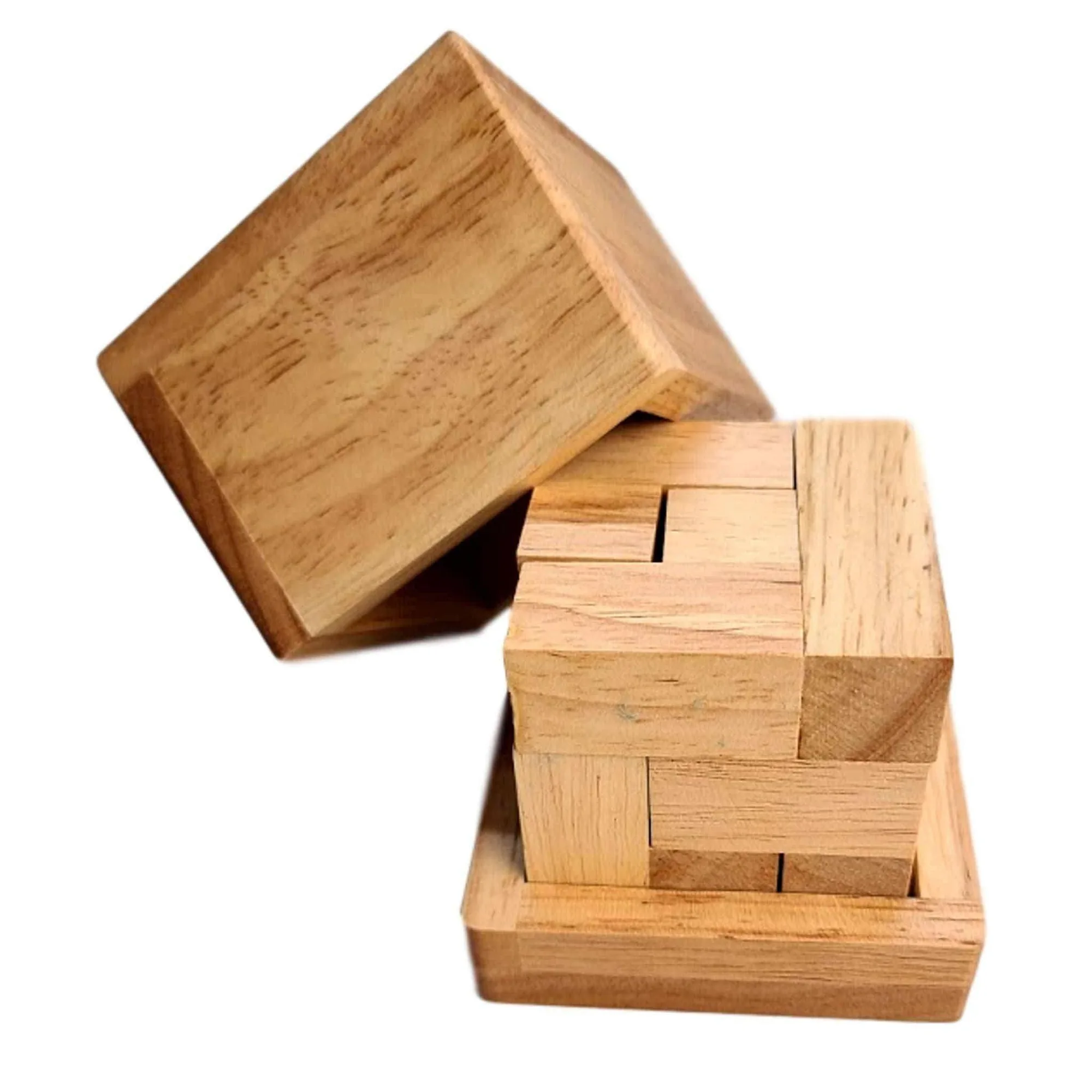
Soma Cube | Premium 7 Piece Puzzle for Kids