Quick answer
Stackable open front storage bins let you see contents at a glance and access items without unstacking. Use them on shelves, louvered panels, or hanging rails to turn wasted vertical space into tidy, visible storage.
Why open front bins beat closed boxes
Closed bins hide clutter but also hide what you need. Open front bins let you spot the right item immediately and pull it out without lifting the bin above it. That makes them ideal for frequently used supplies like craft tools, hardware, or pantry snacks.
Stackable open front bins also work on hanging rails or louvered panels, so you can mount them on a wall or inside a cabinet door. The trade-off: they don't keep dust out as well as sealed containers, so avoid them for long-term storage of sensitive items.
Choosing the right size for your space
IRIS USA's Stackable Open Front Shelf Bin Storage Organizer comes in multiple sizes. Measure your shelf depth and height before buying. A bin that's too deep will stick out; one that's too tall wastes vertical room.
If you plan to hang bins on a louvered panel or rail, check that the built-in lip on the back matches your panel's slot spacing. The lip is designed for standard louvered panels and hanging rails, but not all aftermarket systems are compatible.
How to organize with stackable open front bins
- Measure your space: Measure the width, depth, and height of your shelf or the area where you plan to hang bins. Write down the dimensions so you can pick bin sizes that fit without overhang or wasted gaps. A common mistake is buying bins that are too deep, which stick out and create a tripping hazard or look messy.
- Sort items by frequency of use: Group your items into three piles: daily use, weekly use, and occasional use. Place daily-use items in the most accessible bins (waist to eye level on a shelf, or the lowest row on a hanging panel). If you store rarely used items in open front bins, dust will collect on them. Use closed containers for seasonal or long-term storage.
- Stack or hang the bins: For shelves, stack bins directly on top of each other, aligning the front edges. For hanging, slide the built-in lip on the back of each bin onto a louvered panel or hanging rail. Make sure each bin clicks or locks into place so it doesn't tilt forward. Overloading a hanging bin with heavy metal parts can cause the lip to slip off the rail. Keep the weight moderate and check the manufacturer's load guidelines.
- Label each bin (optional but recommended): Use a label maker or adhesive labels on the front edge of each bin. Because the front is open, you can also place a small card inside that faces outward. Labeling saves time when you're searching for a specific item. Don't rely on memory alone — once you have more than a few bins, it's easy to forget which bin holds what.
- Maintain the system: Every few months, pull out each bin and wipe it down with a damp cloth. Check that the stacking lips or hanging rails are still secure. Return items to their designated bin after use. If you find yourself constantly moving items between bins, your categories may need adjusting. Re-sort and re-label as your needs change.
Product spotlight
-
Stackable Open Front Shelf Bin Storage Organizer: Made in USA with global materials from high-quality, BPA-free plastic. The built-in lip on the back allows the bin to suspend from hanging rails or louvered panels. You can mount these bins on a wall or inside a cabinet to reclaim vertical space, and the BPA-free plastic is safe for storing food items or children's craft supplies.
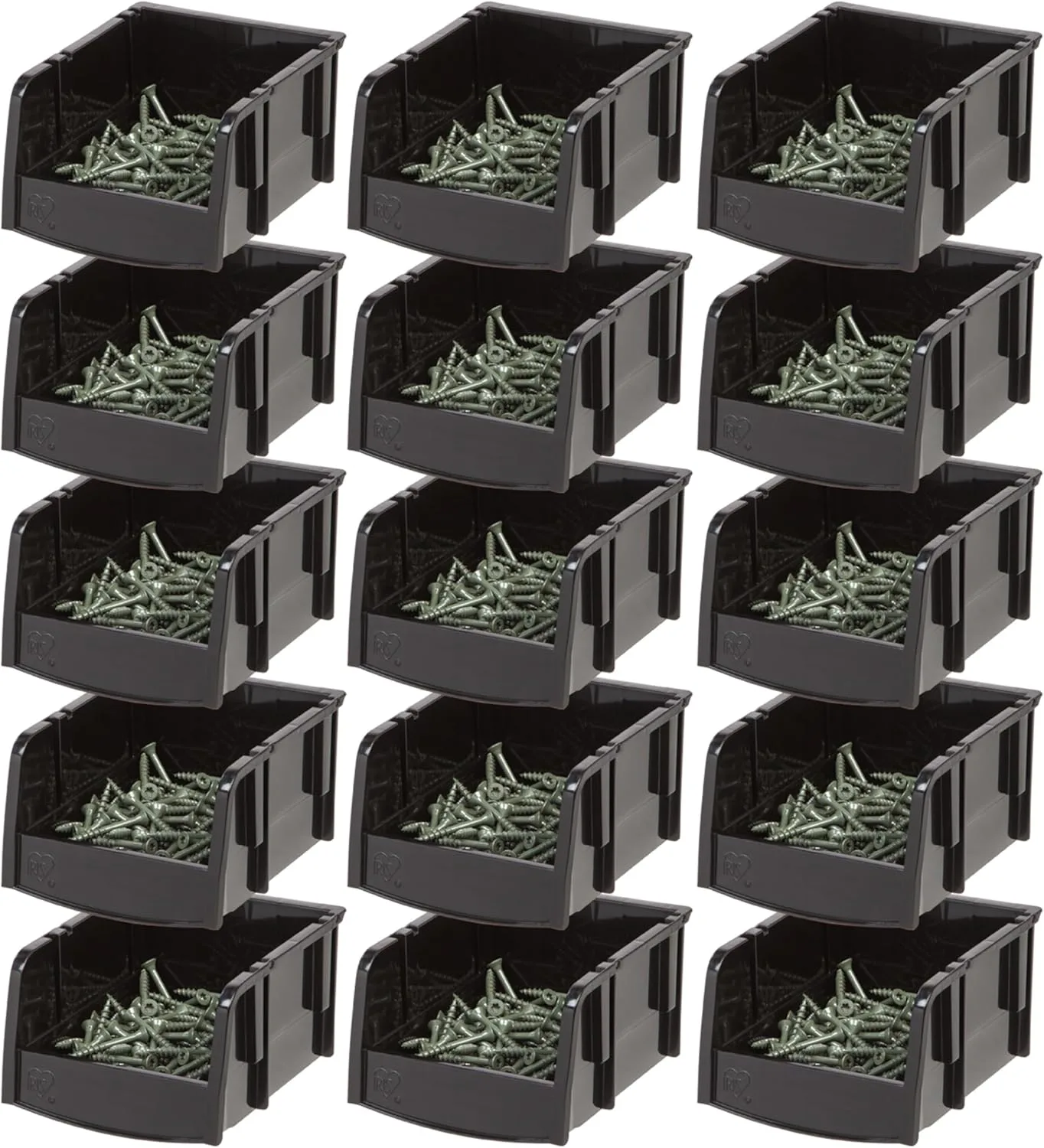
Stackable Open Front Shelf Bin Storage Organizer