Quick answer
Wash stainless steel jewelry with lukewarm water, a drop of mild soap, and your fingertips, then dry it fully with a soft cloth. Do this every one to two weeks for pieces you wear daily. Stainless steel resists tarnishing, but it still collects skin oils, sunscreen, and soap film that make it look dull. If a piece is scratched, peeling, or bent, cleaning will not fix it — that is a finish or construction problem, not a dirt problem.
Stainless steel has a reputation for being the low-maintenance choice, and mostly that reputation is earned. It resists rust and tarnishing far better than brass or plated base metals, which is why so many everyday pieces — from hoops to anklets — are built on it. But "low maintenance" is not the same as "no maintenance." The dull, slightly gray film that shows up after a few weeks of daily wear is usually not tarnish at all. It is a buildup of skin oils, lotion, sunscreen, and soap residue sitting on the surface.
That distinction matters, because it changes what you should do. Most stainless steel jewelry problems have a specific cause and a specific fix, and a few of them cannot be fixed at all — only avoided next time. Below, the most common complaints are broken down by symptom, cause, and corrective action, so you can tell the difference before you scrub a finish off a piece you love.
Why stainless steel still looks dull (and what actually causes it)
Stainless steel is an alloy with chromium that forms a thin, self-renewing oxide layer on the surface. That layer is what blocks the reactions that cause tarnishing in other metals, so a stainless steel piece left in a drawer stays bright. Worn against skin, though, it picks up a film. Body oils, moisturizer, sunscreen, hair products, and soap scum all bond to the surface and scatter light, which reads as dullness or a faint yellow-gray cast.
This is why the fix is so often just a proper wash. It is also why harsh polishing compounds are the wrong tool: they can dull a mirror finish or wear through a thin gold layer. For pieces with an 18k gold finish over stainless steel, the gold layer is the part that needs protecting, and abrasive scrubbing is the fastest way to thin it.
- Wipe jewelry with a soft cloth after wearing it, before oils and sunscreen have time to set.
- Put jewelry on last when getting ready and take it off first at night.
- Keep pieces separate in a pouch or lined box so chains do not rub against each other.
How to clean stainless steel jewelry safely
Fill a small bowl with lukewarm water and add one drop of mild dish soap or baby shampoo. Let the piece sit for a minute or two, then work the surface gently with your fingertips. For chain links and the gaps around a pendant, use a soft-bristled baby toothbrush and light pressure — no scrubbing back and forth. Rinse under lukewarm running water, then dry immediately with a lint-free cloth. Air drying leaves water spots, especially on polished surfaces.
Skip vinegar, bleach, chlorine, ammonia-based cleaners, and ultrasonic machines on gold-finished pieces. They are unnecessary for routine stainless steel jewelry cleaning and can attack the finish or any adhesive-set stones. If a piece has a pearl, keep the pearl out of the water entirely and clean only the metal around it with a barely damp cloth.
- Once a week for daily-wear pieces; once a month for occasional pieces.
- Dry fully before storing — moisture left in a closed box is the real enemy.
- Never soak a piece with a pearl, glued setting, or leather cord.
Stainless steel jewelry maintenance between cleanings
The habits that keep stainless steel looking new are mostly about exposure, not cleaning. Chlorinated pools and hot tubs are harsh on any jewelry finish, so rinse and dry a piece promptly if it goes in. Perfume, hairspray, and sunscreen are best applied before jewelry goes on, not after. When you take a piece off, give it a five-second wipe with the cloth you keep with your jewelry — that single habit prevents most of the buildup that leads to a full cleaning session.
Storage matters more than people expect. A tangled chain gets pulled and stretched, and clasps get bent. Hanging necklaces on separate hooks or laying them flat in a divided tray keeps them intact. Anklets and bracelets take the most abuse because they sit against skin and clothing all day, so they benefit most from a quick rinse at the end of the week.
- Store in a dry place, not a bathroom where humidity swings daily.
- Fasten clasps before storing to stop chains from knotting.
- Rotate pieces rather than wearing the same one every single day.
When cleaning will not help
Some problems look like dirt but are not. If the surface feels rough or flaky, the gold finish is wearing or peeling — cleaning cannot restore it, and polishing will make it worse. If a chain link is stretched or a clasp no longer clicks, that is a structural issue. If a stone is loose, stop wearing the piece and have it looked at rather than cleaning around it. And if a piece has turned dark in a way that will not wipe off, it is likely a base-metal item that was never stainless steel to begin with.
The honest tradeoff: stainless steel is durable and water-resistant, but a gold finish over it is not permanent. It will eventually wear at the points that rub most — the clasp, the chain edges, the back of a pendant. Treating the finish gently is what extends its life, and knowing when to stop cleaning and accept a piece's limits saves you from damaging it further.
- Rough or flaking surface: finish wear, not dirt.
- Stretched links or a bent clasp: structural, not cleanable.
- Dark spots that will not wipe off: likely not stainless steel.
Symptom, cause, and what to do
- Dull gray or yellow film after a week of wear: Skin oils, lotion, and sunscreen have bonded to the surface. Wash with lukewarm water, one drop of mild soap, and fingertips, then dry fully with a soft cloth. If it brightens, it was buildup. Repeat weekly to keep it from returning.
- Rough, flaky, or patchy surface: The gold finish is wearing at friction points like the clasp and chain edges. Cleaning and polishing will accelerate the damage rather than fix it. Stop cleaning aggressively. Accept the wear or replace the piece — this is a finish limit, not a care mistake.
- Dark spots that will not wipe off: The piece is likely not stainless steel, or a non-stainless component is reacting. Confirm the material before spending more time on it. If it is not stainless steel, switch to care suited to that metal instead.
- Stretched links, bent clasp, or a loose stone: This is structural, not cosmetic. Pulling or cleaning around it can make it worse. Stop wearing the piece and have it repaired or set aside.
What this looks like in practice
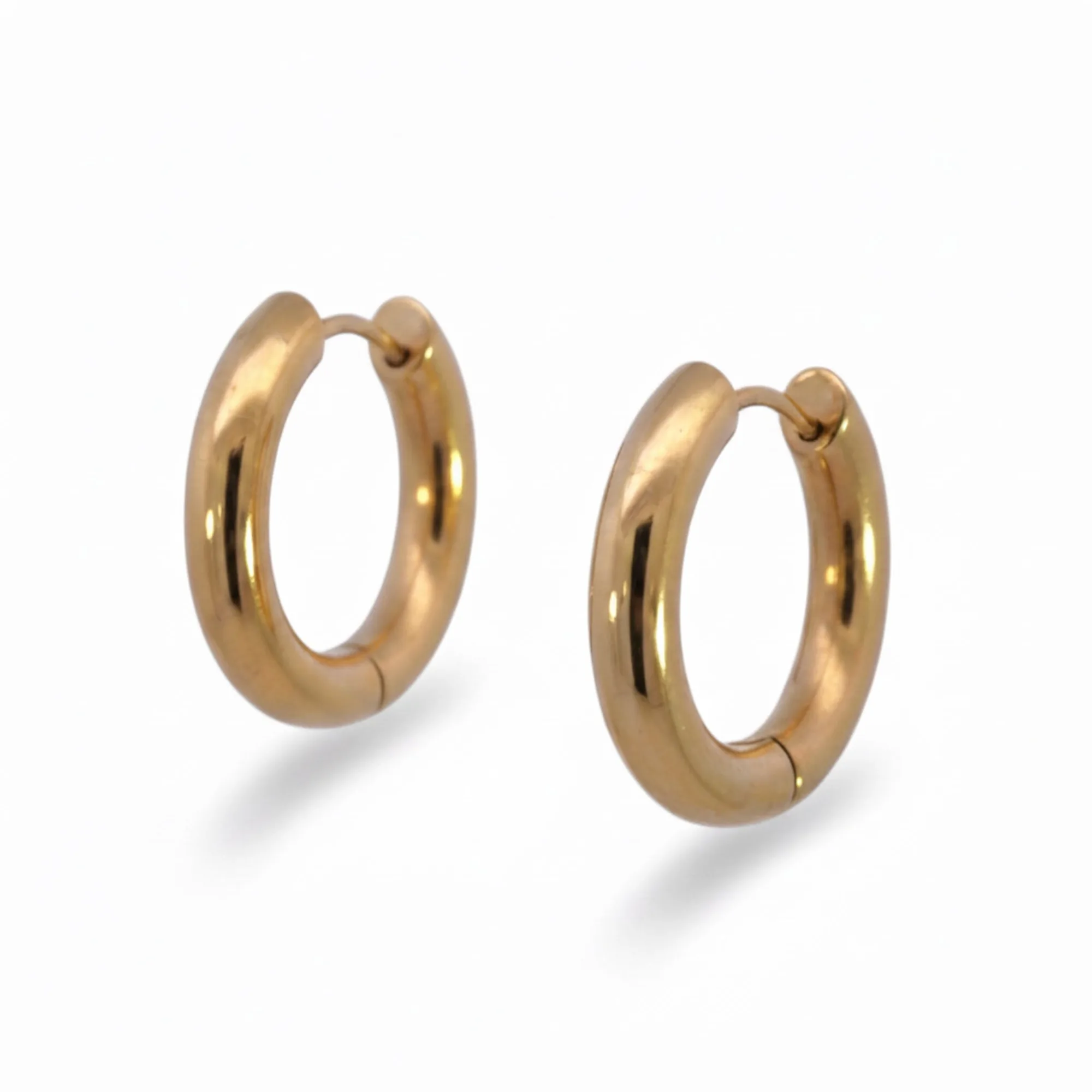
- Noma Hoops: Crafted in stainless steel with an 18k gold finish, they're water-resistant, hypoallergenic, and designed to hold their shine through everyday wear. Water-resistant means a quick lukewarm rinse is safe, but the 18k gold finish is the layer to protect — so keep the cleaning gentle and skip abrasives.
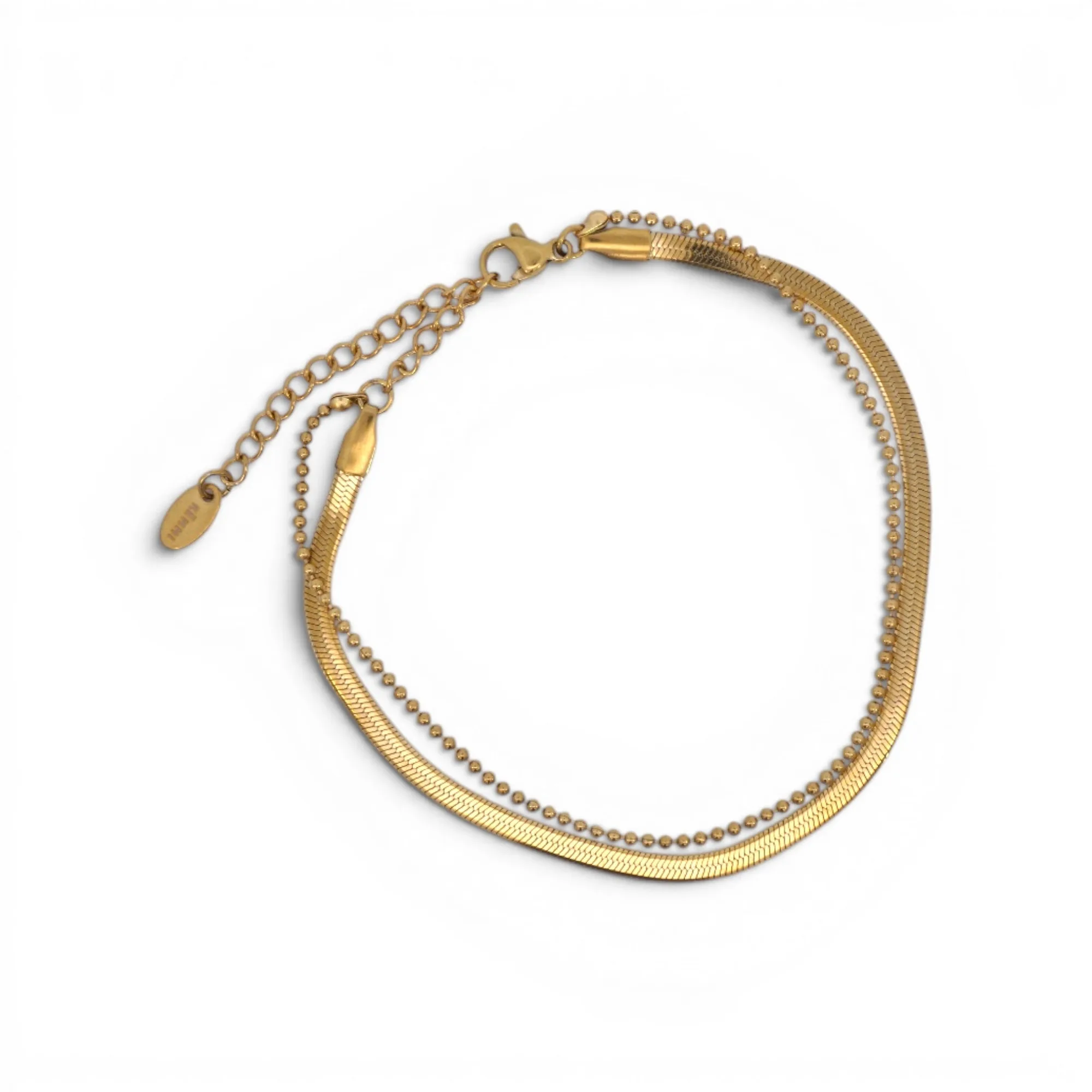
- Sienna Anklet: Crafted in stainless steel with an 18k gold finish, this gold anklet is water-resistant, hypoallergenic, and designed for daily wear without losing its shine. Anklets sit against skin and shoes all day, so they collect the most residue. A weekly rinse and full dry keeps the double-chain silhouette from looking flat.
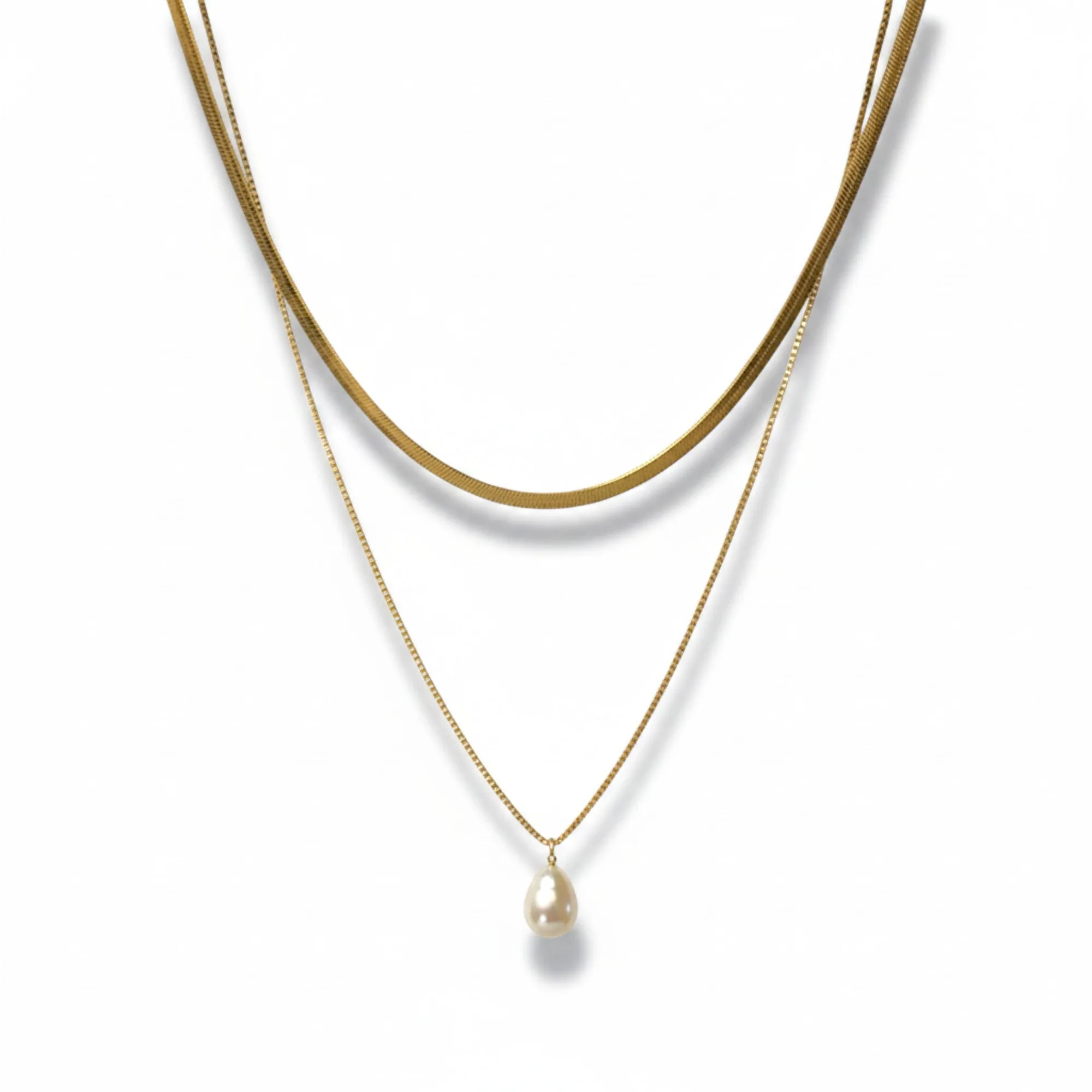
- Dual Flow Pearl Necklace: This layered necklace combines a smooth snake chain with a finer box chain, finished with a luminous pearl pendant. The pearl is the limiting factor here: clean the metal with a damp cloth, but keep the pearl out of water and away from soap entirely.
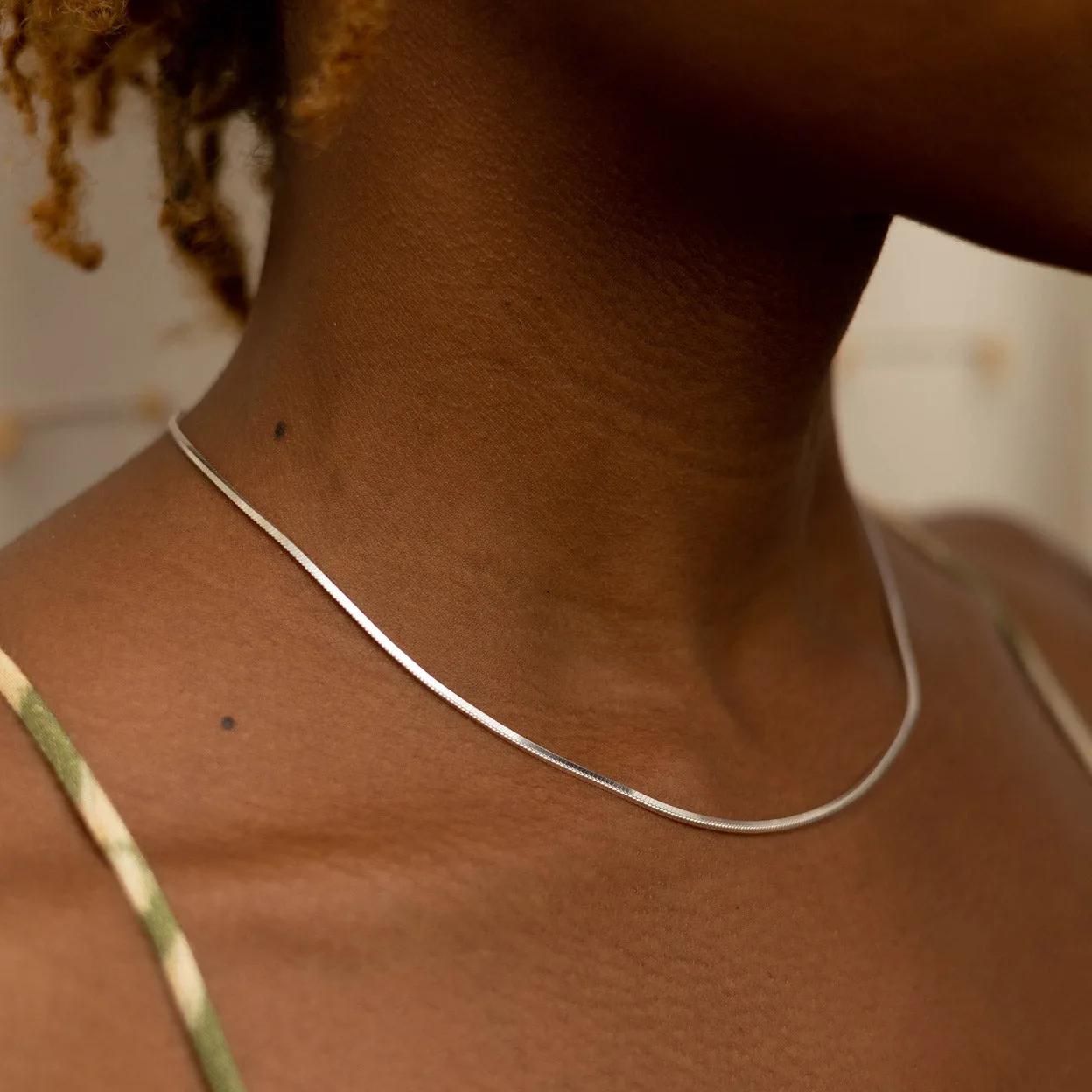
- Square Snake Chain Necklace: Jewelry features 14k Gold Vermeil or Sterling silver, chain length 40cm or 50cm, chain width 1.5mm. This one is not stainless steel, so it needs different care — gold vermeil and sterling silver are more prone to tarnishing and should be kept dry and stored in an anti-tarnish pouch.
Stainless steel jewelry care comes down to three habits: wipe after wear, wash gently every week or two, and dry completely before storing. That routine protects both the steel and any gold finish on top of it. When a piece stops responding to cleaning, believe what you see — it is telling you about a finish or construction limit, not a stain you have not scrubbed hard enough.