Quick answer
If you value temperature retention, durability, and everyday versatility over the traditional stemmed presentation, the Corkcicle Stemless Flute is the better choice. For formal occasions where the classic flute shape and stem are part of the experience, stick with a traditional champagne flute.
Why stemless changes the sparkling wine experience
A traditional champagne flute uses a long stem to keep your hand away from the bowl, preventing body heat from warming the wine. The narrow bowl preserves carbonation and concentrates the delicate aromas. It's a design that has worked for centuries.
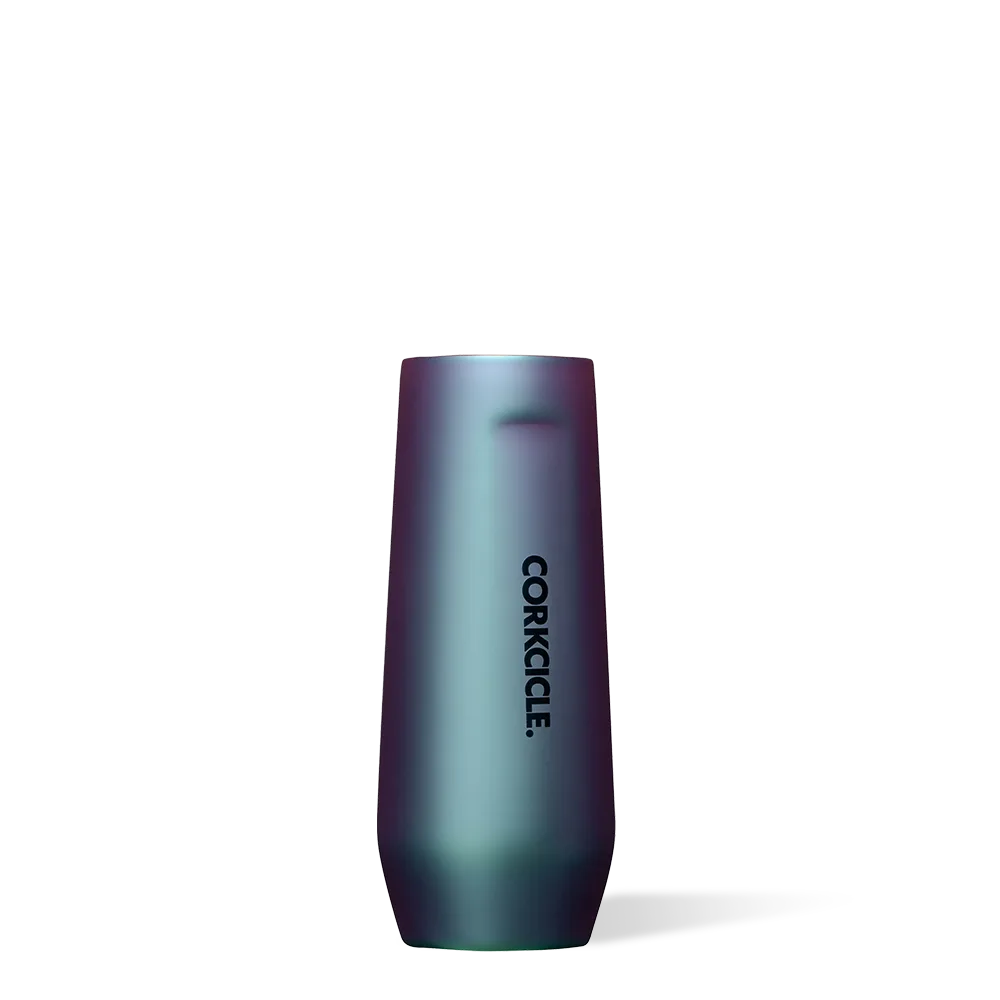
The Corkcicle Stemless Flute rethinks that design. By removing the stem, you gain a more stable, easy-to-hold glass that fits naturally in your hand. The triple-insulated walls keep your wine cold even when you hold the bowl—something a standard glass cannot do. The slip-proof silicone base adds security on any surface.
The trade-off is that the stemless shape changes how you hold and present the glass. Some wine enthusiasts miss the visual elegance of a stemmed flute, and the shorter profile may not suit every formal table setting.
Key differences at a glance
The most obvious difference is the stem. A traditional flute relies on the stem to keep heat away; the Corkcicle Stemless Flute uses triple insulation to achieve the same goal. Both keep your wine cold, but they do it in opposite ways.
The Stemless Flute holds 7 oz, which is slightly less than many traditional flutes (typically 8–10 oz). This smaller capacity is intentional—it encourages smaller, more frequent pours to maintain carbonation. The flat, easy-grip sides make the glass feel more secure, especially outdoors or in casual settings.
One practical limitation: the Stemless Flute does not come with a lid. If you want to keep your drink covered, you'll need to buy one separately or choose a different vessel.
When to choose each glass
The Corkcicle Stemless Flute shines in situations where a traditional glass might break or warm up too quickly: picnics, outdoor wine tastings, poolside, or busy kitchens. The silicone base and triple insulation make it nearly indestructible in daily use.
A traditional champagne flute remains the better choice for formal dinners, weddings, or any occasion where the visual ritual of pouring and holding a stemmed glass is part of the experience. It also pairs better with certain wine-tasting practices that rely on the stem to avoid warming the wine.
Stemless Flute vs Champagne Flute: Trade-offs
- Temperature control: Traditional flute: stem keeps hand heat away. Corkcicle Stemless Flute: triple insulation keeps wine cold even when held by the bowl. Both work, but the stemless approach is more forgiving if you tend to hold the glass by the bowl.
- Stability and durability: Traditional flute: thin stem is fragile and easy to tip over. Corkcicle Stemless Flute: wide silicone base is slip-proof and nearly unbreakable. Choose stemless for outdoor, travel, or high-traffic use.
- Presentation and tradition: Traditional flute: tall, elegant shape is the standard for formal sparkling wine service. Corkcicle Stemless Flute: shorter, modern look that some find less ceremonial. For formal occasions, the traditional flute still wins on visual appeal.
- Capacity and use: Traditional flute: typically 8–10 oz. Corkcicle Stemless Flute: 7 oz, designed for smaller pours to preserve fizz. If you prefer a full pour, the smaller stemless capacity may feel limiting.
Product facts
-
Stemless Flute: Triple-insulated for the perfect chill, slip-proof silicone bottom, easy-grip flat sides, BPA free, holds 7 oz. The triple insulation keeps sparkling wine cold even when you hold the bowl, so you don't need a stem to maintain temperature.
Stemless Flute
Which glass is right for you?
Best for
- Everyday sparkling wine drinkers who want a durable, insulated glass
- Outdoor entertaining, picnics, and poolside use
- Anyone who dislikes fragile stems or worries about spills
Not ideal for
- Formal dinners or weddings where traditional stemware is expected
- Wine enthusiasts who prefer the classic tasting ritual of holding a stem