Quick answer
Buy a step-up ring when you want to mount a larger filter on a smaller lens thread; buy a step-down ring when a smaller filter must fit a larger lens thread. For most photographers, a multi-size set such as the K&F Concept 11pcs Metal Stepping Down Rings Set is the most practical starting point because it covers several thread combinations. Match the ring numbers to the two thread sizes you are joining, and expect a step-down ring to introduce some vignetting on wide lenses.
How step-up and step-down rings work
A step-up ring has a smaller male thread that screws into your lens and a larger female thread that accepts a filter. A step-down ring does the opposite: its larger male thread fits the lens, and its smaller female thread holds a smaller filter. The numbers on the ring tell you the direction, for example 52–77mm means 52mm at the lens side and 77mm at the filter side.
This matters because filters are sold in fixed thread sizes. If your lens is 58mm and your favorite filter is 77mm, a 58–77mm step-up ring bridges the gap without buying a second filter. If your lens is 77mm and you only own a 58mm filter, a 77–58mm step-down ring lets you use it, but the smaller filter may not cover the full frame.
Read your lens thread size before you buy
The thread size is usually printed on the front of the lens barrel or inside the lens cap, often next to a diameter symbol. If you cannot find it, check the lens manual or the manufacturer's specification page. Do not measure the outside of the barrel; measure the filter thread itself or look up the exact model.
Once you know the lens thread, decide which filter thread you want to standardize on. Many photographers pick one common size, such as 77mm or 82mm, and use step-up rings so every lens can share the same filters. That approach reduces duplicates and makes a filter pouch easier to manage.
Step-up vs step-down: which direction to choose
Choose step-up rings when you want to avoid vignetting and you are willing to buy larger filters. A larger filter is more expensive, but it covers more lenses and rarely causes dark corners. Choose step-down rings when you already own a smaller filter and need to use it on a larger lens, or when you want a compact setup for casual shooting.
The trade-off is coverage. A step-down ring places a smaller filter in front of a larger lens, so the filter's image circle may not reach the corners, especially at wide focal lengths. If you shoot wide-angle landscapes or architecture, step-up is usually the safer direction.
Match the ring to the filter you actually use
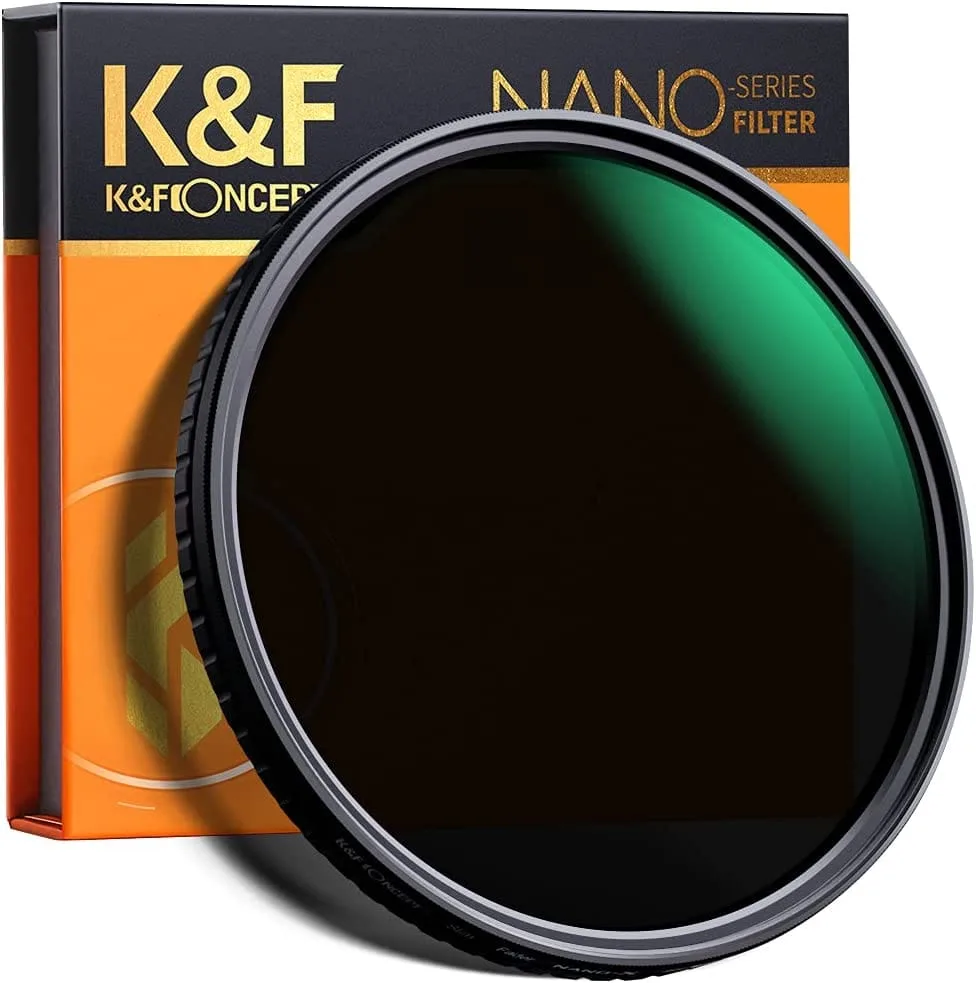
A variable neutral density filter changes density as you rotate it, so the ring must hold it securely without binding. The K&F Concept 58mm Lens Filter Variable Neutral Density ND3-ND1000 is a 58mm-thread filter, so it needs a 58mm female thread on the ring side. If your lens is 52mm, a 52–58mm step-up ring is the correct match; if your lens is 62mm, a 62–58mm step-down ring is the correct match.
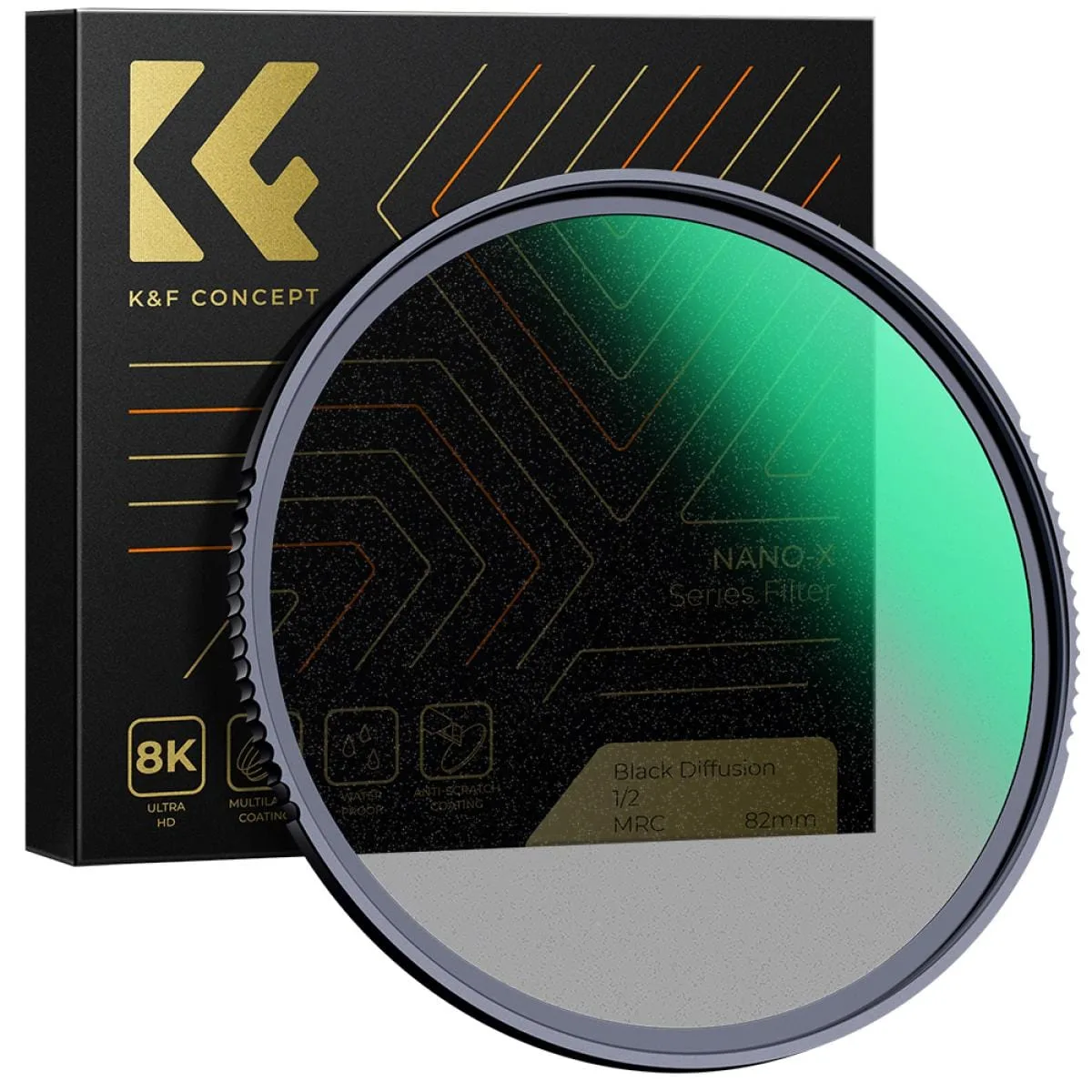
Protection and effect filters follow the same rule. The K&F Concept 105mm MCUV Protection Filter with 28 Multi-Layer Coatings uses a 105mm thread, which is a large size best paired with step-up rings from smaller lenses rather than step-down rings from larger ones. The K&F Concept 82mm Nano-X Black Mist Filter 1/2 uses an 82mm thread and behaves similarly: it is a good candidate for a step-up ring if your lens thread is smaller than 82mm.
Build a set instead of buying one ring at a time
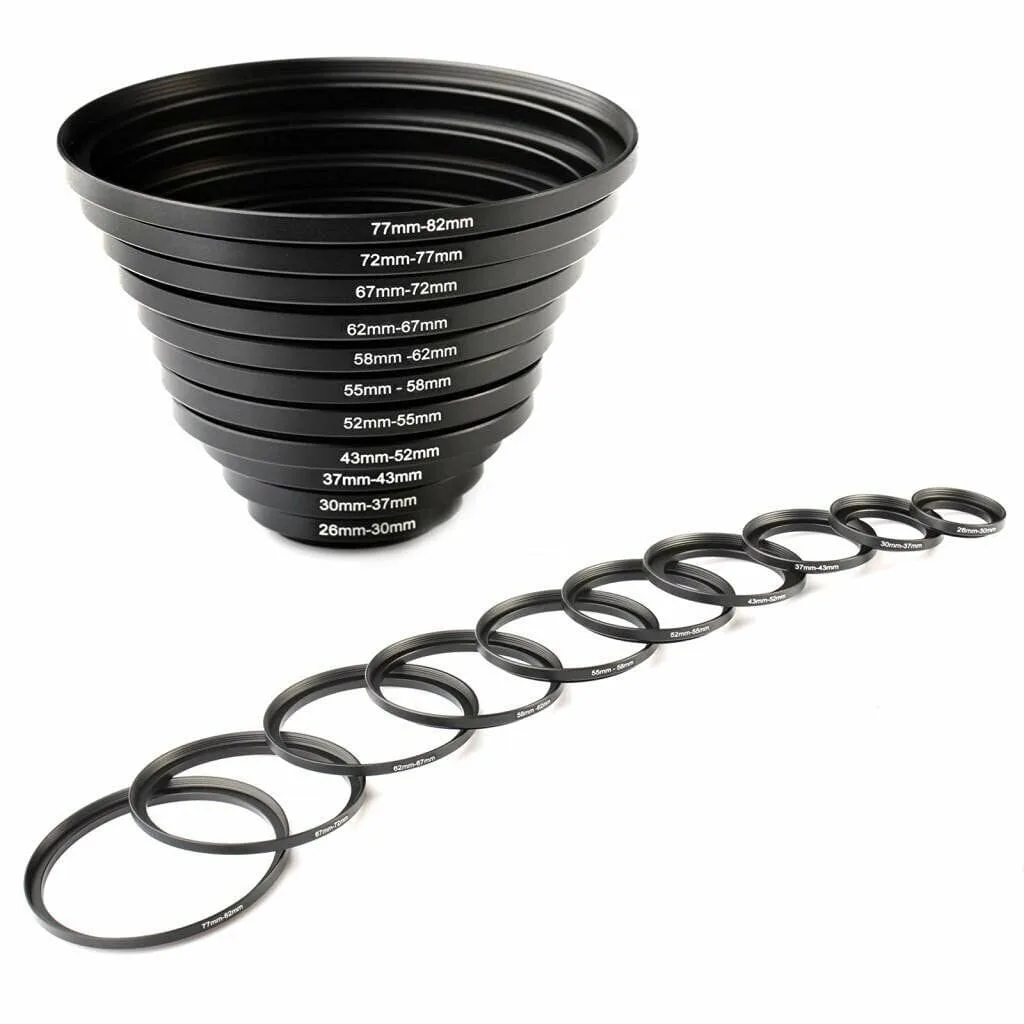
Single rings are useful when you have one specific pairing, but a set covers more combinations and costs less per ring. The K&F Concept 11pcs Metal Stepping Down Rings Set is a multi-ring kit, which suits photographers who own several lenses with different thread sizes or who want to adapt filters across a mixed kit.
When comparing sets, check which thread sizes are included and whether the rings are metal. Metal rings generally resist cross-threading better than plastic ones, but they add a little weight. Also confirm the set includes the direction you need, because a step-down set and a step-up set are not interchangeable.
Decision rules for choosing a ring
- Rule 1: Match the numbers in the right order: The first number is the lens thread and the second is the filter thread. A 52–77mm ring fits a 52mm lens and a 77mm filter. Reversing the order gives you a step-down ring instead. Write down both thread sizes before ordering.
- Rule 2: Prefer step-up for wide lenses: Step-up rings place a larger filter in front of the lens, which reduces the chance of dark corners. Step-down rings can vignette on wide focal lengths because the smaller filter may not cover the full frame. If you shoot wide, choose step-up.
- Rule 3: Buy a set when you own several lenses: A set such as the K&F Concept 11pcs Metal Stepping Down Rings Set is more economical than single rings if you regularly swap filters between lenses with different thread sizes. Count your lens thread sizes first, then check the set covers them.
- Rule 4: Check the filter thread, not the lens cap: The filter thread is the size printed on the lens barrel or in the manual. Lens caps and hoods can use different sizes, so do not rely on them for measurement. Confirm the exact thread size from the lens specification.
Product facts to check before buying
- K&F Concept 11pcs Metal Stepping Down Rings Set: K&F Concept 11pcs Metal Stepping Down Rings Set A multi-ring set covers several thread combinations, so you can adapt filters across more than one lens without buying individual rings.
- K&F Concept 58mm Lens Filter Variable Neutral Density ND3-ND1000: K&F Concept 58mm Lens Filter Variable Neutral Density ND3-ND1000 This filter has a 58mm thread, so the ring must present a 58mm female thread to hold it securely.
- K&F Concept 82mm Nano-X Black Mist Filter 1/2: K&F Concept 82mm Nano-X Black Mist Filter 1/2 An 82mm thread is a good candidate for step-up rings from smaller lenses, which helps avoid corner shading.
- K&F Concept 105mm MCUV Protection Filter with 28 Multi-Layer Coatings: K&F Concept 105mm MCUV Protection Filter with 28 Multi-Layer Coatings A 105mm thread is large, so it is usually paired with step-up rings from smaller lenses rather than step-down rings.
Who should buy which ring
Best for
- Photographers who own several lenses with different thread sizes and want to share one filter
- Video shooters who need to mount a variable ND on a lens with a smaller thread
- Buyers who want a multi-size kit such as the K&F Concept 11pcs Metal Stepping Down Rings Set
Not for
- Photographers who only own one lens and one filter with matching threads
- Wide-angle shooters who need maximum corner coverage and should use a native-size filter instead
- Buyers who need a specific single ring size that is not included in a set