Quick answer
Most swimsuits are designed to be worn without underwear, and that is the cleanest option for fit and hygiene. If you want extra coverage, a liner, or protection on heavy days, choose a thin, stretch lace thong in a color close to your skin or your swimsuit. Skip cotton briefs and anything with seams or elastic bands, because those are what create visible lines and chafing under wet fabric.
Why your usual underwear shows through a swimsuit
Swim fabric is thin, stretchy, and often light-colored, so it behaves differently from denim or knit dresses. A standard brief adds a waistband, leg elastic, and a seam line, and those three edges are what read as bumps under a wet suit. The problem is not the underwear itself, it is the structure.
There is also a fit issue. Swimsuits are cut to sit against the body with no extra layer, so adding a full brief can push the suit out of place at the hips and waist. A low-profile layer, or no layer at all, keeps the suit sitting where it was designed to sit.
When a thong under a swimsuit actually makes sense
There are legitimate reasons to layer. You may want a barrier on a rental or shared swimsuit, extra coverage under a high-cut leg, or backup on a heavy period day with a swim-safe product. In those cases, a thong is the lowest-profile option because it removes the rear seam and the leg elastic that cause the worst lines.
Look for stretch lace rather than rigid cotton. Lace moves with the body and dries faster than thick cotton, which stays damp and can bunch when you sit or swim. A style that stretches to follow your shape will stay in place better than a fixed-cut brief.
Color and cut choices that keep lines invisible
Match the layer to what is underneath, not to the swimsuit. If your suit is light or slightly sheer when wet, a skin-tone or nude layer disappears far better than white or black. White underwear under a white swimsuit is the most common mistake, because the contrast shows through the fabric.
For cut, a high-waist option can work under a high-waisted bikini bottom or a one-piece, because the waistband sits under the suit's own waistband instead of cutting across the middle. For low-rise and high-cut suits, a standard thong sits lower and stays hidden.
Hygiene, drying, and the honest tradeoffs
Layering under swimwear means one more thing to dry. Lace dries faster than cotton but still holds moisture, so change out of a wet layer as soon as you can and rinse it with cool water. Leaving a damp layer against the skin for hours is the main comfort downside of this approach.
If you are swimming in chlorinated or salt water, the layer will pick up the same residue as your suit. A quick cool rinse after each wear keeps the lace from stiffening. If that upkeep sounds like too much, wearing the suit alone is the simpler and often better choice.
Diagnose your swimwear layering problem
- Visible lines across the hips or rear: The waistband and leg elastic of a standard brief are pressing into thin, wet swim fabric. Switch to a thong with no rear seam, or go without a layer. If lines persist after switching to a thong, the suit is likely cut too tight, not the underwear.
- A dark or light shape showing through the suit: This is a color-contrast problem, not a fit problem. Match the layer to your skin tone rather than the swimsuit color, especially under pale or sheer-when-wet fabric. Nude or skin-tone beats white or black under almost every light suit.
- Chafing, bunching, or damp discomfort: Thick cotton holds water and bunches when you move. A lightweight stretch lace layer dries faster and moves with the body, but it still needs a cool rinse and a change after swimming. If you cannot change or rinse soon after, wear the swimsuit alone.
- The layer keeps riding up or shifting: The cut is fighting the swimsuit's cut. A high-waist layer belongs under a high-waisted bottom or one-piece; a standard thong belongs under low-rise and high-cut suits. Match the rise of the layer to the rise of the suit, or stop layering and let the suit do the work.
Lace Laboratory pieces that work as a swim layer
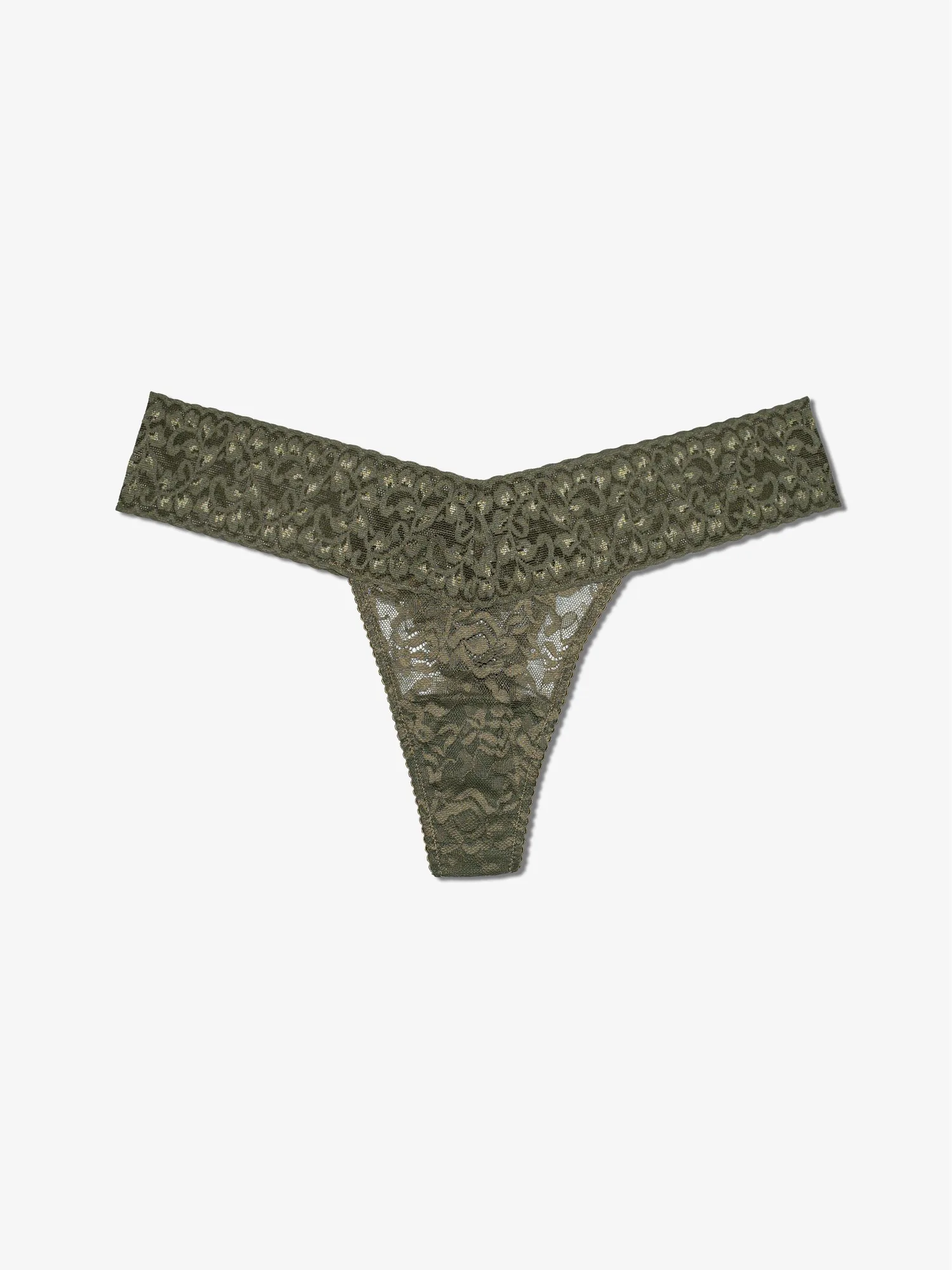
- Lace Thong - Forest Muse: Signature stretch lace engineered to stretch up to 150% while maintaining support, with a smooth, minimal-show finish under clothing. The low-profile finish and high stretch are exactly what keep a layer from printing through a wet swimsuit, and the lace moves with you instead of bunching when you sit or swim.
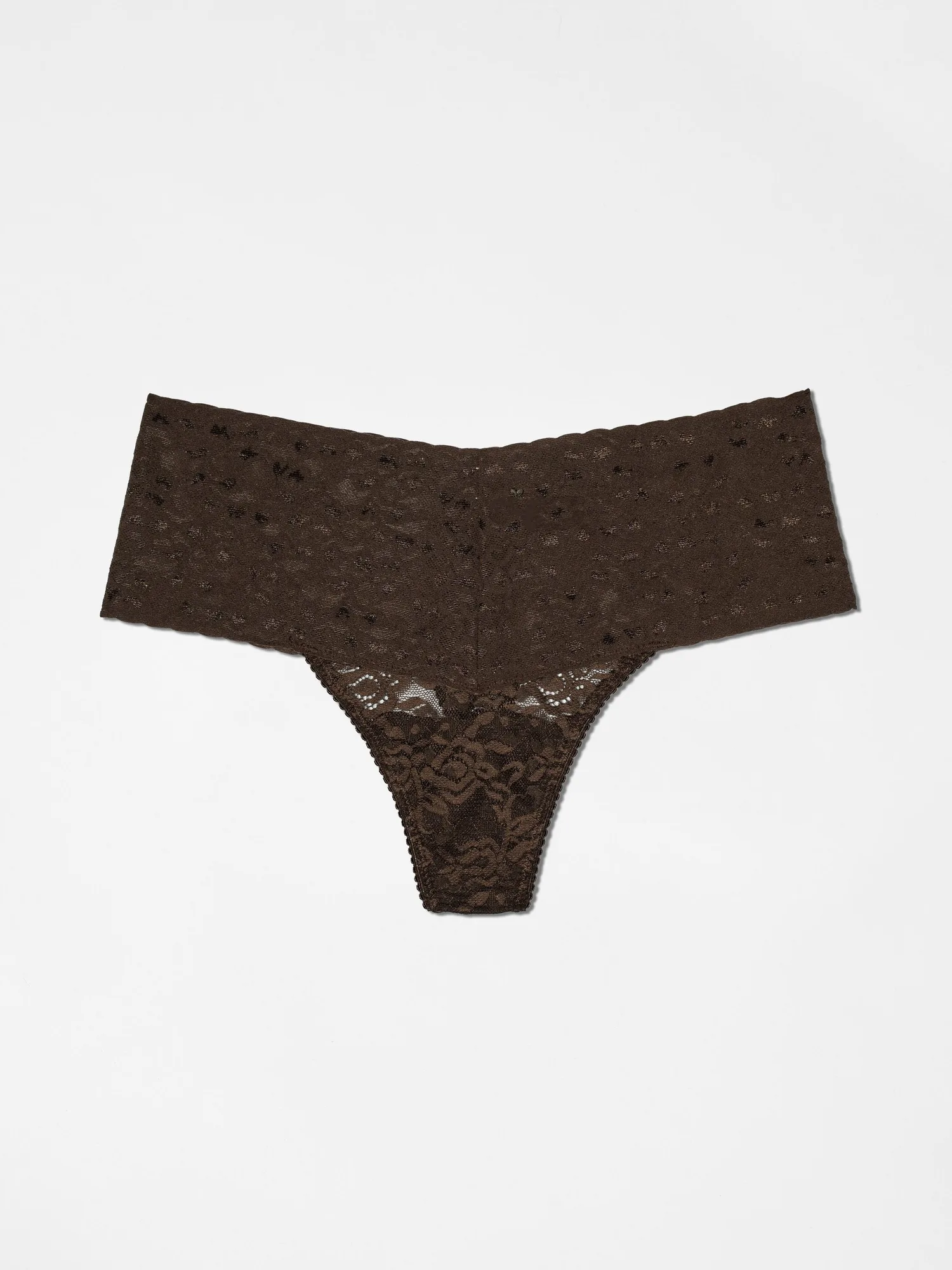
- High Waist Thong - Umber: Super high-waisted style in buttery soft lace that stretches up to 150%, designed to create a smooth silhouette and shape after you rather than the other way around. A high waistband can sit under a high-waisted bikini bottom or one-piece, so the layer stays hidden instead of cutting across the middle of your suit.
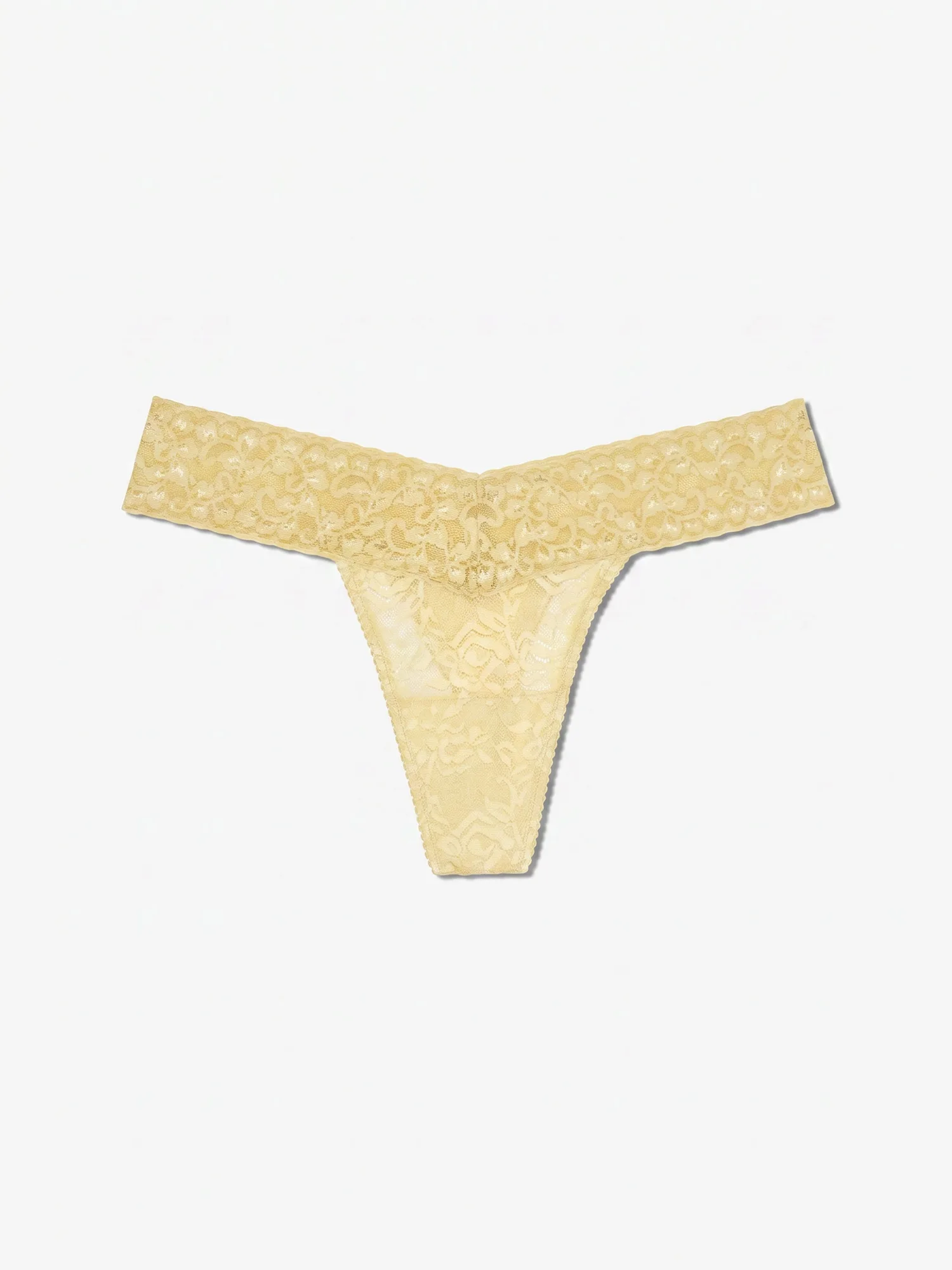
- Lace Thong - Lemon Sorbet: Lightweight stretch lace with a smooth, minimal-show finish, designed for all-day wear. A lighter tone is easier to match to skin under pale or slightly sheer swim fabric, which is where contrast shows most.