Quick answer
Anchor your swing set with ground stakes if it can tip or slide, keep the area under and around it clear, and check hardware, swing connections, and slide mounts before each play season. Trapeze bars are for kids who can hold their own weight and should be used one at a time with an adult nearby. Slides are safest when kids go down feet-first, one at a time, and the exit is clear.
You want the backyard to be the fun, worry-free part of the day. These are the swing set safety questions parents actually ask, answered in short, practical terms so you can check your own setup without wading through a manual.
Each answer stands on its own, so jump to the question that matches your playset. When a detail depends on your specific model, the answer tells you what to look for instead of guessing.
Ground stakes and anchoring: what you need to know
Do you need ground stakes? If your swing set can tip, slide, or lift during use, yes. Anchoring keeps the frame from moving when kids swing high or climb on one side. Most playsets are designed to be anchored, and the right method depends on your ground: grass, dirt, or a hard surface. Follow the manufacturer's anchoring instructions for your model rather than improvising.
What about safety surfacing? Ground stakes hold the set down, but they do not cushion a fall. The area under and around the playset should have a shock-absorbing surface such as wood mulch, rubber tiles, or engineered wood fiber, installed to the depth your playset manual recommends. Loose-fill surfaces need raking and topping up over time.
- Check anchors at the start of each season and after heavy rain or frost.
- Keep the safety zone clear of tree roots, rocks, and toys.
- If you move the playset, re-anchor it before the kids use it again.
Trapeze bar safety: who can use it and how
A trapeze bar is a swinging bar kids hold while they pump their legs or hang. It is not a gymnastics bar and it is not designed for flips, spins, or multiple kids at once. Use it one child at a time, with an adult close enough to steady the bar if needed. Kids should be able to grip the bar and support their own weight before using it without help.
Before each use, check the rope or chain, the bar itself, and the connection point to the swing beam. Look for fraying, cracks, or loose hardware. If the bar swings too close to a slide, a deck post, or another swing, adjust the spacing or remove the bar until you can create safe clearance.
- No standing on the bar and no hanging upside down by the knees.
- Teach kids to let go and step back only after the bar stops moving.
- Store or remove the bar if younger children use the set unsupervised.
Swing set slide safety: rules that prevent most injuries
Most slide injuries happen at the top, the exit, or when two kids go down together. The rule is simple: one child at a time, feet-first, sitting up. Keep the top of the slide clear so kids are not pushed from behind, and keep the bottom clear so they are not landed on. Metal slides can get hot in direct sun, so check the surface with your hand before younger kids use it.
Check the slide mounting hardware and the condition of the slide itself at the start of the season. Look for cracks, loose bolts, or sharp edges. If a slide is cracked or the mounting is loose, stop using it until it is repaired or replaced. Slides are designed for a specific deck height, so only use a slide that matches your playset.
- No going down head-first, on your stomach, or on a lap.
- Keep the slide exit zone free of toys, bikes, and other kids.
- For younger children, spot them at the top and the bottom until they can use the slide independently.
Quick playset inspection questions
How often should you inspect? A quick visual check before play and a more thorough check monthly during heavy-use seasons covers most issues. Start with the things kids touch: swing chains or ropes, the trapeze bar, slide mounts, and handholds. Then check the frame: bolts, brackets, and the wood itself for cracks or splinters.
What about the ground? Look for exposed footings, eroded surfacing, or new obstacles like roots or rocks. If the playset has a tarp or roof, check that it is secure and not sagging into the play area. Tighten what is loose, replace what is worn, and note anything you cannot fix right away so the set stays out of use until it is safe.
- Bring a wrench and a screwdriver on your monthly walk-around.
- Take a photo of anything that looks worn so you can compare next month.
- Re-check after storms, freezes, or any repair.
Age, supervision, and accessory questions
What age is a swing set for? It depends on the accessory. Infant swings are for babies who fit the seat and harness; trapeze bars and big slides are for older kids who can follow rules and support themselves. If you have a mix of ages, set clear rules about which accessories younger kids can use and which are off-limits without an adult.
Do you need to supervise? Yes, especially for kids under six and for any child using a trapeze bar or a new accessory for the first time. Supervision is not just watching; it means being close enough to steady a swing, stop a risky move, or clear the landing zone. If you cannot supervise closely, remove or lock off the accessories that need it.
- Match the accessory to the child, not to the playset's maximum age range.
- Review rules at the start of each play session with younger kids.
- If a child is not ready for an accessory, store it until they are.
Safety FAQ quick reference
Do I need ground stakes?
Yes if the set can tip or slide. Anchor according to the manufacturer's instructions and maintain a shock-absorbing surface under and around the playset. Check anchors at the start of each season.
Can two kids use the trapeze bar at once?
No. One child at a time, with an adult close by, and no flips or spins. Check the bar, rope, and connection before each use. Remove the bar if younger kids use the set unsupervised.
What is the one slide rule that matters most?
One child at a time, feet-first, sitting up, with the top and bottom of the slide clear. Check the slide surface for heat and the mounts for looseness.
Playset features that support safer play
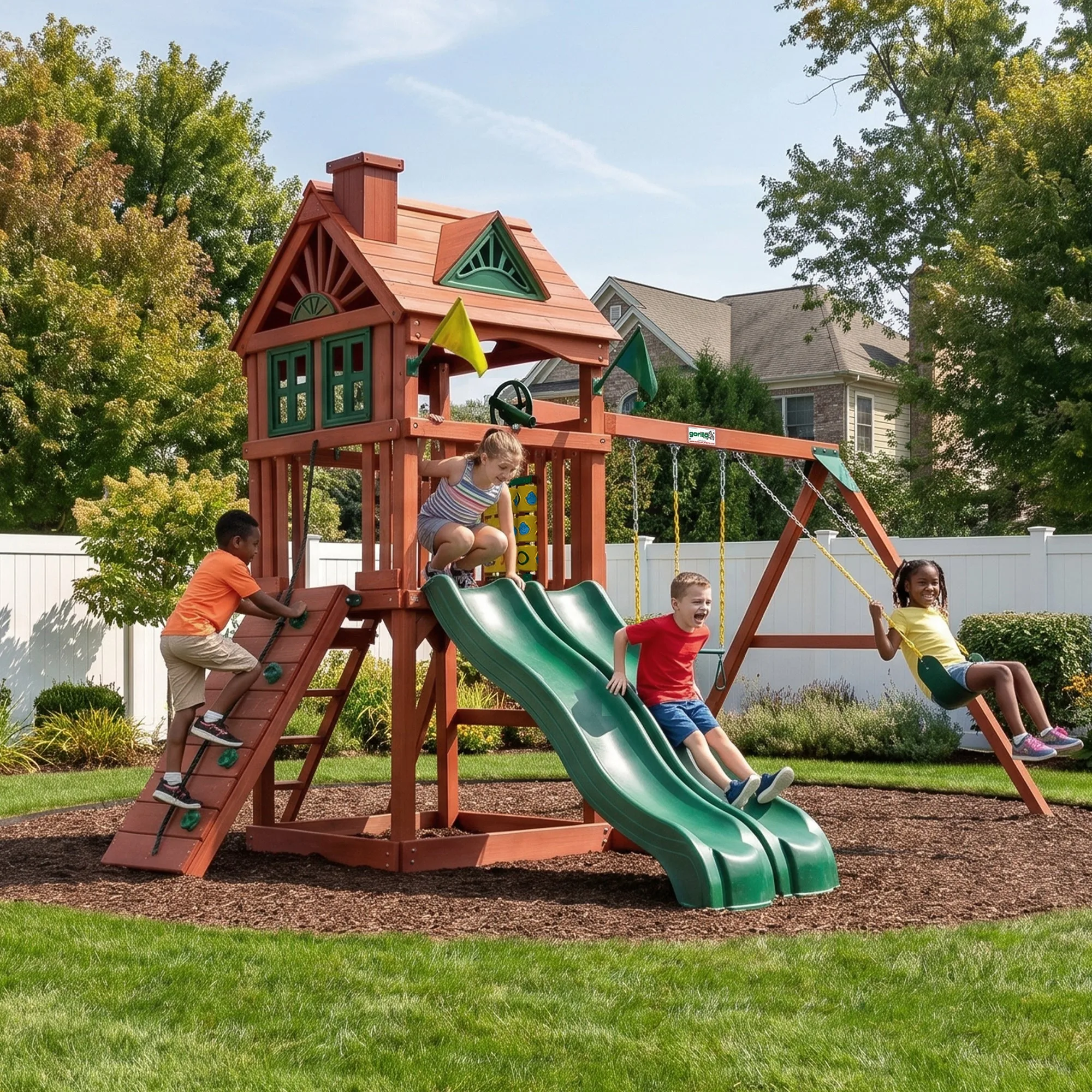
- Double Down Swing Set: The Double Down Swing Set by Gorilla Playsets includes two side-by-side Alpine Wave Slides, swings, a trapeze bar, and interactive play accessories. Two slides side by side can reduce crowding at the top, and the trapeze bar means you will want to set clear rules for one-at-a-time use.
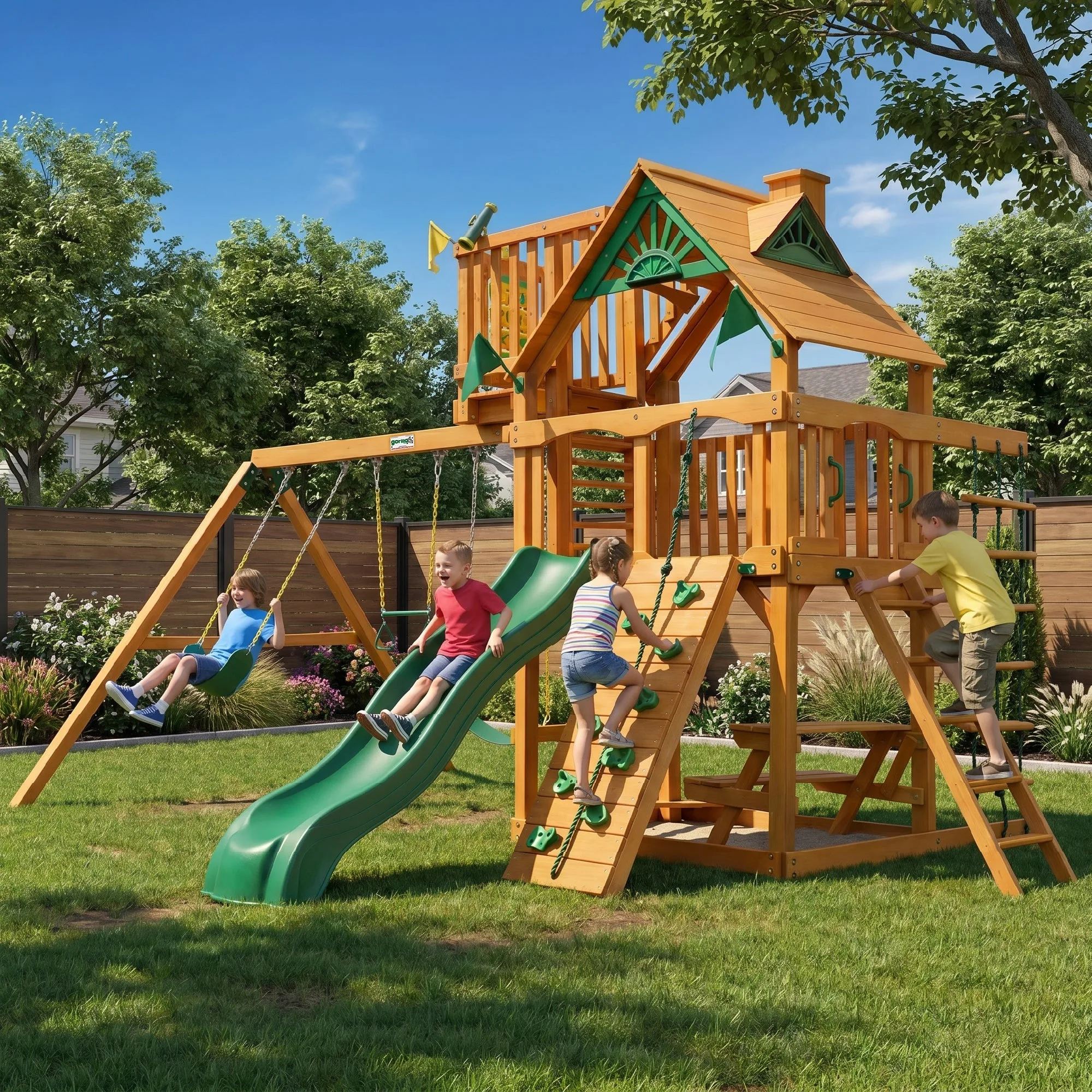
- Chateau Swing Set: The Chateau Swing Set is a cedar wood playset that is pre-cut, pre-sanded, pre-stained, and ready to assemble, with a tongue-and-groove wood roof over the play deck. A pre-stained cedar frame makes it easier to spot cracks or splinters during inspections, and the wood roof adds shade over the deck.
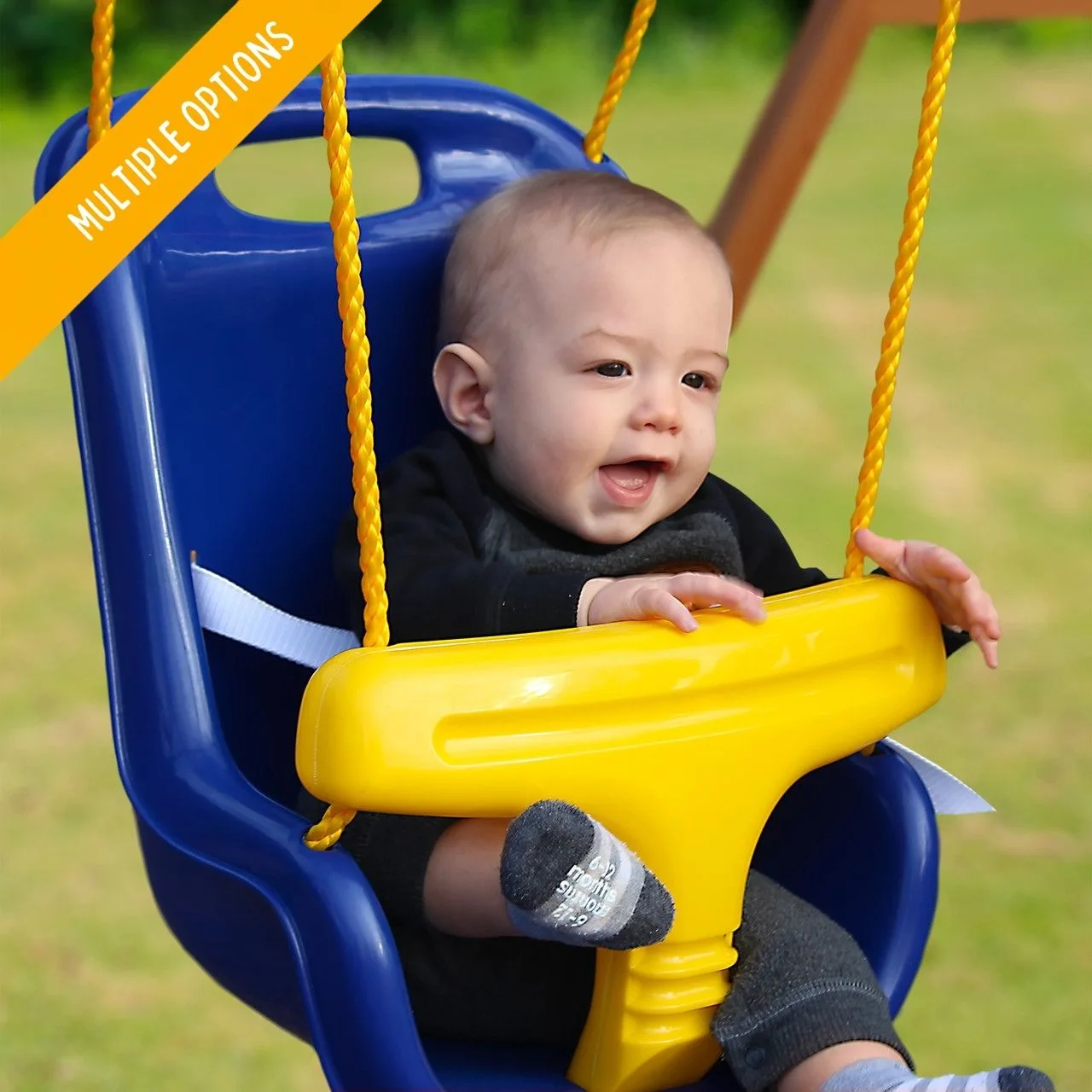
- High Back Infant Swing: The High Back Infant Swing has a strap over the front to secure the shoulders and torso, plus a wide seat belt that slides up and down on the rope. For the youngest kids, a dedicated infant swing with a harness is safer than adapting a standard swing seat.
Most swing set safety questions come down to a few habits: anchor the set, match accessories to the child, keep landing zones clear, and check hardware before the season starts. Do those consistently and the backyard stays the easy part of the day.