Quick answer
Switch your cat to wet food by mixing a teaspoon of wet food into their usual dry food, then gradually increase the wet-to-dry ratio over 7–14 days. If your cat refuses, step back to the last accepted ratio and hold it for two days before increasing again. Never starve a cat to force a switch; if they skip meals for more than 24 hours, contact your vet.
Why cats refuse wet food (and what actually helps)
Cats are neophobic, meaning they are naturally suspicious of new foods. A sudden change in texture, smell, or temperature can trigger wet food refusal even if the food is high quality. The most common mistake is offering a full bowl of wet food and expecting hunger to win. Instead, use a gradual cat food switch that keeps a familiar base (their current dry food) while adding a small amount of wet food. Warm the wet food slightly to body temperature to release aroma, and offer it in a shallow dish so whiskers don't touch the sides.
Set up a 7–14 day transition schedule
A structured cat food transition schedule removes guesswork. Start with 90% dry and 10% wet (about 1 teaspoon of wet food mixed into the dry). Hold each ratio for 2–3 days. If your cat eats willingly, move to 80/20, then 70/30, and so on. If they refuse or eat around the wet food, drop back to the previous ratio for another two days. Most cats reach a full wet food meal in 10–14 days. Keep meals timed (20–30 minutes) rather than free-feeding, so you can see exactly how much they eat.
Choose a wet food that matches their preference
Texture matters as much as flavor. Some cats prefer pâté, while others like shredded meat in broth. If your cat licks the gravy and leaves the meat, try a smoother texture or a different protein. Single-protein options can help you isolate what they like. For example, a chicken-only recipe removes the variable of mixed proteins, while a fish-based recipe offers a distinct aroma that may tempt a reluctant eater. Always introduce one new food at a time so you know what works.
Handle refusal without creating a food aversion
If your cat walks away, do not add treats or dry food on top immediately—that teaches them that refusing wet food earns a reward. Remove the bowl after 20 minutes and offer the same ratio at the next meal. If they still refuse, go back one step on the schedule. Never let a cat go more than 24 hours without eating; cats can develop hepatic lipidosis (fatty liver) quickly. If refusal persists for more than two days, or if you see vomiting, diarrhea, or lethargy, consult your veterinarian.
Step-by-step transition plan
- Step 1: Start with a 10% wet mix: Mix one teaspoon of wet food thoroughly into your cat's normal portion of dry food. Serve at room temperature. Checkpoint: If your cat eats the mix without leaving wet food behind, continue. If not, reduce to a quarter teaspoon.
- Step 2: Increase gradually every 2–3 days: Move to 20% wet, then 30%, and so on. Keep the dry base consistent until your cat accepts each new ratio. Common mistake: Increasing too fast. A jump from 10% to 50% often causes refusal.
- Step 3: Hold at the first sign of refusal: If your cat stops eating or eats around the wet food, return to the last ratio they accepted and stay there for two extra days. Checkpoint: A cat that eats 90% of the bowl is still progressing; don't rush.
- Step 4: Transition to full wet meals: Once your cat reliably eats a 50/50 mix, you can reduce dry food to a small topping or remove it entirely over 3–4 days. Next step: If they refuse full wet, keep a 25% dry base long-term—many cats do well on a mixed diet.
Wet food options that support a gradual switch
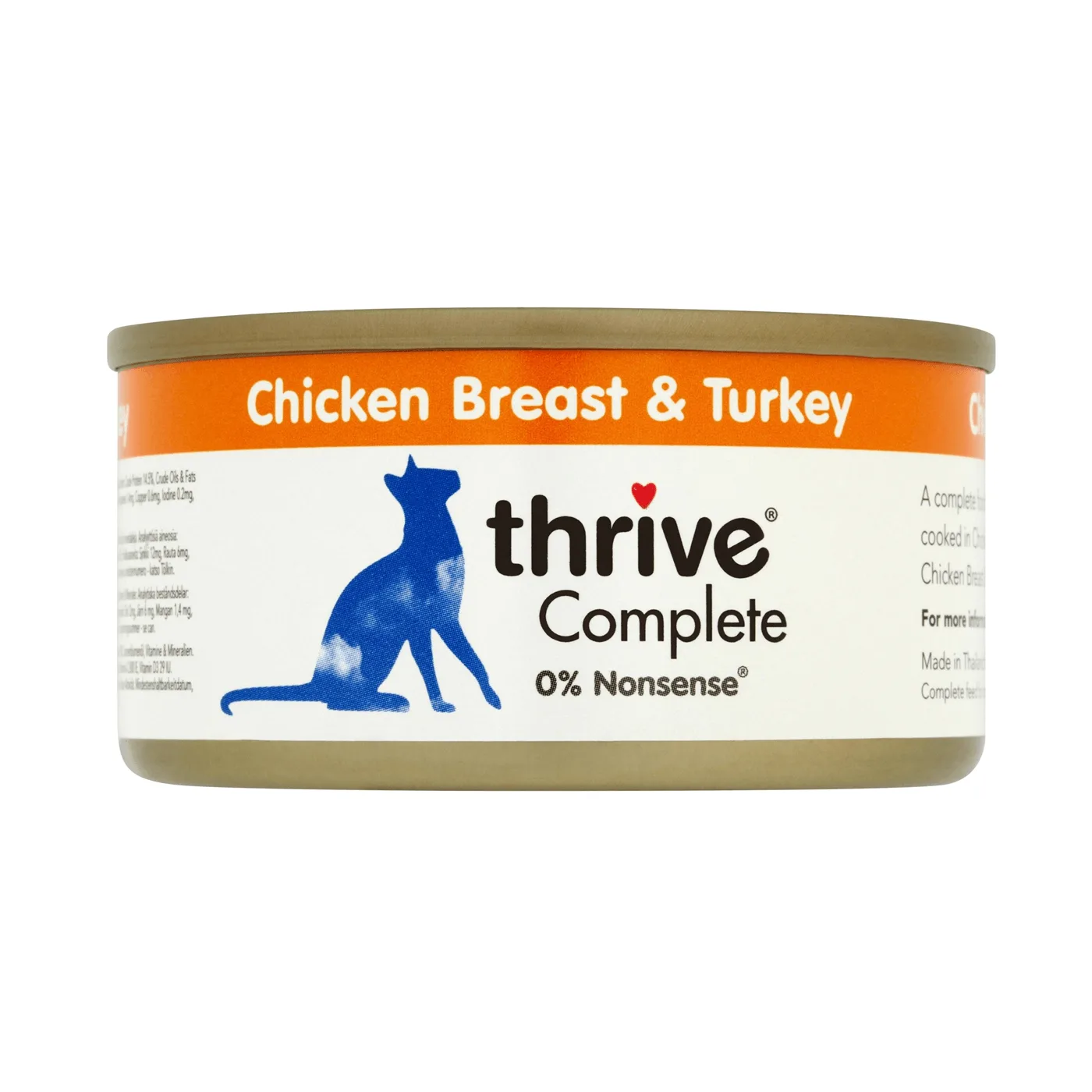
- Thrive Complete Chicken Breast & Turkey Cat Food 75g: Thrive Complete Chicken Breast & Turkey Cat Food is made with 100% real chicken breast and turkey as the only sources of protein. Two familiar proteins in one can may appeal to cats that already like chicken, while still offering a novel mix for variety.
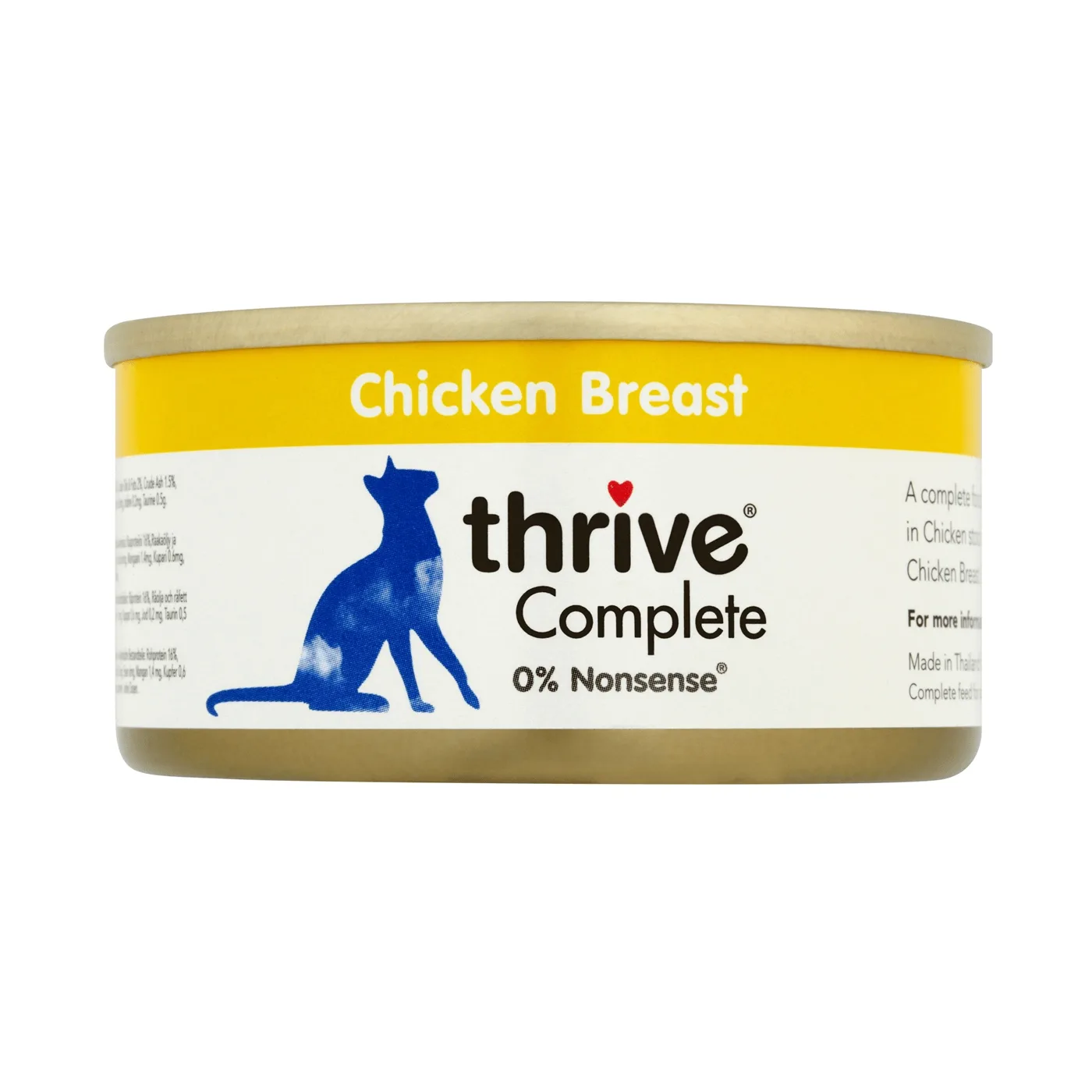
- Thrive Complete Chicken Breast Cat Food 75g: Thrive Complete Chicken Breast Cat Food is made with 100% chicken breast, providing a single source of protein. A single-protein recipe is ideal during a transition because you can rule out protein sensitivity if your cat reacts poorly.
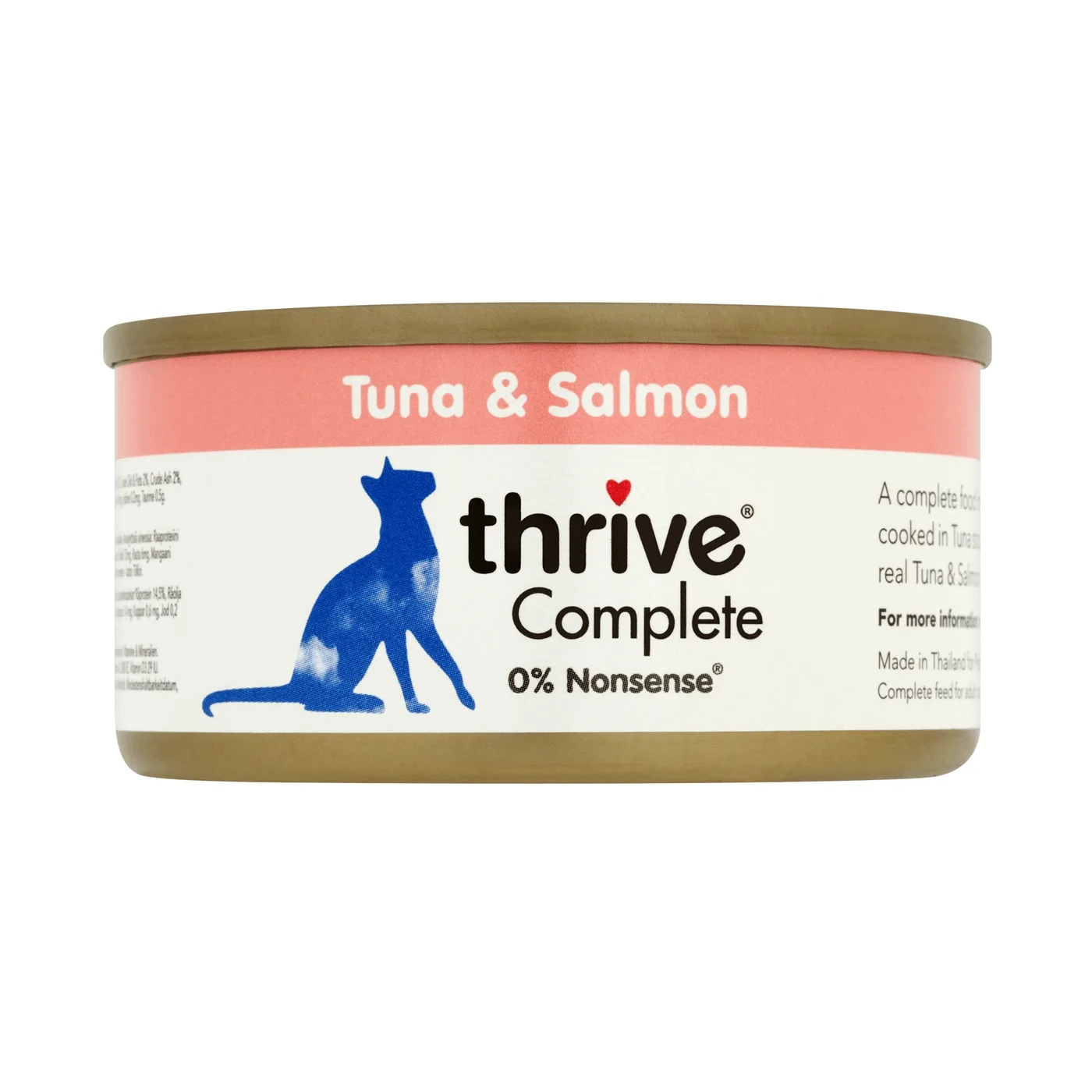
- Thrive Complete Tuna and Salmon Cat Food 75g: Thrive Complete Tuna and Salmon Cat Food is made with 100% tuna fillet and salmon fillet cooked in a fish broth. The strong fish aroma and broth texture can tempt cats that ignore chicken-based wet foods.