Quick answer
Switch your senior dog over 7 to 10 days by mixing a little Calibra Dog Life Senior Medium Fresh Beef into the old food and increasing that share by roughly 10 to 15 percent every two days. Keep total daily calories close to what your dog already eats, split meals if your dog eats fast, and slow down or pause the change if loose stools or vomiting appear.
Why a slow transition matters more for older dogs
A senior dog's gut is less forgiving than a young dog's. Sudden switches can trigger loose stools, gas, or a few days of refusing food, and older dogs have less reserve to bounce back from a short hunger strike. That is why a planned 7 to 10 day crossover beats a one-day swap.
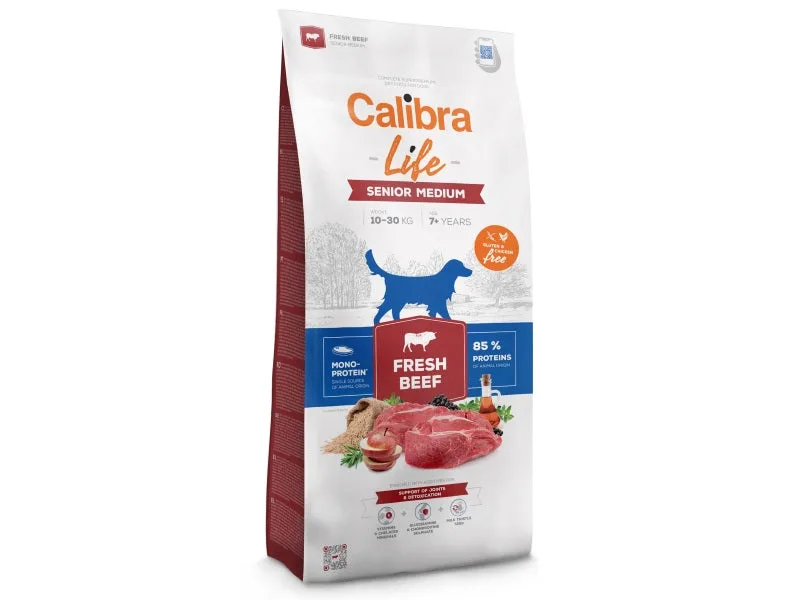
Age also changes what your dog needs from a bowl. Calibra Dog Life Senior Medium Fresh Beef is built for senior dogs aged 7 years and up in the 10kg to 30kg medium breed range, so the portion that suits a 12kg cocker spaniel will be wrong for a 28kg Labrador. Weigh your dog or use your last vet visit weight before you calculate anything.
Check the fit before you buy the bag
Calibra Dog Life Senior Medium Fresh Beef is a complete, 100% monoprotein dry food made with fresh beef and rice. If your dog has done well on a single-protein beef diet before, that structure is a point in its favour. If your dog has a diagnosed beef sensitivity, this is not the bag to test.
The formula contains 85% proteins, which tells you the recipe leans heavily on animal protein rather than fillers. That is useful for maintaining muscle in older dogs, but it also means the food is calorie-dense, so measuring by weight rather than by eye matters more than it did with a lighter kibble.
Set up the first week
Pick a week when your routine is calm. Travel, house guests, or a vet visit in the same week will muddy the picture if your dog's appetite or stools change. Keep the old food on hand until the new bag is at least half used, so you never have to rush the last stage.
Feed at the same times as before and keep treats consistent. If you normally give table scraps, pause them during the switch so you can tell what is actually causing any change. Fresh water should always be available, especially in the first three days.
What to do if your dog is a fast eater
Senior dogs that gulp their food often swallow air, which makes transition-related gas look worse than it is. Split the daily portion into three smaller meals instead of two during the crossover, or spread the kibble on a flat plate so your dog has to work for each piece.
If your dog has missing teeth or a sensitive mouth, check with your vet whether the kibble size suits your dog. The catalog does not list a kibble dimension for this product, so if your dog struggles with standard dry food, that is a question for your vet rather than something you can assume from the listing.
When to stop and call your vet
A day of softer stools during a food change is common. Vomiting, blood in the stool, refusing all food for more than 24 hours, or repeated diarrhoea is not a normal transition response. Stop increasing the new food, go back to the last ratio that worked, and contact your vet.
Older dogs can also have underlying conditions that a diet change will not fix. If your dog is losing weight despite eating normally, or drinking far more than usual, that is a vet conversation, not a food-switching problem.
The 10-day transition plan
- Days 1-2: 25% new food: Mix one part Calibra Dog Life Senior Medium Fresh Beef with three parts of your dog's current food. Keep the total daily amount the same as before so you are only changing the composition, not the volume. Checkpoint: stools should look the same as usual by the end of day 2.
- Days 3-4: 50% new food: Move to equal parts old and new. If your dog picks out the new kibble and leaves the old, that is a good sign, but do not speed up the schedule just because your dog likes the taste. Checkpoint: no vomiting and no more than one soft stool in this window.
- Days 5-7: 75% new food: Three parts new to one part old. This is the stage where portion accuracy starts to matter, because the senior beef recipe is calorie-dense. Weigh the kibble if you have kitchen scales. Checkpoint: energy levels and appetite should be steady, not dropping.
- Days 8-10: 100% new food: Drop the old food completely and feed the full Calibra portion. Recheck the bag's feeding guide against your dog's current weight, since senior dogs often need slightly fewer calories than they did at five years old. Mistake to avoid: topping up the bowl because your dog seems hungry. Add a little warm water instead if the meal disappears too fast.
- Week 2 onward: hold and observe: Keep the food, timing, and portion steady for at least two weeks before judging results. Coat, stool quality, and willingness to eat are the practical signals most owners notice first. If something is off after two stable weeks, book a vet check rather than switching again immediately.
Product facts
- Calibra Dog Life Senior Medium Fresh Beef: Calibra Dog Life Senior Medium Fresh Beef is a complete, 100% monoprotein dry food for senior dogs aged 7 years and up, in the medium breed range of 10kg to 30kg. It is only the right target food if your dog falls inside that age and weight band. A small breed senior or a dog under 7 needs a different formula.
- Calibra Dog Life Senior Medium Fresh Beef: The recipe uses fresh beef with rice and is described as highly digestible, suitable even for sensitive digestion, with 85% proteins. A single animal protein plus rice gives you a simpler baseline to judge during the transition, and the high protein share supports muscle maintenance in older dogs.
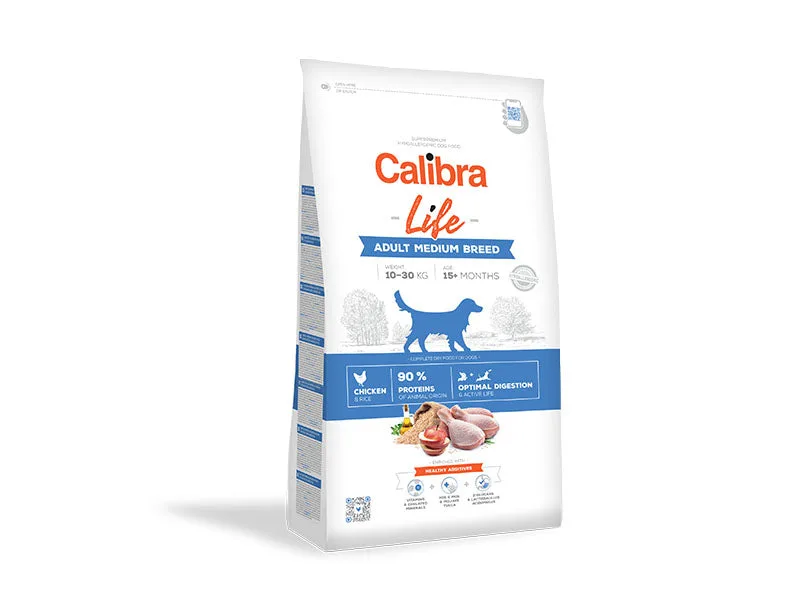
- Calibra Dog Life Adult Medium Breed Chicken: Calibra Dog Life Adult Medium Breed Chicken is a hypoallergenic complete dry food for adult medium breed dogs of 10kg to 30kg, with animal proteins making up 90% of total protein and low grain content using only rice. If your dog is not yet 7, or does not settle on the senior beef recipe, this is the same brand's adult medium breed option and a logical fallback rather than jumping to an unrelated brand.