Quick answer
The Switchbak Multi-Function Dog Leash lets you switch from standard to hands-free walking in seconds using its adjustable length and double-ended design. Follow these steps to set it up correctly and avoid tangles or discomfort.
Why choose a hands-free leash for walking
A hands-free leash frees your hands for carrying gear, using trekking poles, or managing your phone. It also reduces arm fatigue on long walks by transferring the pull force to your waist or hip. The Switchbak leash is designed to adapt to these needs with its adjustable length and double-ended clips.
When the Switchbak leash works best
The Switchbak leash excels on trails where you need to switch between close control and hands-free freedom. Its lightweight webbing and smooth adjustment make it easy to change modes without stopping. However, for very strong pullers, a dedicated hands-free belt with a bungee may offer more shock absorption.
How to set up the Switchbak leash for hands-free walking
- Attach the leash to your dog's collar or harness: Clip one end of the leash to your dog's back or front ring. For hands-free walking, use a harness with a back attachment to keep the leash centered and reduce pulling. A front clip harness works for training but may cause the leash to twist during hands-free use.
- Adjust the leash to your preferred length: Slide the adjuster to shorten the leash for close control or lengthen it for more freedom. For hands-free mode, set it to a length that keeps your dog at your side without tangling your legs. A common mistake is leaving the leash too long, which lets the dog wander into bushes or trip you.
- Loop the other end around your waist or hip: Wrap the free end around your waist and clip it back onto itself using the second clip. Position the clip at your side or lower back for balance. The sliding V-rings help the leash move smoothly as your dog changes direction. Avoid clipping at your front center, as it can restrict leg movement and cause tripping.
- Test the fit and adjust tension: Walk a few steps and check that the leash doesn't sag or pull too tight. The leash should have a slight droop when your dog walks calmly. Tighten or lengthen as needed. If the leash is too tight, it may encourage pulling; too loose, and you risk tripping.
- Practice switching modes on the trail: To switch back to standard mode, unclip the waist loop and hold the leash in your hand. Use the adjuster to shorten it for heel work. The V-rings let you change grip positions without unclipping. Practice the switch at home first so you can do it smoothly when you encounter obstacles or other dogs.
Product facts
-
Switchbak™ Multi-Function Dog Leash: The Switchbak Leash features adjustable-length, double-ended design with Ruffwear's custom sliding V-rings for seamless transitions. You can quickly switch between standard and hands-free modes without unclipping, making it practical for changing trail conditions.
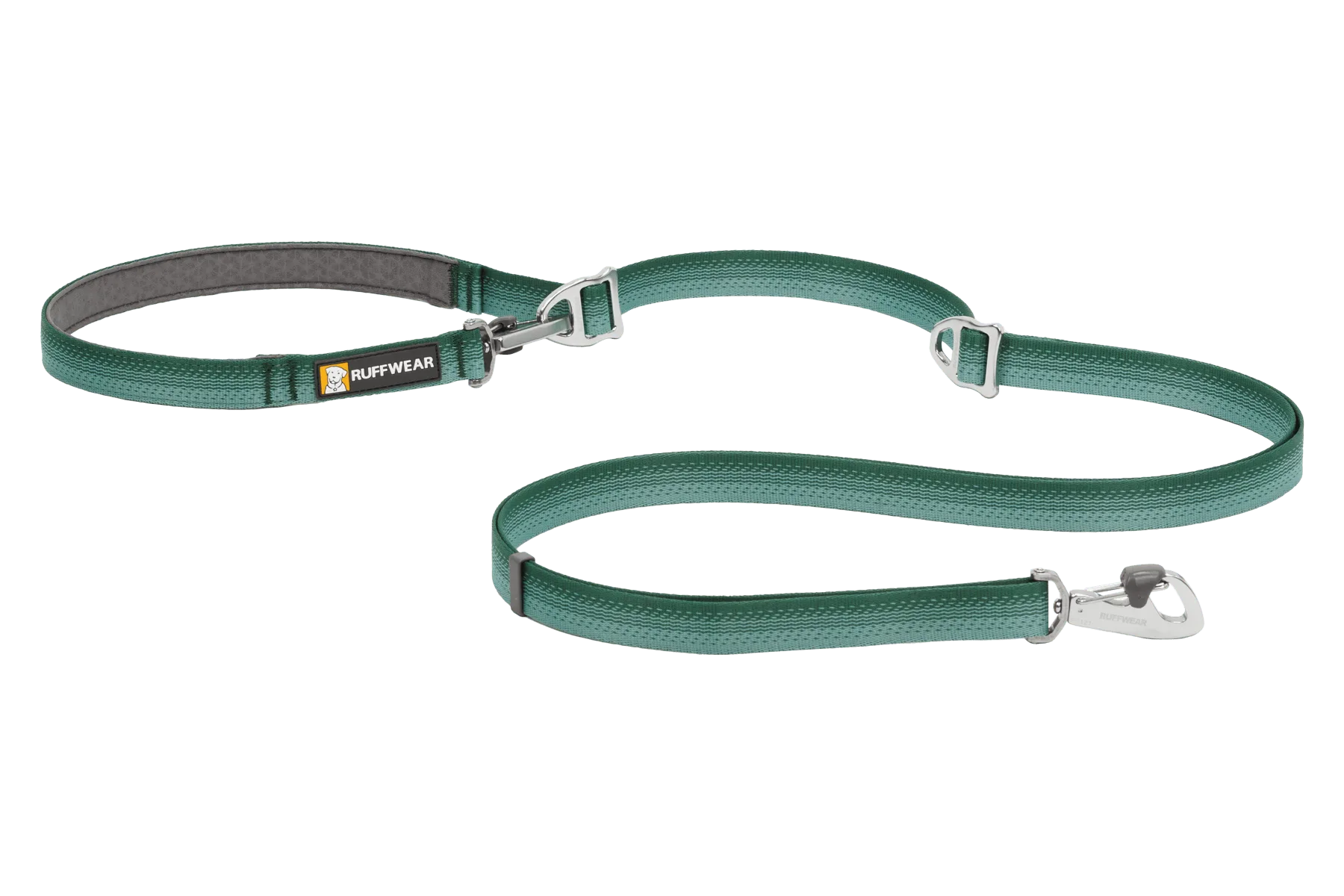
Switchbak™ Multi-Function Dog Leash