Quick answer
Work one attribute at a time: sort by color for a week or two, then by shape, then mix both. Keep sessions to five or ten minutes, name what your child is holding instead of quizzing them, and stop while they are still interested. The montessori-twist-and-match-puzzle-50718b1791966fc350515501-1541621">Montessori Twist and Match Puzzle is a good next step once your child sorts confidently, because its four-side chunky wooden pieces add shape matching without adding pressure.
Most color and shape lessons fail for a boring reason: we teach both at once. A toddler holding a red circle is processing two labels, two categories, and a hand movement, all in the same second. Splitting the job into color first, then shape, then both, is the whole trick.
This guide walks through a simple sequence you can run at home with the Montessori 6-in-1 Sorting Tool, what to say at each stage, and the specific mistakes that make toddlers walk away.
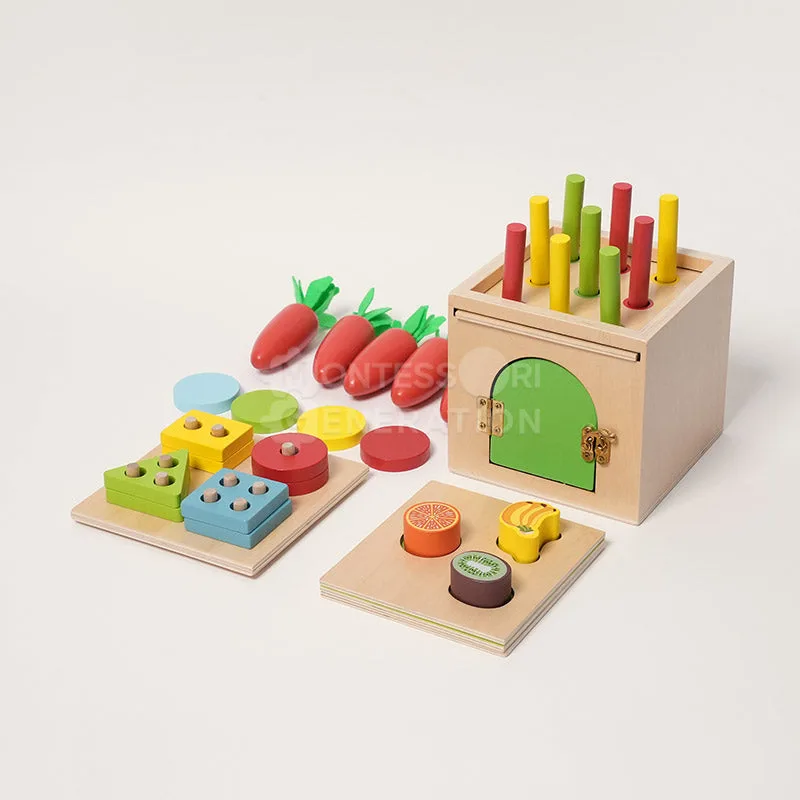
Montessori 6-in-1 Sorting Tool
Start with color only
Pick two colors that look nothing alike, such as red and blue, and put every other piece out of reach. Set one piece of each color on the table and say the color name as you place it, then hand your child a matching piece and let them put it down. No questions, no corrections, just naming.
Keep this to one short session a day. When your child starts placing pieces on the matching pile without being asked, add a third color. Rushing to all six colors at once is the most common reason this activity stalls in week one.
- Checkpoint: your child can match two colors before you add a third.
Move to shape sorting
Once color matching is easy, switch the focus to shape and use a single color so the shapes carry the whole task. Use the same routine: name the shape, place one, hand over a piece, stay quiet while your child works.
Expect this stage to take longer than color. Shape names are less familiar words, so your child may match correctly for weeks before saying 'circle' or 'triangle' themselves. That gap between doing and saying is normal and not a sign you should add pressure.
- Common mistake: correcting a wrong placement out loud. Move the piece back and name the correct shape instead.
Combine colors and shapes
When both attributes are solid on their own, put all the pieces back and sort by two rules: red circles here, blue triangles there. This is the hardest version of the activity and the one that builds real classification skill.
If your child gets stuck, drop back to one attribute for a few days rather than pushing through. The tool rewards repetition, not speed, and a child who feels tested will stop playing.
- Checkpoint: two-rule sorting usually clicks a few weeks after single-attribute sorting feels automatic.
Keep it short and repeatable
Five to ten minutes is plenty. End the session while your child is still engaged, even if that means stopping mid-sort, because the next session starts better when the last one ended well.
Store the pieces in one container your child can reach. An activity they can choose themselves gets used far more than one that requires an adult to set up.
- Practical tip: keep only the pieces you are currently teaching in the container and store the rest out of sight.
Your color and shape teaching sequence
- Step 1: Sort by two contrasting colors: Set out red and blue pieces only. Name each color as you place it and let your child match without being quizzed. Checkpoint: matching happens without prompting before you add a third color.
- Step 2: Add a third color: Introduce one more color once the first two are reliable. Keep the same quiet naming routine. Mistake to avoid: adding colors faster than your child can match them.
- Step 3: Switch to shapes in one color: Use a single color so shape is the only new information. Expect this stage to take longer than color. Checkpoint: correct matching for several sessions before you expect the shape names to be spoken.
- Step 4: Sort by two rules at once: Bring all pieces back and sort by color and shape together, such as red circles in one pile and blue triangles in another. If it stalls, return to one attribute for a few days rather than pushing.
- Step 5: Keep sessions short and end on a good note: Stop after five to ten minutes while your child is still engaged, and leave the pieces somewhere they can reach. Next step: move to the Montessori Twist and Match Puzzle when single-attribute sorting is easy.
What you are working with
- Montessori Twist and Match Puzzle: Age 2+, contains five four-side chunky wooden puzzle pieces and one wooden board, sized 5.8" x 5.8" x 1.1". The four-sided pieces mean each block offers several matching options, so the puzzle stays useful after your child has mastered basic color and shape sorting.
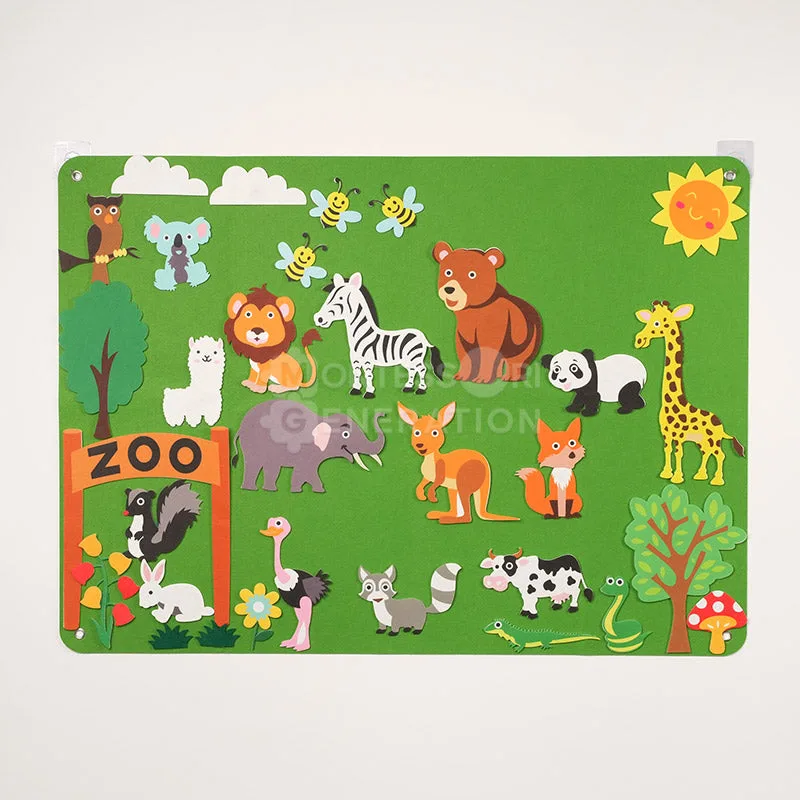
- Montessori Learning Felt Board: Age 3+, available in Zoo or Universe options, with Velcro pieces and hangers for wall mounting. A wall-mounted board turns sorting into a standing activity, which suits toddlers who will not sit at a table for long.
Color and shape learning works best when you slow down and teach one thing at a time. Run the sequence above for a few weeks, follow your child's pace rather than a schedule, and the sorting will start happening on its own.