Quick answer
Soothe sore gums by offering a chilled—not frozen—teether, giving a gentle gum massage with a clean finger, and matching the toy's shape and texture to your baby's current teething stage. Rotate between a few different teethers so your baby can choose what feels best, and always supervise chewing.
Teething starts before you see the first tooth. Most babies begin gnawing and drooling around 4 to 7 months, but the timeline varies widely, and the pressure you feel under the gums is your best clue about which toy will actually help today.
This guide walks through a simple, repeatable routine for how to soothe teething baby discomfort at each stage, with practical teething relief tips, safe cold teether use, and a gum massage baby can tolerate. You do not need a drawer full of gadgets—just a few well-chosen tools and a consistent approach.
Know the teething stages before you buy anything
Teething is not one event; it is a series of phases. Early on, babies gnaw on fists and want broad, soft surfaces. As front teeth push through, they often prefer long, flexible shapes they can reach with their molars. Later, when molars arrive, many babies want firmer textures and more pressure. Watching where your baby chews tells you which toy shape to offer.
You do not need a different product for every week. A small rotation of two or three teethers with different textures and firmness covers most stages. If a toy is consistently rejected, it is usually the wrong shape or temperature for that phase, not a sign that your baby dislikes teething toys in general.
- Checkpoint: if your baby chews mainly on one side, offer a teether that reaches that area without forcing it.
- Mistake to avoid: buying only one style of teether and assuming it will work for every stage.
Build a simple daily teething relief routine
A predictable routine helps you respond quickly when fussiness starts. First, wash your hands and check the gums for swelling or a new bump. Then offer a chilled teether for a few minutes. If your baby still seems uncomfortable, try a gentle gum massage with a clean finger for 30 to 60 seconds. Finish with a cool drink or a feed if your baby is hungry.
Keep sessions short. Teething relief works best in small, repeated doses rather than one long chew session. If your baby pushes the teether away, stop and try again later. Forcing a toy can make your baby more resistant the next time.
- Checkpoint: a calm baby who accepts the teether is the goal—not a fixed number of minutes.
- Mistake to avoid: leaving a teether in the crib or playpen for unsupervised chewing.
Use cold teethers safely
Cold teether use is one of the most effective teething relief tips, but temperature matters. A teether chilled in the refrigerator is soothing; a frozen one can be too hard and may hurt tender gums. If you freeze a teether, let it soften for a few minutes before offering it, and check it against your own lip first.
Not every teether is designed for chilling. Check the product instructions before putting anything in the fridge or freezer. Silicone teethers generally handle chilling well, while some toys with rattles or moving parts are better kept at room temperature.
- Checkpoint: the teether should feel cool, not rock-hard.
- Mistake to avoid: freezing a teether overnight and handing it over straight from the freezer.
Try a gum massage baby will accept
A gum massage baby tolerates is brief and gentle. Wash your hands, then use one clean finger to rub the gum line in small circles for a few seconds at a time. Some babies prefer a soft silicone teether with a bumpy texture instead of a finger, especially once they can hold it themselves.
Watch your baby's face. If they turn away, clamp their mouth shut, or cry harder, stop. Gum massage is a comfort tool, not a treatment, and it should never feel like a struggle. A teether with a suction base can help here because it stays put while your baby controls the pressure.
- Checkpoint: a short massage that ends calmly is better than a long one that ends in tears.
- Mistake to avoid: pressing hard on swollen gums or using a rough cloth.
Match the teether to your baby's grip and stage
Younger babies need lightweight teethers they can hold with a whole-hand grasp. Look for rounded shapes, flexible rings, and textures that are easy to find with the mouth. As hand-eye coordination improves, babies often enjoy teethers with rattles or moving parts because the sound rewards their effort.
For babies working on molars, firmer silicone and longer shapes can reach farther back. If your baby is just starting to teethe, a soft silicone teether with a suction base lets them explore without needing a strong grip. Rotate textures every few days so your baby stays interested.
- Checkpoint: if your baby drops the teether constantly, try a lighter or ring-shaped option.
- Mistake to avoid: choosing a teether that is too heavy or too large for your baby's hands.
Keep teethers clean and ready to use
Teethers go from mouth to floor to mouth again, so cleaning matters. Wash silicone teethers with warm water and mild soap, then air dry. Check manufacturer instructions for dishwasher safety before placing anything in the dishwasher. Inspect teethers regularly for cracks, tears, or loose parts, and replace them if you find damage.
Keep one clean teether in the fridge and one at room temperature so you always have an option. A small rotation also gives you a backup when one is being washed. If your baby is in a heavy drooling phase, keep a soft cloth nearby to pat the chin dry and reduce irritation.
- Checkpoint: a quick squeeze and visual check before each use takes seconds and catches most wear.
- Mistake to avoid: using a teether that has changed color, smells odd, or has a sticky surface.
Your step-by-step teething routine
- Wash up and check the gums: Wash your hands and look for swelling, redness, or a new bump along the gum line. This tells you which area needs attention and whether a cold teether or a massage will help more. Checkpoint: if you see white spots under the gum, a tooth is close—expect more chewing.
- Offer a chilled teether first: Take a silicone teether from the refrigerator—not the freezer—and hand it to your baby. Let them choose the angle and pressure. If they refuse it, move on to a massage instead of insisting. Mistake to avoid: freezing teethers solid; they can be too hard on sore gums.
- Massage the gums gently: Use a clean finger to rub the gum line in small circles for a few seconds. If your baby prefers a textured surface, offer a soft silicone teether with bumps instead. Checkpoint: stop if your baby turns away or cries harder; comfort should not feel like a fight.
- Rotate textures and shapes: Keep two or three teethers with different firmness and shapes in rotation. Offer a different one at each session so your baby can pick what feels right for the current stage. Mistake to avoid: sticking to one teether for weeks; babies' needs change as teeth move.
- Clean and inspect after every use: Wash teethers with warm water and mild soap, then air dry. Check for cracks, tears, or loose parts before putting them away. Next step: replace any teether that shows wear, and keep a clean backup in the fridge.
Teethers that fit this routine
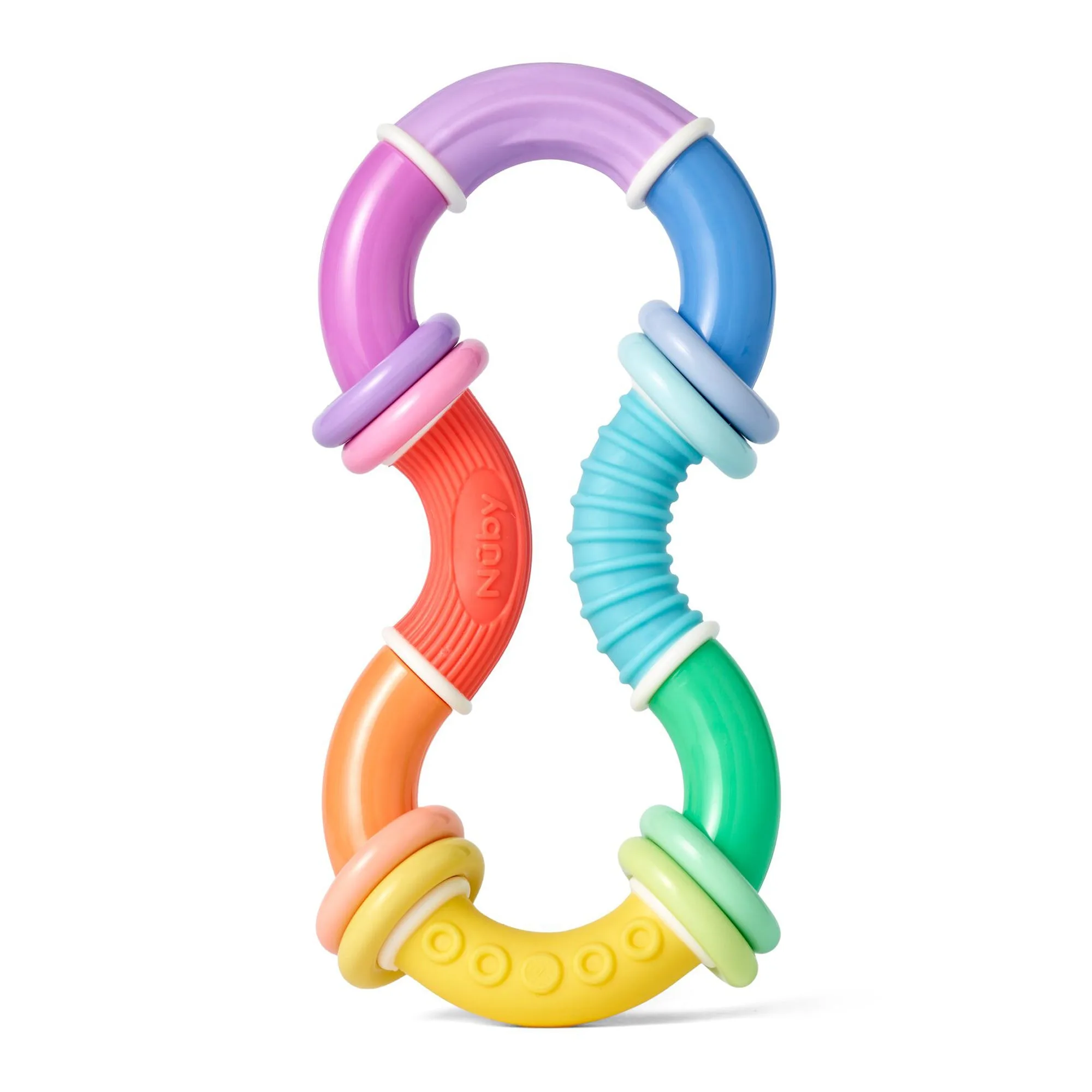
- Twista Rattle Teether Toy | Colorful Rings: Features bright colors, fun sounds, and textured surfaces that provide relief while engaging fine motor skills and hand-eye coordination. The rattle sound and flexible rings give babies a reason to keep grasping, which helps during the stage when they are learning to hold and chew at the same time.
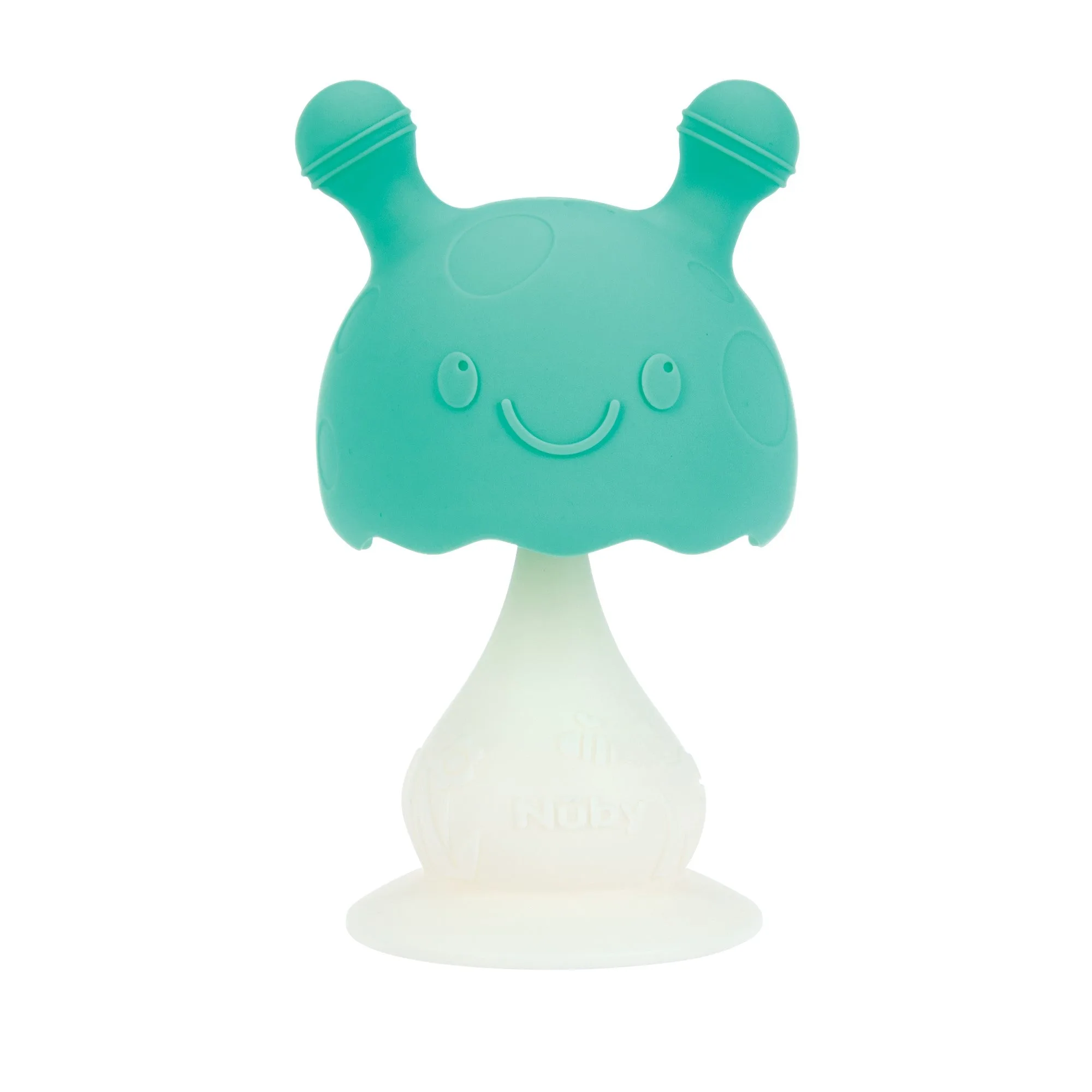
- Mushroom Bobble Head Teether Toy: Made of super soft silicone with a suction base that sticks to most surfaces, and antennae that resemble mom's nipple to mimic soothing. The suction base keeps the teether steady for babies who cannot yet hold one for long, and the soft silicone is gentle on sensitive gums.
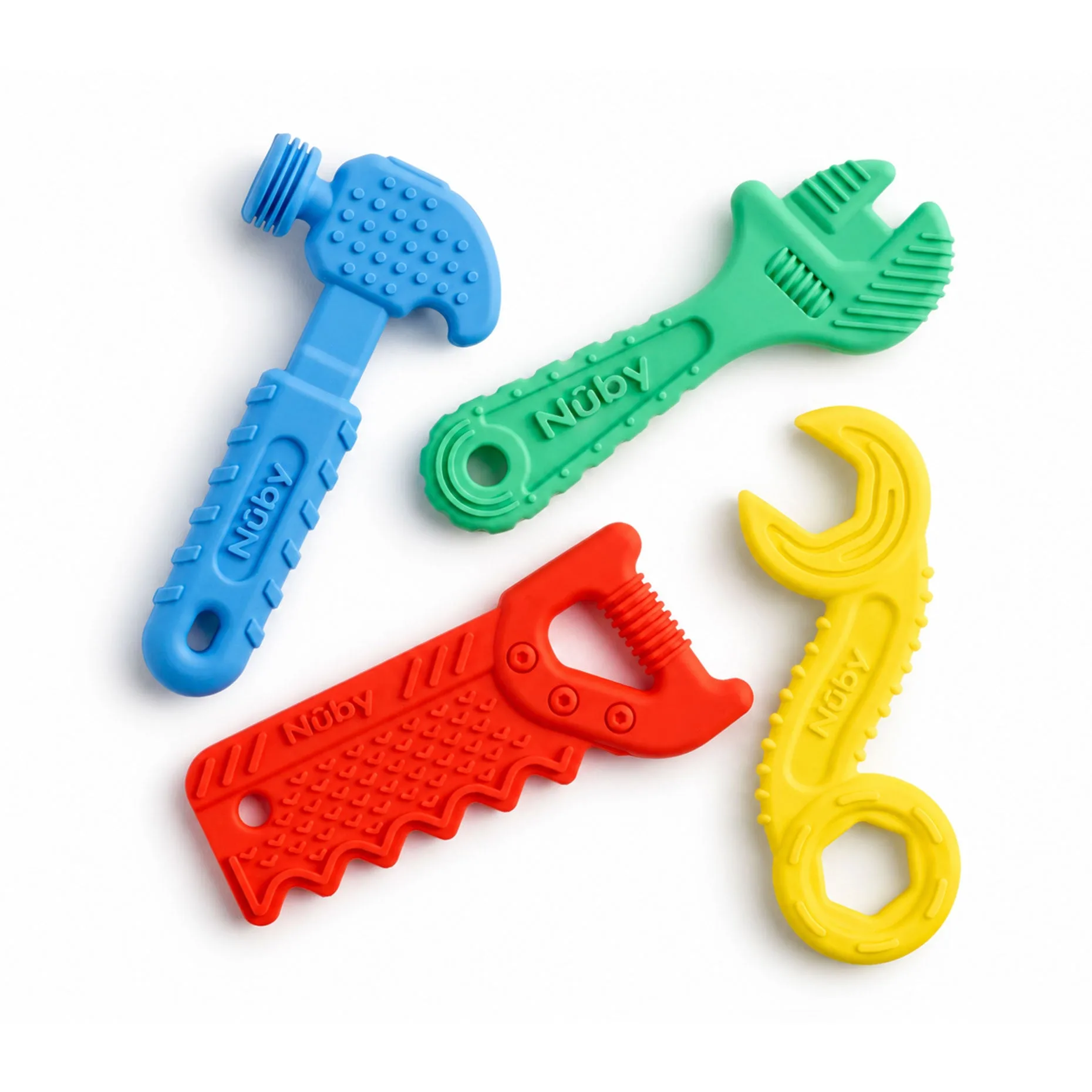
- Tool Teethers (4 Pack): Four tool-shaped silicone teethers with multiple textured surfaces, sized for little hands and easy to clean. Having four different shapes in one pack lets you rotate textures without buying separate toys, and the tool shapes appeal to babies who like to mimic adults.
Teething is a moving target, but your routine does not have to be complicated. Chill a safe teether, massage gently, rotate shapes as your baby grows, and keep everything clean. With a few reliable tools and a calm approach, you can soothe sore gums at every stage without guessing.