Quick answer
Tell Me A Story is a bluffing party game where you spin a yarn from a picture card, then everyone votes on whether you're telling the truth or lying. To win, balance convincing details with subtle tells—and trust your gut when others speak.
What makes Tell Me A Story different from other bluffing games
Most bluffing games rely on poker faces or hidden roles. Tell Me A Story flips the script: the storyteller invents a tale based on an image, and the audience must decide if it's fact or fiction. The twist? The audience earns points for guessing correctly, and the storyteller earns points for fooling them. This dual scoring keeps everyone engaged every round.
Why the storyteller role is harder than it looks
It's tempting to make up an outrageous story, but that often backfires. Skilled players know that the most believable lies are grounded in small, ordinary details. The supplied picture gives you a starting point—use it to build a plausible narrative, not a wild fantasy. Your goal is to make the truth sound just as suspicious as a lie.
How to play and win Tell Me A Story
- Setup and deal: Shuffle the story cards and deal one to each player. Keep your card hidden from others. Place the remaining deck face down in the center. Don't show your card to anyone—the image is your secret prompt.
- Tell your story: The first storyteller looks at their card and invents a short story (30–60 seconds) that may be true to the card or completely made up. The audience listens without interrupting. A common mistake is telling a story that's too long or rambling—keep it tight and confident to avoid suspicion.
- Audience votes: After the story, all other players vote simultaneously (using tokens or a show of hands) on whether they think the story is true or false. The storyteller then reveals the truth. Watch for nervous tells like fidgeting or over-explaining, but remember that confident liars can fake calmness.
- Score points: If the audience guessed correctly, each correct voter earns 1 point. If the storyteller fooled at least one person, they earn 1 point. The game continues until a set number of rounds or a target score is reached. Don't always vote with the majority—trust your own read, even if you're the only one who gets it right.
- Winning strategy for storytellers: Mix truth and fiction. Use a real personal anecdote that loosely matches the card, or invent a boring, mundane detail that sounds too specific to be made up. Avoid dramatic pauses or overly elaborate plots. The best lies are 80% true—if you sound too rehearsed, people will assume you're lying.
- Winning strategy for the audience: Listen for inconsistencies in timing, location, or character actions. Compare the story to the card's imagery—if the storyteller ignores a key element, they're probably lying. Also, note how quickly they start speaking; hesitation can signal fabrication. A common trap is overthinking—sometimes the simplest story is the truth. Go with your first instinct.
What you need
-
Tell Me A Story: Take turns spinning yarns and then unraveling them as you and your friends find out who can tell the most convincing story. The audience is rewarded for discerning the truth and the storyteller is rewarded for their cunning deceptions. This dual-reward system means you can't just sit back—everyone has a reason to pay close attention and participate actively.
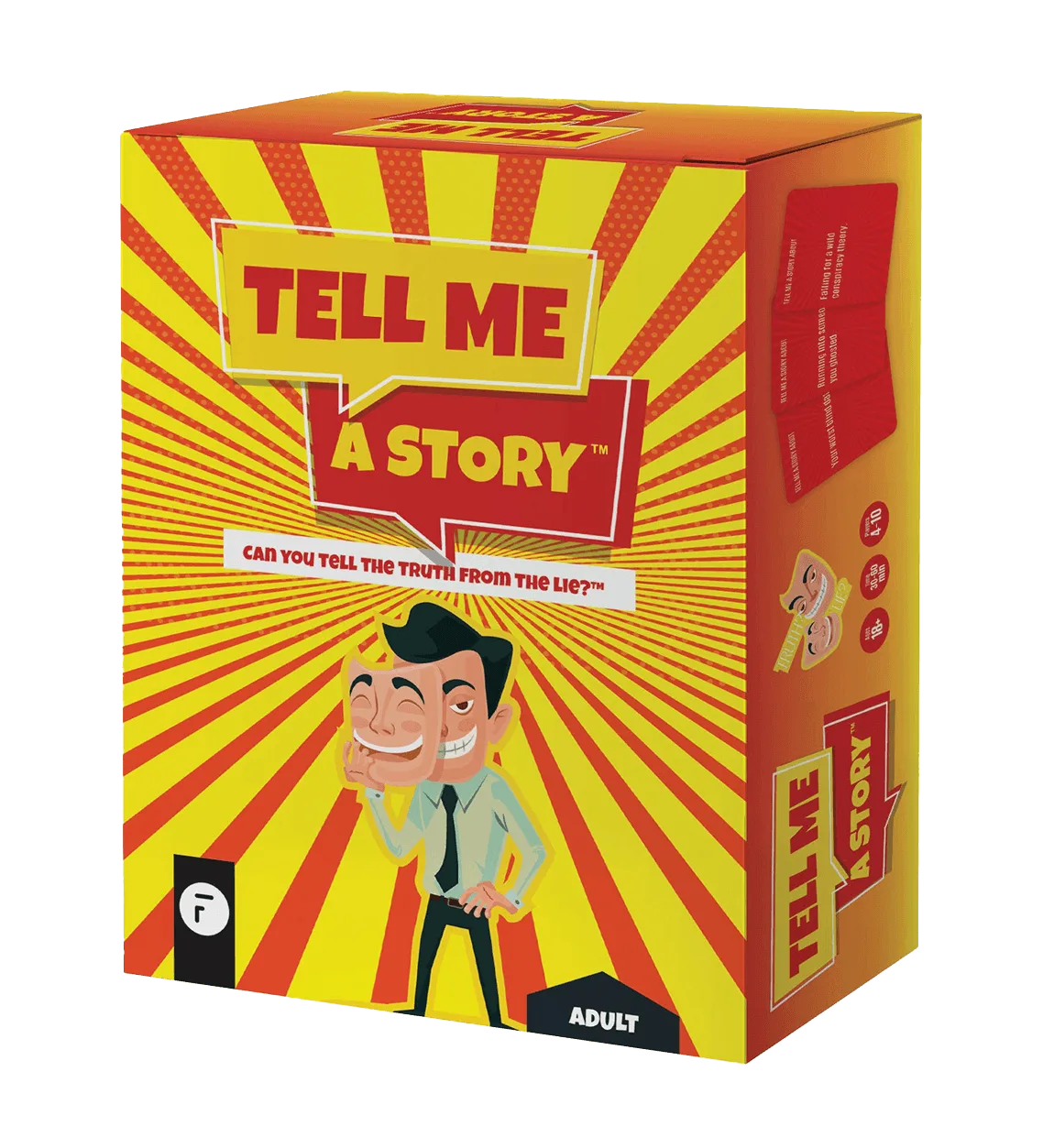
Tell Me A Story