Quick answer
The SPILL is a fully cooperative game where your team contains an offshore oil disaster before it devastates the ecosystem. Set up the 4-way dice tower, place the oil, and take turns rolling and assigning dice to containment actions. You win by keeping oil from spreading beyond the ocean's limits; you lose if the spill overwhelms the board. Play the Deluxe edition with 56 full-color wood tiles for clearer, more tactile tracking of Sea Life and Weather Effects.
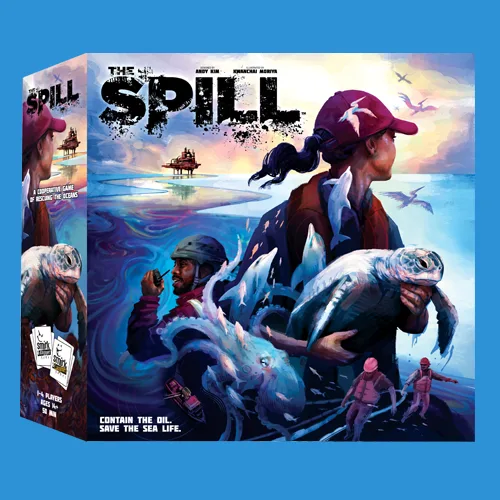
The SPILL drops your response team into the worst-case scenario: Offshore rig DeepWell•4 has blown out and is pouring crude oil into the ocean. Every turn, the dice tower physically pours oil into the sea, and you and your fellow players must work together to contain it before marine life is contaminated and the ecosystem collapses.
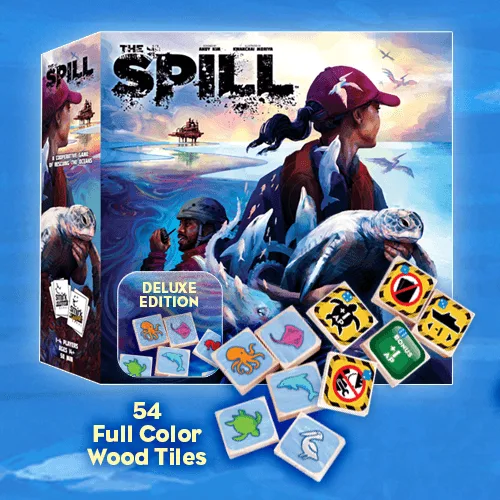
This guide walks through setup, turn order, and the decisions that separate a narrow win from an ecological disaster. It assumes you have the base game or the Deluxe edition with 56 two-sided full-color wood tiles (36 Sea Life tiles and 20 Weather Effect tiles). The core rules are the same; the Deluxe edition simply makes the board state easier to read at a glance.
Setting up the spill
Place the ocean board in the center of the table. Assemble the 4-way dice tower as shown in the rulebook and position it so it feeds oil into the ocean. Shuffle the Sea Life and Weather Effect tiles separately. If you are playing the Deluxe edition, use the 36 Sea Life tiles and 20 Weather Effect tiles; their full-color wood faces make it obvious which side is active. Deal each player their starting response team cards and tokens.
A common mistake is skipping the tower assembly check. If the tower is not seated correctly, dice will jam or spill oil into the wrong zone, which breaks the game's core pressure. Run one test die through the tower before the first real turn. Also confirm that the oil reservoir starts at the correct level for your player count; the rulebook scales this, and guessing high makes the first round unfairly punishing.
- Checkpoint: run one test die through the tower before starting.
- Keep the Sea Life and Weather Effect tiles in separate stacks until setup tells you to place them.
Turn order and dice actions
On your turn, roll the dice and let the tower pour oil into the ocean. Then assign your dice to the available actions: contain oil, protect Sea Life, or mitigate Weather Effects. You have a limited number of actions each turn, so talk through priorities with your team before you commit. Because the game is fully cooperative, you can share information about your dice and planned actions freely.
The most common mistake is treating your turn as a solo puzzle. The SPILL is not a game where you quietly optimize your own board; it is a shared crisis. If you spend all your actions on one hotspot while another player has no way to reach a spreading slick, you will lose tempo. Call out what you can cover and ask what the team needs most before you place a single die.
- Checkpoint: before assigning dice, name the single biggest threat on the board.
- Do not hoard action tokens for a perfect turn; the oil does not wait.
Managing oil spread and Sea Life
Oil spreads after the tower pours, following the flow rules in the rulebook. Sea Life tiles represent the marine life at risk; if oil reaches them, they are contaminated and the team loses ground. Weather Effect tiles change how oil moves or how many actions you have, so read them before you plan. In the Deluxe edition, the 20 Weather Effect tiles and 36 Sea Life tiles are printed on two-sided full-color wood, which makes it easy to see which effects are currently in play without squinting at cardboard.
A frequent error is ignoring the Weather Effects until they trigger. Treat them as part of the board state, not as surprises. If a Weather Effect is going to push oil toward a cluster of Sea Life, that is your priority for the round, even if it means leaving a smaller slick alone for one turn.
- Checkpoint: after the tower pours, trace the oil path before choosing actions.
- Protect clusters of Sea Life over isolated tiles when you cannot save both.
How to win The SPILL together
You win by containing the spill and keeping the ecosystem from collapsing. That means balancing three jobs every round: stopping oil from reaching Sea Life, clearing existing contamination, and managing Weather Effects that accelerate the disaster. No single player can do all three, so divide roles early. One player can focus on the leading edge of the spill, another on rescuing Sea Life, and a third on Weather Effects and dice efficiency.
The biggest strategic mistake is chasing every drop of oil. You cannot clean the entire ocean; you can only buy time and protect the most valuable zones. Decide as a team which losses you can accept and which you cannot. If you are new, play a round or two with open discussion before adding any optional difficulty. The base game already applies steady pressure through the dice tower.
- Checkpoint: at the end of each round, ask whether your team is ahead of the spill or just reacting to it.
- If you are losing repeatedly, reduce the starting oil level before changing any other rule.
Your first game, step by step
- Assemble and test the dice tower: Build the 4-way tower exactly as shown, then run one die through it before anyone takes a turn. Checkpoint: if the die jams or lands outside the ocean, fix the tower before playing.
- Set the oil level for your player count: Use the rulebook's starting oil level rather than guessing; more players does not automatically mean more oil. Checkpoint: confirm the level out loud with the table so no one is surprised by round one.
- Place Sea Life and Weather Effect tiles: Separate the 36 Sea Life and 20 Weather Effect tiles, then place them according to the setup diagram. Checkpoint: in the Deluxe edition, keep the full-color wood tiles face-up and grouped so effects are easy to read.
- Assign team roles before the first roll: Agree on who covers oil containment, who protects Sea Life, and who tracks Weather Effects. Checkpoint: roles can shift, but everyone should know their first priority.
- Take turns and let the tower pour: On your turn, roll, let the tower add oil, then spend your actions on containment, Sea Life, or Weather Effects. Checkpoint: talk through the biggest threat before assigning any die.
- Review the board at the end of each round: Ask whether the spill is growing faster than you are containing it, and adjust roles for the next round. Checkpoint: if you are falling behind, protect clusters of Sea Life instead of chasing isolated oil.
What you need to play
- The SPILL: a dynamic co-op game of saving our oceans from a disaster: A fully co-op game featuring a 4-way dice tower pouring oil into the ocean. Offshore rig DeepWell•4 has blown out and is spilling crude oil at an alarming rate. The dice tower is not a gimmick; it physically adds oil each turn, so your planning must account for a constantly worsening board rather than a static puzzle.
- The SPILL DELUXE edition: with full color wood tiles: Comes with 56 two-sided full-color wood tiles: 36 Sea Life tiles and 20 Weather Effect tiles. The wood tiles make the active Sea Life and Weather Effects readable across the table, which speeds up cooperative decision-making and reduces setup confusion.
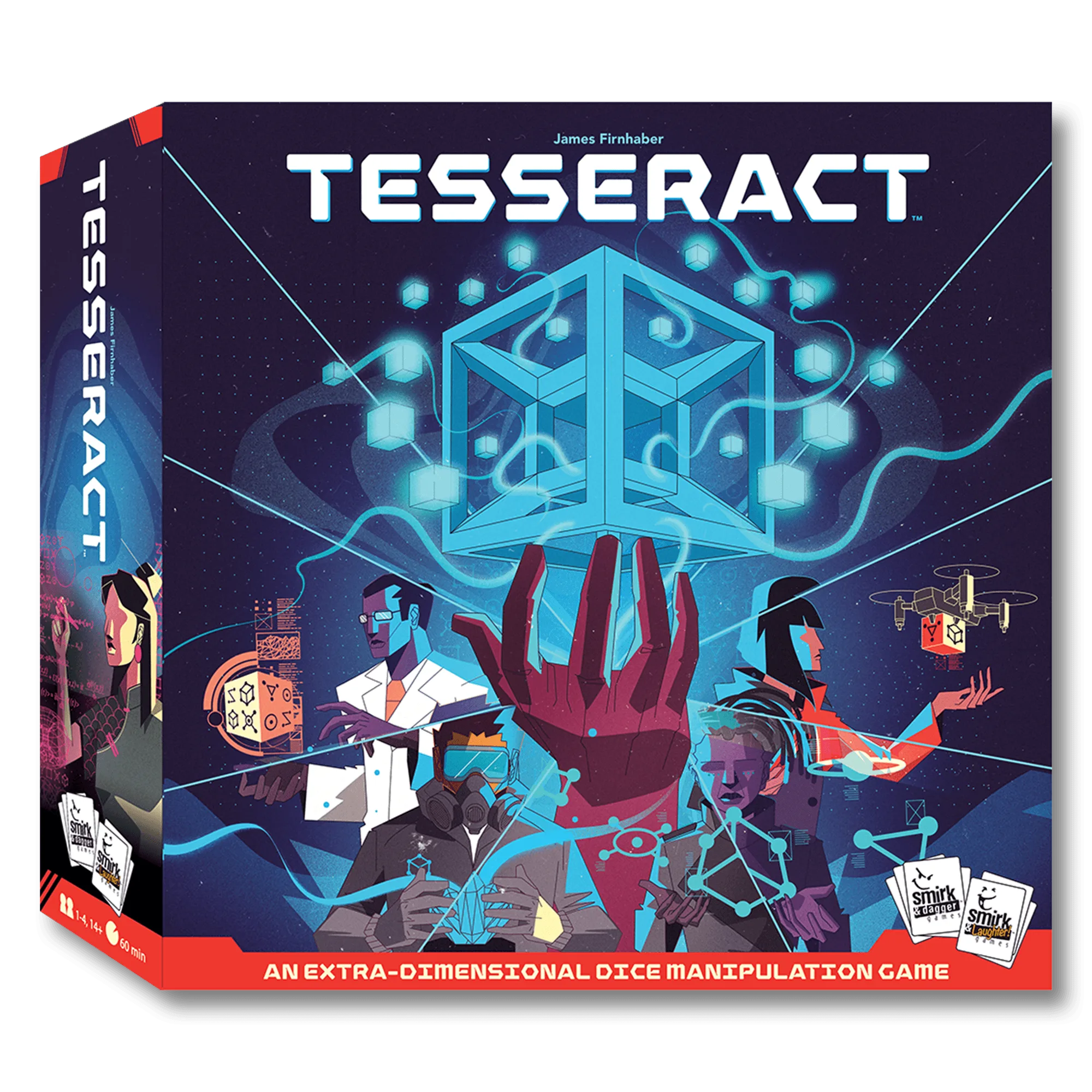
- TESSERACT: a cooperative, puzzle strategy game: A cooperative puzzle strategy game featuring a cube of 64 dice on a rotating platform. If your group enjoys The SPILL's cooperative pressure but wants a more abstract, puzzle-first challenge, TESSERACT offers a different style of shared problem-solving.
The SPILL rewards teams that communicate and accept smart losses. Set up the tower carefully, divide roles early, and protect the Sea Life that matters most. If you want a more tactile board, the Deluxe edition's 56 full-color wood tiles make the crisis easier to read and faster to plan around.