Quick answer
Most sewing problems come from three things: incorrect threading, the wrong needle or thread for the fabric, or a machine that just needs a clean. Work through the symptom-to-cause checks below before you rip out a single seam.
Why thread tangles usually aren’t the thread’s fault
It’s tempting to blame the spool, but tangles under the fabric almost always mean the top thread didn’t seat properly in the tension discs or the bobbin is wound unevenly. Before you rethread, clip the thread at the spool and pull it out of the machine—never yank a tangled nest backward through the tension path. That backward pull can bend the needle or burr the bobbin case, which creates a new problem.
When to stop adjusting and change your setup
If you’ve rethreaded, changed the needle, and cleaned the bobbin area, and the same stitch still fails on the same fabric, stop. Repeating the same adjustments rarely helps. Switch to a fresh needle size or a different thread weight, or test on a scrap of the same fabric first. A machine that fails on every fabric after a full reset likely needs a service—not more troubleshooting at home.
Symptom-to-fix diagnosis
- Thread nests under the fabric: Likely cause: top thread not seated in the tension discs, or bobbin thread not through the case slot. Corrective action: remove the bobbin, rethread the top with the presser foot up, then reinsert the bobbin and bring the thread up. Stop if the nest returns on a test scrap—switch to a new needle and check for lint under the throat plate. Always test on a scrap before you sew the real seam.
- Skipped stitches or loose top thread: Likely cause: needle too small or dull for the fabric, or the wrong thread weight. Corrective action: match the needle to the fabric (sharps for wovens, universal for knits) and rethread. Stop if the problem persists after a needle change—try a different thread weight before adjusting tension. Change one variable at a time so you know what fixed it.
- Bobbin thread tangles or breaks: Likely cause: bobbin wound unevenly, overfilled, or the wrong bobbin for the machine. Corrective action: rewind a fresh bobbin at a slow, steady speed and check that it sits flush in the case. Stop if the case feels rough or the thread catches—have the bobbin case inspected before you sew again. A smooth-wound bobbin prevents most bobbin-side headaches.
- Seam puckers or fabric feeds unevenly: Likely cause: tension too tight for the fabric, or the presser foot pressure is too high. Corrective action: loosen top tension one number at a time and test on a scrap of the same fabric. Stop if the fabric still puckers after two tension changes—switch to a lighter thread or a stabilizer instead of fighting the machine. If two adjustments don’t work, change the material setup, not the machine.
A small fix for the “I meant to do that” pile
-
Thread Happens- Sewing Labels: Sew-in fabric labels designed for quilts, garments, bags, and accessories. When a seam comes out crooked or a tangle leaves a scar, a label lets you own the make with a wink instead of hiding the story.
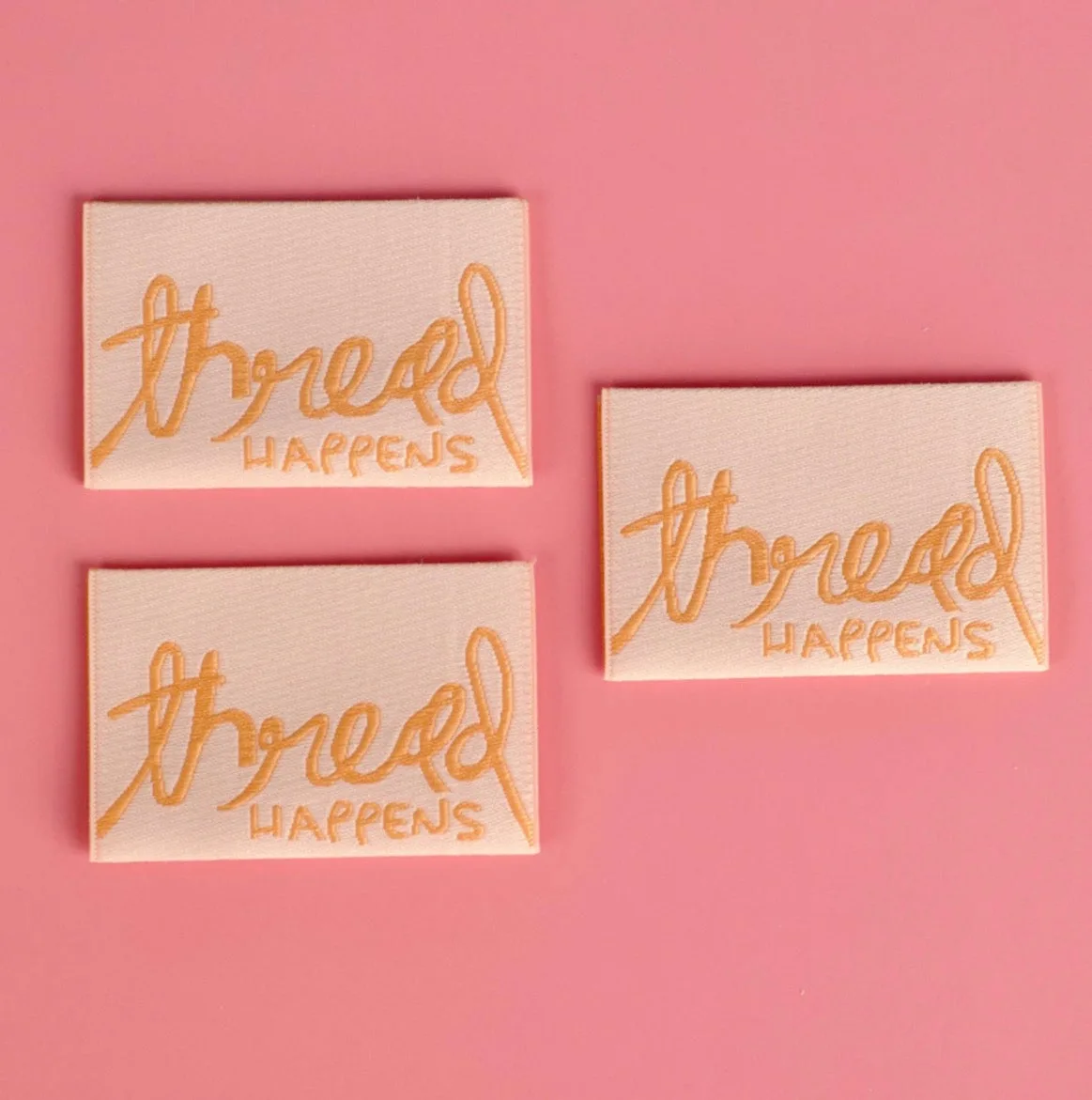
Thread Happens- Sewing Labels