Quick answer
Most toddlers are ready to start using a fork and spoon between 12 and 18 months, but readiness depends more on motor skills and interest than age alone.
Why age isn't the only factor
While many guides point to 12 months as a starting point, every child develops at their own pace. Some may show interest in utensils as early as 10 months, while others might not be ready until after their second birthday. Watching for specific behaviors is more reliable than waiting for a calendar date.
Pushing utensils too early can lead to frustration for both parent and child. It's better to wait until your toddler demonstrates curiosity about how you eat or tries to grab the spoon from your hand during meals.
The mess factor and what to expect
Self-feeding with utensils is inherently messy, especially in the beginning. Expect food to end up on the floor, in their hair, and everywhere in between. This is a normal part of the learning process and not a sign that your child isn't ready.
Choosing utensils with an ergonomic design can help reduce some frustration. The Raise™ Toddler Fork & Spoon Set, for example, is designed to fit toddler hands and features tips that pick up food easily, which can make the early attempts more successful.
Frequently asked questions
What is the ideal baby self-feeding age?
Most babies show readiness between 12 and 18 months. Look for signs like reaching for your spoon, imitating your eating motions, or trying to grab food with their hands and bring it to their mouth. Some start earlier, some later — both are normal.
How do I know my toddler is ready for utensils?
Key signs include: they can sit up well in a high chair, they show interest in the food you're eating, they try to grab the spoon from you, and they can bring food to their mouth with their hands. If they're still mostly playing with the utensil rather than attempting to use it, wait a few more weeks. If your toddler uses the utensil as a drumstick more than a tool, they're not ready yet.
Which type of toddler eating tools work best for beginners?
Look for short, chunky handles that are easy for small hands to grip. Utensils with slightly curved or angled heads can help food stay on the spoon or fork. The Raise™ Toddler Fork & Spoon Set is a good example — it's designed for small hands and the flatware picks up food with ease, making early attempts more rewarding.
Should I start with a spoon or a fork first?
Start with a spoon. Spoon foods like yogurt, applesauce, or mashed vegetables are easier to scoop and stay on the utensil. Forks work better once your toddler is comfortable with spearing softer foods like cooked carrots or banana slices. Many sets, including the Raise™ set, include both so you can introduce them as your child progresses.
How can I make the transition to utensils less messy?
Use a suction bowl or plate to keep the dish in place. Offer pre-loaded spoons — scoop the food yourself and hand the utensil to your toddler. Let them practice with thicker foods that stick to the spoon better. Accept that mess is part of learning and use a splash mat under the high chair to simplify cleanup. Pre-loading the utensil for the first few weeks builds success before asking them to scoop independently.
Product spotlight
-
Raise™ Toddler Fork & Spoon Set: The Raise™ Toddler Fork & Spoon Set includes a base that keeps utensil tips off tables and other surfaces, away from germs. This means less worry about dropped utensils touching dirty surfaces during meal times, giving parents one less thing to clean.
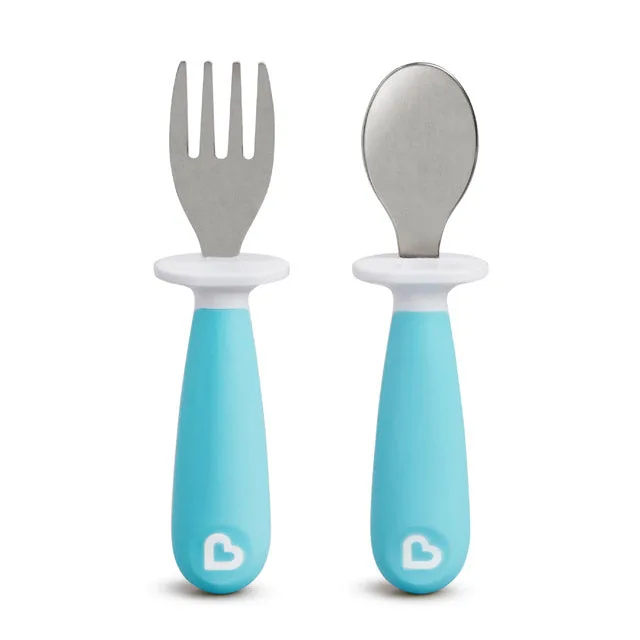
Raise™ Toddler Fork & Spoon Set
-
Raise™ Toddler Fork & Spoon Set: The set features an ergonomic design that fits toddler hands. A comfortable grip helps toddlers hold and control the utensils more easily, which can boost confidence and reduce frustration during self-feeding practice.