Quick answer
If your toddler refuses the peg puzzle, the cause is usually a mismatch between the task and their current fine motor or problem-solving skills. Start by simplifying the puzzle, then build up hand strength and shape recognition before expecting independent success.
Why toddlers refuse puzzles: frustration vs. skill gap
Toddlers don't refuse puzzles out of stubbornness. Often, the pieces are too small, the pegs are too thin, or the shapes don't visually match the holes clearly. When a child can't grasp or rotate a piece easily, frustration builds fast and they push the puzzle away.
Another common cause is that the puzzle is slightly beyond their current fine motor or spatial skills. A toddler who can stack blocks may still struggle with the precise wrist rotation needed to align a shape into its slot. Recognizing the difference between "won't do it" and "can't do it yet" changes how you respond.
The role of fine motor skills in peg puzzles
Peg puzzles ask a toddler to grasp a peg, lift the piece, rotate it, and drop it into the matching hole. That sequence relies on finger strength, wrist control, and hand-eye coordination. If any of these are still developing, the puzzle can feel impossible even when the shape matching is easy.
A jumbo peg puzzle with extra-thick pieces and large pegs is designed to reduce that frustration. The bigger pegs give small hands more surface to grip, and the thick pieces are easier to lift and turn. If your child is struggling, a simpler peg puzzle can bridge the gap between cause-and-effect play and true shape matching.
The frustration loop: why pushing makes it worse
When a toddler refuses a puzzle, the instinct is often to demonstrate or coax. But pressure can turn a playful challenge into a power struggle. The child may associate the puzzle with failure and avoid it entirely, even if the skill is within reach. Recognizing the difference between "can't do it yet" and "won't try" changes how you respond.
A refusal that happens only during certain moods or times of day often points to tiredness or overstimulation rather than a skill gap. A consistent refusal across many attempts usually signals that the puzzle is too hard or the child is bored with the same activity.
When the puzzle is too easy or too hard
Peg puzzles sit between simple knob puzzles and multi-piece jigsaws. If the pieces are too tight or the shapes too similar, a toddler may give up before they feel successful. If the puzzle is too easy, they may lose interest and walk away, which looks like refusal but is really boredom.
The First Shapes Jumbo Peg Puzzle uses five extra-thick pieces with jumbo wooden pegs. The large pegs and basic shapes are designed for early grasp and matching, so they suit toddlers who are still building finger strength and shape recognition. If your child is past that stage, they may need a puzzle with more pieces or different shapes.
Diagnose the Refusal: Symptom, Cause, Corrective Action
- Symptom: Your toddler pushes the piece away, drops it, or walks off after one or two tries.
- Likely cause: The puzzle is too advanced for their current fine motor or matching skills, or the pieces are too small for their grip. Watch how your child handles the pieces: if they struggle to grasp or rotate them, the issue is motor skill, not interest.
- Corrective action: Start with a jumbo peg puzzle with extra-thick pieces and large pegs, like the First Shapes Jumbo Peg Puzzle. Model turning the piece and placing it, then let your child try with your hand guiding theirs. Keep sessions short and end on a success. Offer the puzzle only when your child is calm and alert; stop before frustration peaks.
- When to step back or choose another option: If your toddler still refuses after several gentle attempts, set the puzzle aside for a week and return to it later. If they consistently avoid all puzzles, try a different activity that builds the same fine motor skills, such as stacking rings or shape sorters, before revisiting the peg puzzle. Choose a different challenge if the puzzle remains frustrating after a break.
Product facts
-
First Shapes Jumbo Peg Puzzle - 5 Pieces: This extra-thick wooden puzzle features a charming cottage with five big puzzle pieces and jumbo wooden pegs that are easy for little hands to grasp and lift. The jumbo pegs reduce the grip strength needed, so a toddler who struggles with fine motor skills can still succeed and build confidence.
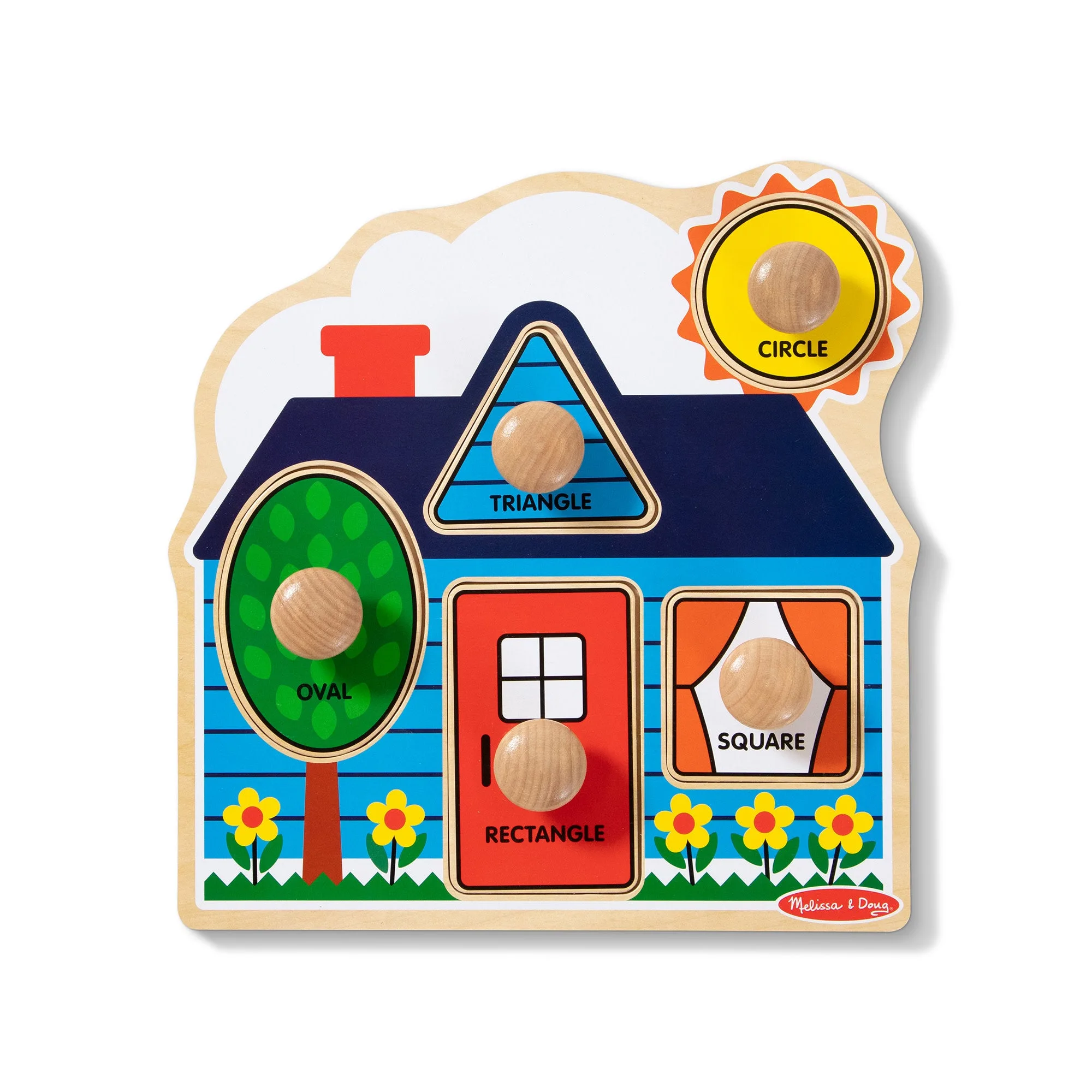
First Shapes Jumbo Peg Puzzle - 5 Pieces