Quick answer
Clean your child's toy harmonica after each use by tapping out moisture and letting it air dry completely. For deeper cleaning, use a soft brush and mild soap on the exterior only.
Why regular cleaning matters for a toy harmonica
A toy harmonica collects saliva, dust, and debris inside the small chambers. Over time, this buildup can muffle the sound, make playing less enjoyable, and even encourage mold growth. Wooden models, like those made from FSC-certified wood, are especially sensitive to moisture because the material can warp or crack if not dried properly.
Because children often share toys or put them down between sessions, a quick cleaning habit keeps the instrument hygienic and ready for the next playtime. The goal is to remove moisture without damaging the internal reeds or the wood finish.
What to avoid when cleaning a kid's harmonica
Never submerge a wooden harmonica in water. The reeds are delicate, and the wood can absorb liquid, causing swelling or splitting. Avoid using harsh chemicals, alcohol wipes, or dishwasher cycles. Stick to gentle methods that preserve the instrument's structure and tone.
If you notice a persistent musty smell or visible mold, the harmonica may be beyond safe repair for a child's toy. In that case, replacement is the simplest solution.
Diagnosis: Common harmonica problems and fixes
- Symptom: Muffled or weak sound: Likely cause: Saliva or debris blocking the reed chambers. Corrective action: Hold the harmonica with the mouthpiece facing down and tap it gently against your palm to dislodge loose particles. For stubborn buildup, use a soft, dry toothbrush to brush the exterior slots. Do not insert anything into the holes. If tapping doesn't improve the sound, the blockage may be deeper — consider replacing the harmonica.
- Symptom: Musty smell or visible spots: Likely cause: Moisture trapped inside after play. Corrective action: After each use, shake out excess saliva and let the harmonica air dry on a clean towel, mouthpiece down, for at least 2 hours. Store in a dry place, not in a sealed case or plastic bag. If the smell remains after 24 hours of drying, the wood may be compromised — replace the toy for hygiene.
- Symptom: Sticky or sticking reeds: Likely cause: Dried saliva or sticky residue. Corrective action: Gently tap the harmonica as above. For sticky reeds, you can carefully rinse the exterior under lukewarm running water (avoiding the mouthpiece holes) and dry immediately. This is a last resort — never soak. If the reed still sticks after drying, the instrument is likely worn out. A new harmonica is the safest option.
Product spotlight
-
Speedy Monkey - Toy Harmonica- each color sold separately: The Speedy Monkey Toy Harmonica is made from FSC®-certified wood and designed for children aged 3 and up. The wood construction means moisture care is extra important — proper drying after each use helps prevent warping and keeps the harmonica safe for little musicians.
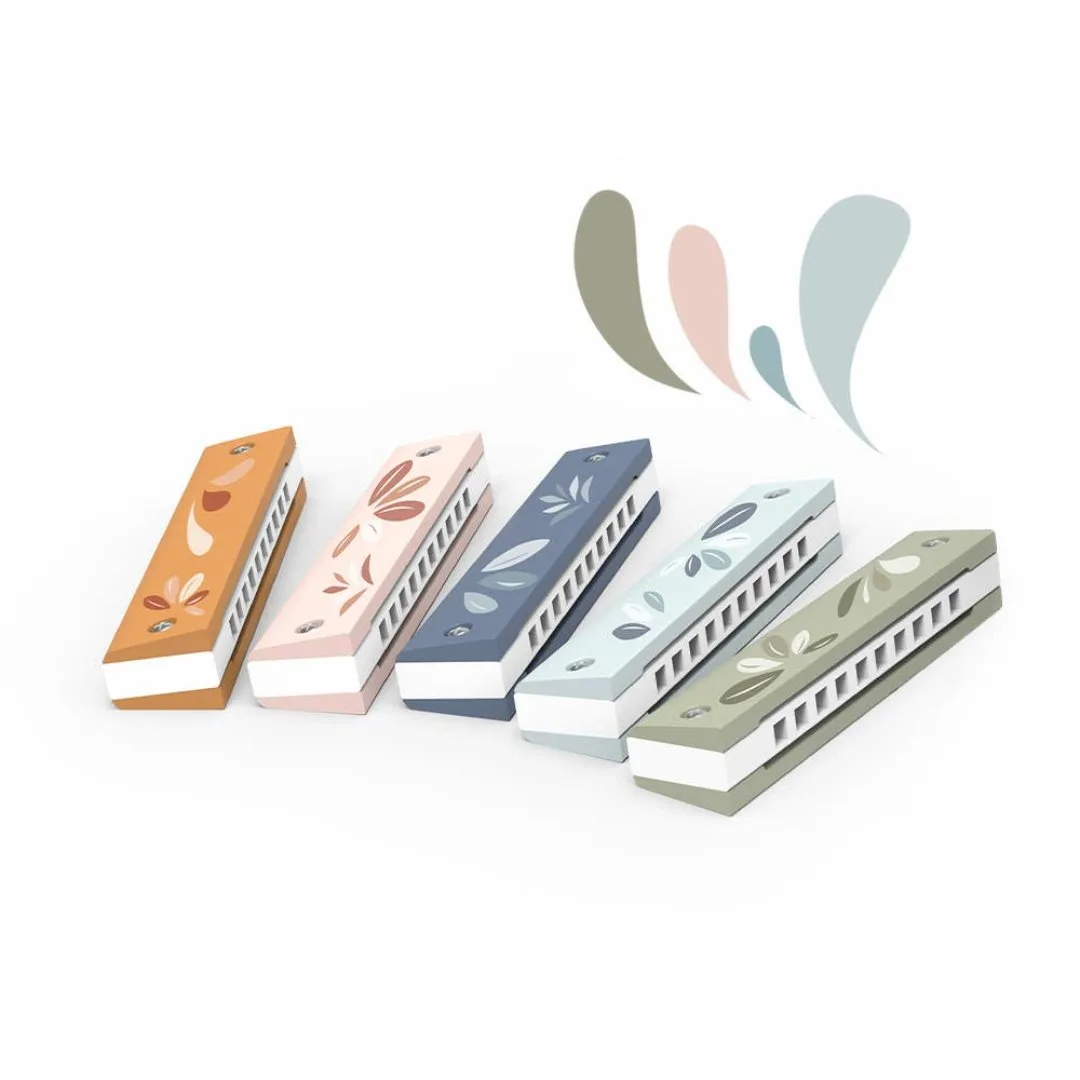
Speedy Monkey - Toy Harmonica- each color sold separately