Quick answer
Training a dog that seems impossible requires shifting from formal sessions to integrating requests into your dog's daily wants, using positive reinforcement at the perfect moment.
Why traditional training often fails with stubborn dogs
Many owners treat training like a classroom drill, but dogs with strong wills or past trauma often shut down or rebel in that setting. The key is to stop fighting for attention and instead use what your dog already wants—a walk, a treat, a door opening—as a natural training opportunity.
This approach works because it leverages your dog's own motivation rather than forcing compliance. It's especially effective for reactive, fearful, or independent breeds that don't respond to pressure.
Diagnosing and solving impossible dog training moments
- Symptom: Your dog ignores known cues, refuses to comply, or actively resists training sessions.
- Likely cause: The training context feels adversarial or irrelevant to your dog. They see no personal payoff in the requested behavior. The problem is usually timing and motivation, not your dog's intelligence or your skill.
- Corrective action: Wait for a moment when your dog naturally wants something (going outside, a treat, your attention). Then ask for one simple behavior—like sit or look at me—before giving them what they want. Repeat this pattern throughout the day. Start with one or two high-value wants per day. Gradually increase the number of requests as your dog succeeds.
- When to stop or choose another option: If after two weeks of consistent practice your dog still shows extreme avoidance or aggression during these exchanges, consult a certified positive-reinforcement trainer. Some dogs with deep-seated fear or pain require professional assessment before training can proceed. Safety first. If you see signs of stress (yawning, lip licking, whale eye), pause and reduce the difficulty.
A resource that makes the approach practical
-
When Pigs Fly!: Training Success with Impossible Dogs: When Pigs Fly! teaches you to integrate dog training into your everyday routine by asking for a specific behavior when your dog wants something. Instead of scheduling separate training time, you learn to use real-life moments—like meal prep or leash-up—to reinforce calm, desired behaviors without extra effort.
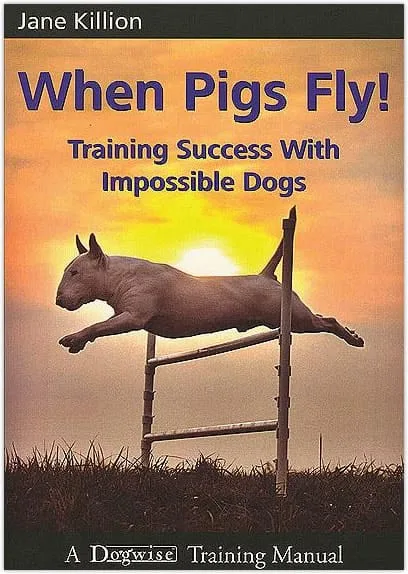
When Pigs Fly!: Training Success with Impossible Dogs