Quick answer
To transition your dog from a collar to a no-pull harness, start with short indoor sessions, adjust the fit for comfort and security, then pair the harness with loose-leash walking practice before using it on regular walks.
Why switch to a no-pull harness?
Collars put pressure on your dog's neck and throat, which can cause coughing, gagging, or injury if your dog pulls hard. A no-pull harness distributes force across the chest and shoulders, protecting the neck and spine. The Beast & Buckle No Pull Harness includes D-rings on both sides and a safety handle on the back, giving you more control without hurting your dog.
What to expect during the transition
Your dog may act confused or resist the harness at first because it feels different from a collar. Some dogs try to back out of it or freeze. That's normal. The key is to introduce the harness gradually, using treats and praise, so your dog associates it with positive experiences. Avoid rushing into a full walk on day one.
Steps to transition your dog from collar to no-pull harness
- Step 1: Let your dog inspect the harness: Place the harness on the floor or hold it out for your dog to sniff. Give treats and praise when they show interest. Common mistake: forcing the harness onto your dog right away can create fear. Take it slow. Your dog should be relaxed around the harness before you try putting it on.
- Step 2: Buckle the harness loosely indoors: Put the harness on your dog without tightening it fully. Let them wear it for a few minutes while playing or getting treats. Check for signs of discomfort like scratching or freezing. Common mistake: overtightening the harness, which can rub or restrict movement. The harness should be snug enough to stay in place but loose enough to fit two fingers between the strap and your dog's body.
- Step 3: Adjust the fit for your dog's body type: Tighten the straps so the harness sits behind the shoulder blades and does not rub the armpits. The D-rings should rest on the sides, not on the spine. Common mistake: leaving the harness too loose, which lets your dog slip out or shifts the pressure to the neck. A properly fitted harness stays centered and does not twist when your dog moves.
- Step 4: Practice walking with a loose leash indoors: Attach the leash to one of the D-rings and let your dog walk around the house or yard. Reward any moment of loose-leash walking. Common mistake: yanking the leash when your dog pulls, which defeats the purpose of the harness. Instead, stop and wait for slack. Indoor practice builds confidence before you face outdoor distractions.
- Step 5: Take short, low-distraction walks outside: Choose a quiet time and place for the first few walks. Keep sessions under 10 minutes. If your dog pulls, stop moving and call them back to your side. Common mistake: expecting your dog to walk perfectly on the first outdoor try. Be patient and consistent. Gradually increase walk length and distraction level as your dog learns to walk without pulling.
Product facts
-
Autumn Plaid No Pull Dog Harness: The Beast & Buckle No Pull Harness provides the strength, structure and security needed to handle strong pulling and even train the behavior out entirely. This means the harness is built to last through training sessions, so you can focus on teaching loose-leash walking without worrying about gear failure.
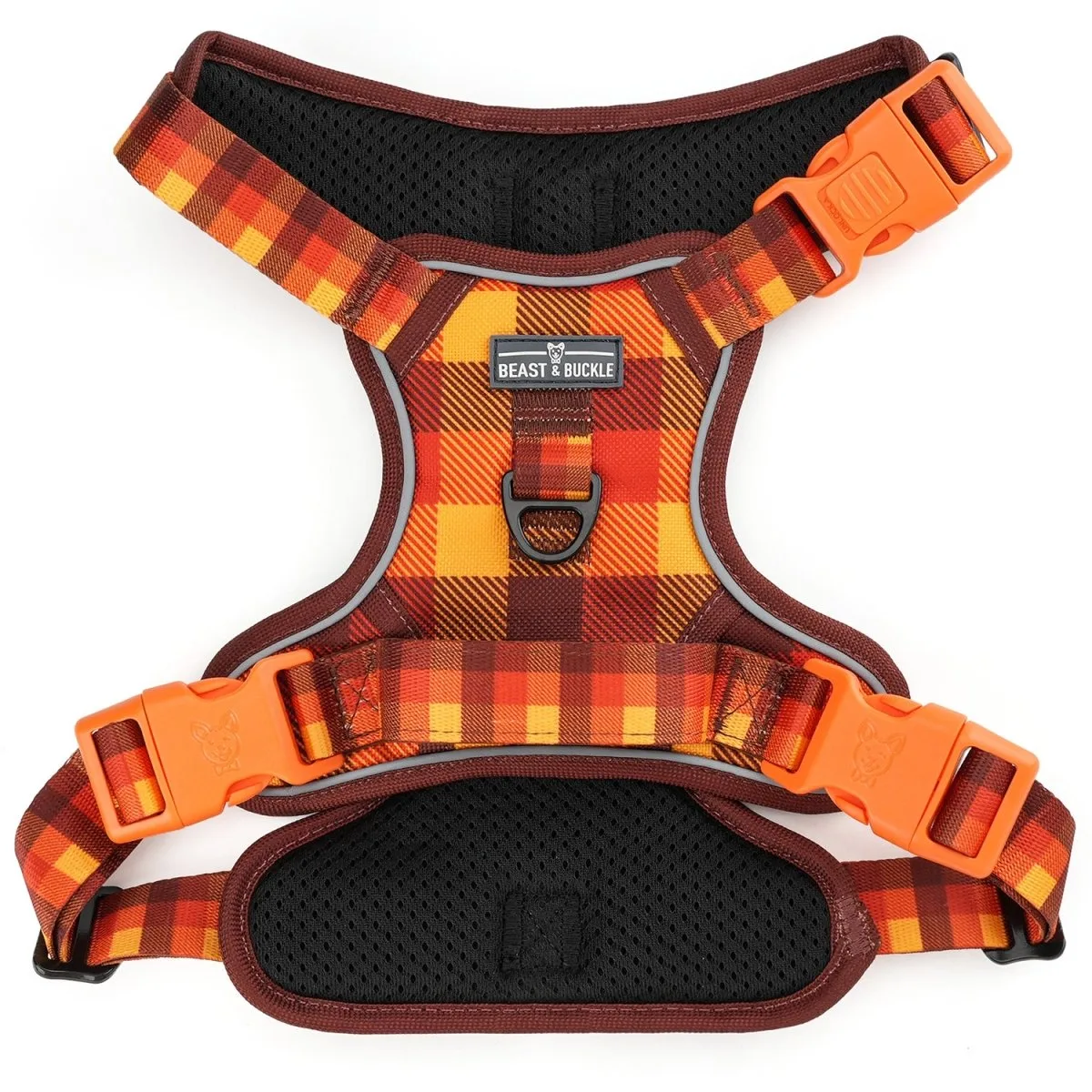
Autumn Plaid No Pull Dog Harness


