Quick answer
For most road trips, a travel dog bed works best when it matches the space your dog actually gets in the car, not the size of your dog alone. If your dog already sleeps well on an orthopedic bed at home, bring that bed and protect it with a waterproof liner rather than buying a thin portable pad. Choose a portable dog bed for car use only when you need something packable for short trips or tight cargo space.
A travel dog bed is not just a smaller version of your dog's everyday bed. On a road trip, the bed has to survive being folded, stuffed behind a seat, and used on unfamiliar floors. That changes what matters most: how it fits the space, how easy it is to clean, and whether your dog will actually settle on it.
This guide walks through the decisions that separate a bed your dog uses from one that ends up shoved in the trunk. It also covers when a portable pet bed makes sense and when your existing orthopedic bed is the better call.
Start with the space, not the dog's weight
Most travel bed mistakes happen because people shop by dog size alone. In a car, the limiting factor is usually the footprint available on the seat, in the cargo area, or on the floor between seats. Measure that flat space first, then look for a bed that fits inside it with a little room to spare.
A bed that is too large gets compressed against doors or seats, which makes it lumpy and hard for your dog to settle on. A bed that is too small leaves your dog hanging off the edges. For large dogs, this trade-off is real: you may need to accept a thinner bed that fits the space rather than a thick orthopedic bed that does not.
- Measure the usable flat area in your vehicle before shopping.
- Leave a few inches of clearance so the bed is not crushed against a door or seat.
- If your dog is between sizes, size down for car use and up for home use.
Decide between a portable bed and your everyday bed
A portable dog bed for car use is usually lighter, rolls or folds, and is easy to move between a hotel room and the car. The trade-off is support. Thinner portable beds may not give a large dog the joint cushioning it gets at home, especially on hard hotel floors.
Your everyday orthopedic bed offers better support but is bulkier and harder to protect from dirt and moisture. If your dog is used to a specific bed and sleeps well on it, bringing that bed can reduce settling problems on the road. The practical middle ground is to bring the everyday bed and add a waterproof liner underneath or over the sleep surface.
- Short trips and tight cargo space: a packable portable bed is usually enough.
- Long trips or dogs with joint issues: bring the orthopedic bed if it fits.
- Use a waterproof liner to protect an everyday bed from spills and damp fur.
Durability and cleaning matter more on the road
Travel exposes a bed to more dirt, moisture, and chewing than a bed that stays in one spot at home. A chew-resistant cover and strong stitching hold up better when a dog paws or nibbles at the bed in an unfamiliar place. If your dog is a heavy chewer, this is the feature to prioritize over plushness.
Cleaning is the other practical test. On a multi-day trip, you cannot wait for a full wash and dry cycle. Removable covers and waterproof liners let you wipe or rinse the surface and get back on the road. A bed that cannot be cleaned easily will smell by day three.
- Prioritize chew-resistant fabric if your dog chews when anxious.
- Choose a bed with a removable cover or a waterproof liner you can wipe down.
- Bring a spare blanket or cover so one can dry while the other is in use.
Match the bed to how your dog rides
Some dogs sleep flat on a seat or cargo floor. Others circle, dig, and lean against a side. If your dog leans or sprawls against a wall, a bed with raised sides or a three-sided shape gives more security and keeps the dog from sliding. If your dog stretches out flat, a flat portable bed is easier to fit.
Temperature also plays a role. A bed that traps heat may be fine in winter but uncomfortable in summer. A simple flat bed with a breathable cover is easier to manage across seasons, and you can add a blanket for warmth rather than relying on the bed itself.
- Leaning or circling dogs: consider a bed with raised sides.
- Flat sprawlers: a flat portable bed is easier to fit and pack.
- Hot climates: choose a breathable cover and add a blanket for cold nights.
Decision rules for choosing a travel dog bed
- If the car space is tight: Choose a packable portable bed that fits the measured flat area rather than a thick orthopedic bed that gets compressed. Fit beats thickness in a small space.
- If your dog has joint issues: Bring the orthopedic bed your dog already uses and protect it with a waterproof liner instead of switching to a thin travel pad. Consistent support reduces settling problems on the road.
- If your dog chews or digs: Prioritize a chew-resistant bed with strong fabric and stitching over a plush, lightweight bed. Durability is the feature you will notice most on a long trip.
- If the trip is longer than a weekend: Plan for cleaning: a removable cover or waterproof liner lets you manage dirt and odor without a full wash cycle. Easy cleaning keeps the bed usable for the whole trip.
Products that fit a road trip setup
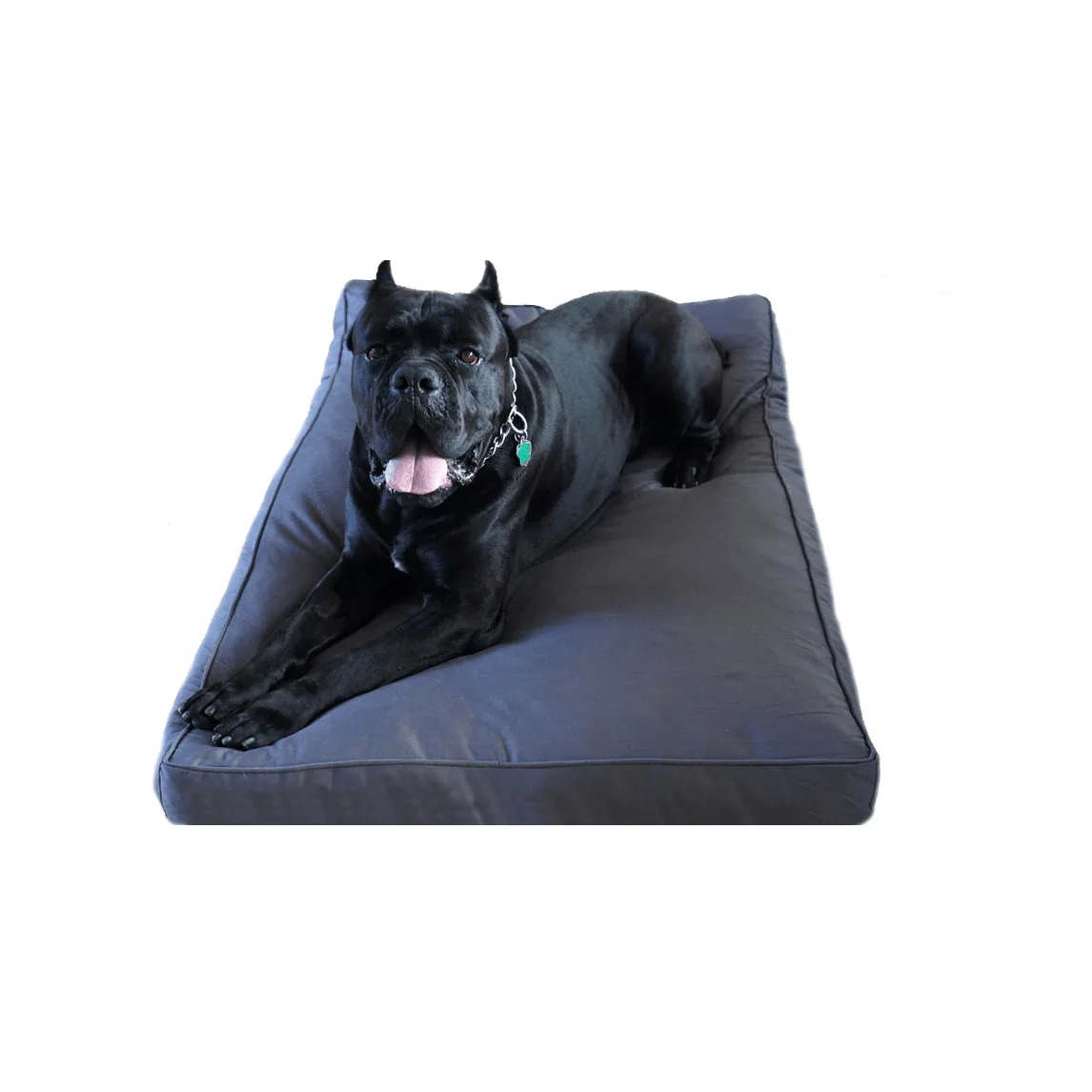
- Chew Proof Dog Bed (with a 200 Day Guarantee): Bully Beds offers a high quality chew resistant dog bed that has extra strong padding and fabric that is resistant to wear and tear. If your dog chews or digs at the bed in the car, this construction is more likely to survive the trip than a standard portable pad.
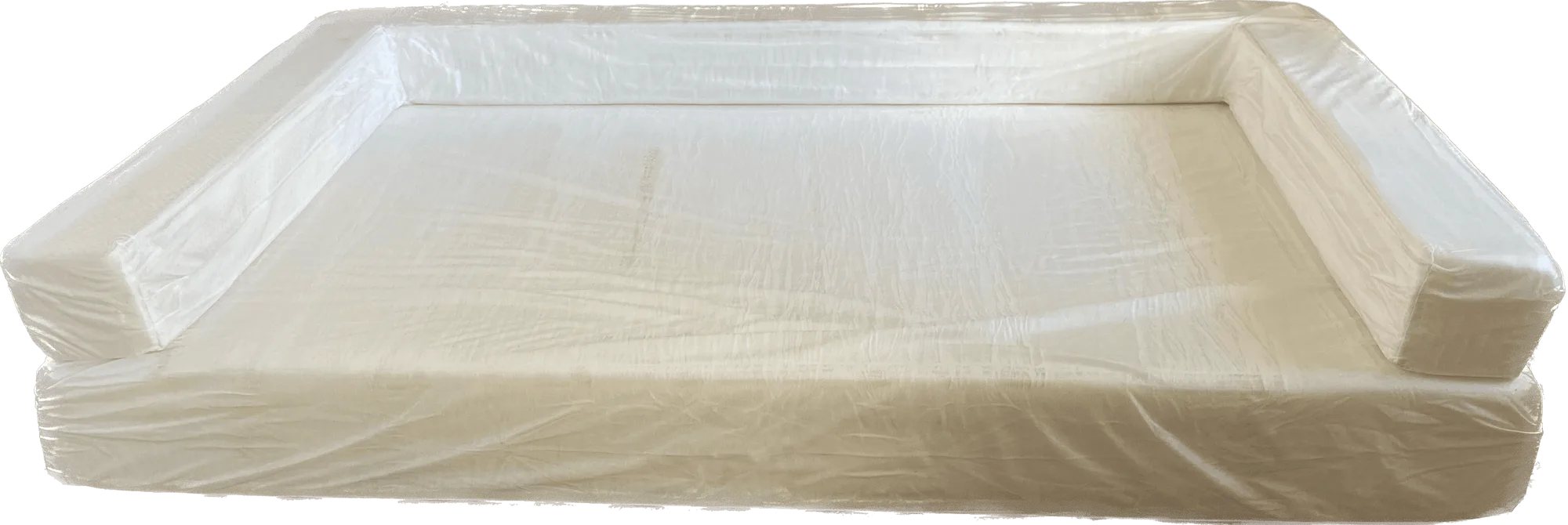
- 3 Sided Bed Waterproof Liner: The 3 Sided Bed Waterproof Liner is designed to fit our 3 sided bed and is available in four sizes to match your bed. A waterproof liner protects the bed from spills, wet fur, and accidents on the road, and it is easier to wipe down than a full bed cover.
Who this is for
Best for
- Owners taking large dogs on road trips who need a bed that fits a specific vehicle space
- Dogs with joint issues whose owners want to bring familiar orthopedic support on the road
- Owners who need a bed that can be cleaned easily between stops
Not for
- Owners looking for a permanent everyday bed for home use only
- Dogs that need a bed larger than the available vehicle space
- Owners who want a bed that never needs cleaning or protection
The right travel dog bed is the one that fits your car, survives the trip, and gives your dog enough support to settle. Measure first, decide between portable and orthopedic based on your dog's needs, and protect whichever bed you bring with a waterproof liner. That combination handles most road trips without overbuying.