Quick answer
Pack a toddler travel toy kit around one soft, familiar comfort item, one open-ended quiet toy, and one small accessory set, then rotate them one at a time instead of dumping everything into the bag at once. Test each toy at home first, keep the kit small enough to fit in a personal bag, and save a surprise toy for the hardest stretch of the trip.
Start with the child, not the toy aisle
A travel toy kit works only if it matches how your toddler already plays. Watch a normal afternoon at home and note which toys hold attention for more than five minutes, which ones get thrown, and which ones need an adult to operate. Those observations tell you more than any age label on a box. A toddler who loves feeding and rocking a doll will settle into nurturing role-play on a plane, while a toddler who mostly runs and climbs may need a toy that invites squeezing, opening, or quiet stacking instead.
Age and stage matter, but temperament matters more on a trip. A child who is easily overstimulated by noise and crowds often does better with one soft, repetitive comfort toy than with a bag of novelty items. A child who craves novelty may need several small toys rotated through the trip. You are not shopping for the perfect toy; you are matching a small set to the specific child in seat 14B.
What belongs in a calm-play kit
A calm-play kit is built from toys that ask for hands, not batteries. Soft dolls, small accessory sets, and simple take-apart or nesting toys let a toddler repeat an action quietly, which is exactly what you want in a confined space. Avoid anything with loud electronic sounds, loose tiny parts that roll under seats, or pieces that need a flat surface to work. If a toy cannot be used on a lap, it does not belong in the kit.
Size and weight decide how much you can carry. A soft doll that doubles as a pillow, a small picnic-style accessory set that stores inside its own container, and a compact baby doll that tucks into a pod all earn their space because they pack down and offer more than one kind of play. Toys that only do one thing for thirty seconds are the first things to leave behind.
Pack by moment, not by category
Trips have distinct phases: the wait before boarding, the first hour in motion, the long middle, and the final stretch when everyone is tired. Pack one small toy or activity per phase so you always have something new to reveal. Keep the kit in a bag you can open with one hand, and put the most engaging item on top where you can reach it without digging. A toddler who sees the whole bag at once will want all of it immediately, and then none of it.
Nine steps to build and pack the kit
- Audit how your toddler already plays: Spend one afternoon noting which toys hold attention for five minutes or more and which ones need an adult to work. Write down two or three winners. Checkpoint: if you cannot name two toys your child plays with independently, start there before buying anything new.
- Choose one soft comfort item: Pick a soft doll or plush that can be hugged, used as a lap pillow, and washed after the trip. Familiarity beats novelty for the first hour of travel. Common mistake: packing a brand-new comfort toy your child has never seen. Introduce it at home for a few days first.
- Add one open-ended quiet toy: Choose a toy with no batteries and more than one way to play, such as a doll with a removable outfit or a small set of pieces that can be sorted, fed, or tucked away. Checkpoint: if the toy makes noise you cannot turn off, leave it home.
- Add one contained accessory set: Pick a small set whose pieces store inside its own container, like a basket with hinged lids. Contained sets stay put on a tray table and are easy to zip away. Common mistake: loose pieces in a zip bag. They spill, roll, and disappear under seats.
- Test every toy at home first: Let your toddler play with each item for a full afternoon. Note whether pieces get lost, whether the toy frustrates them, and whether it holds attention without you. Checkpoint: any toy that causes a meltdown at home will cause a bigger one in transit.
- Pack by trip phase, not by toy type: Assign one small toy or activity to the wait, the first hour, the middle stretch, and the final stretch. Keep the bag organized so you can pull the right item without looking. Common mistake: handing over the whole bag at once. Reveal one item at a time.
- Keep the kit carry-on sized: Fit the entire kit into one personal bag or backpack pocket. If it does not close easily, you have packed too much. Checkpoint: you should be able to open and close the kit with one hand while holding a toddler.
Products that fit a travel kit
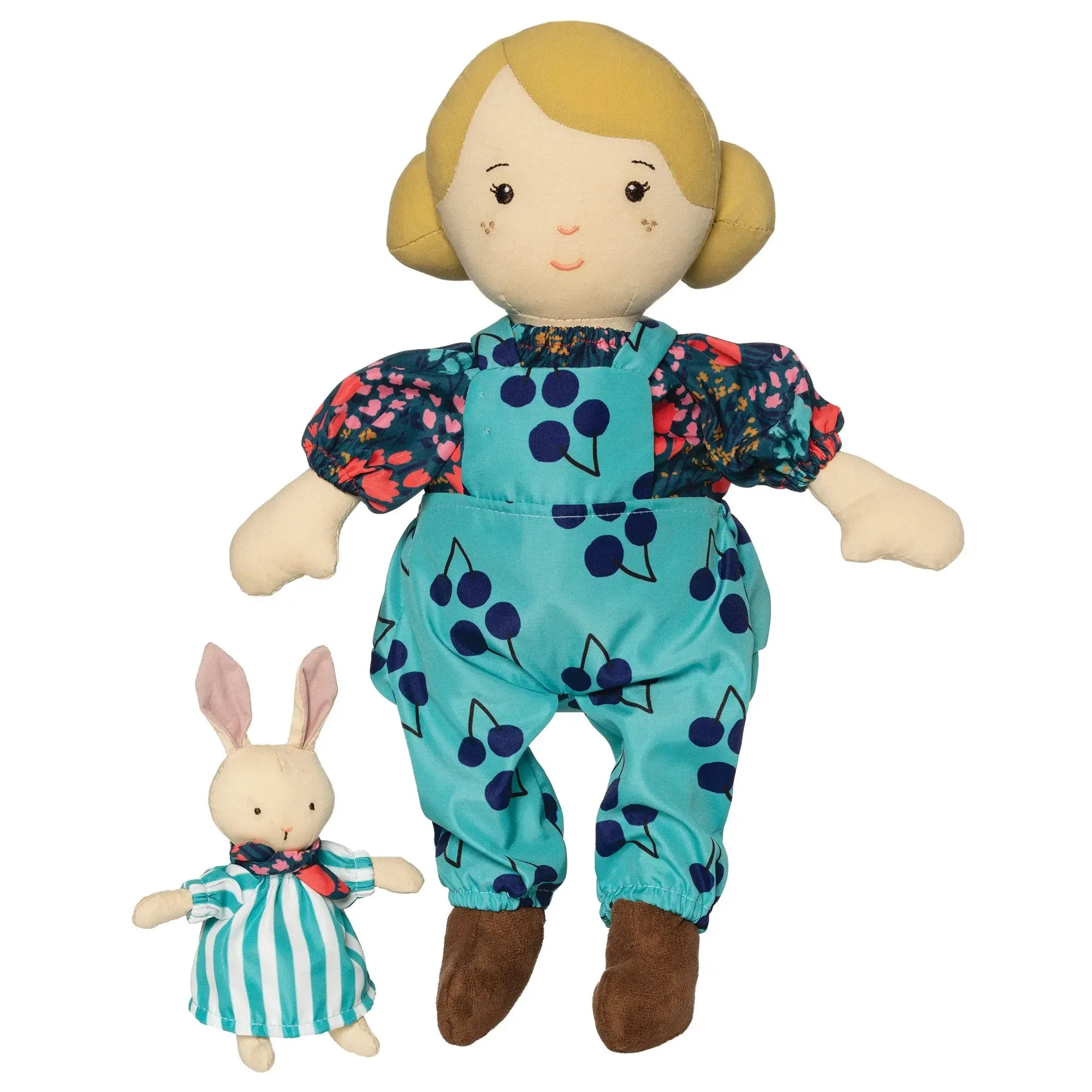
- Playdate Friends Ollie: Playdate Friends Ollie is a soft doll with a built-in onesie, a removable two-piece outfit and shoes, and a little bunny friend; it is machine washable and dryer safe. The soft body makes it comfortable to hold on a lap, the removable outfit gives toddlers a quiet dressing activity, and washability matters when travel messes happen.
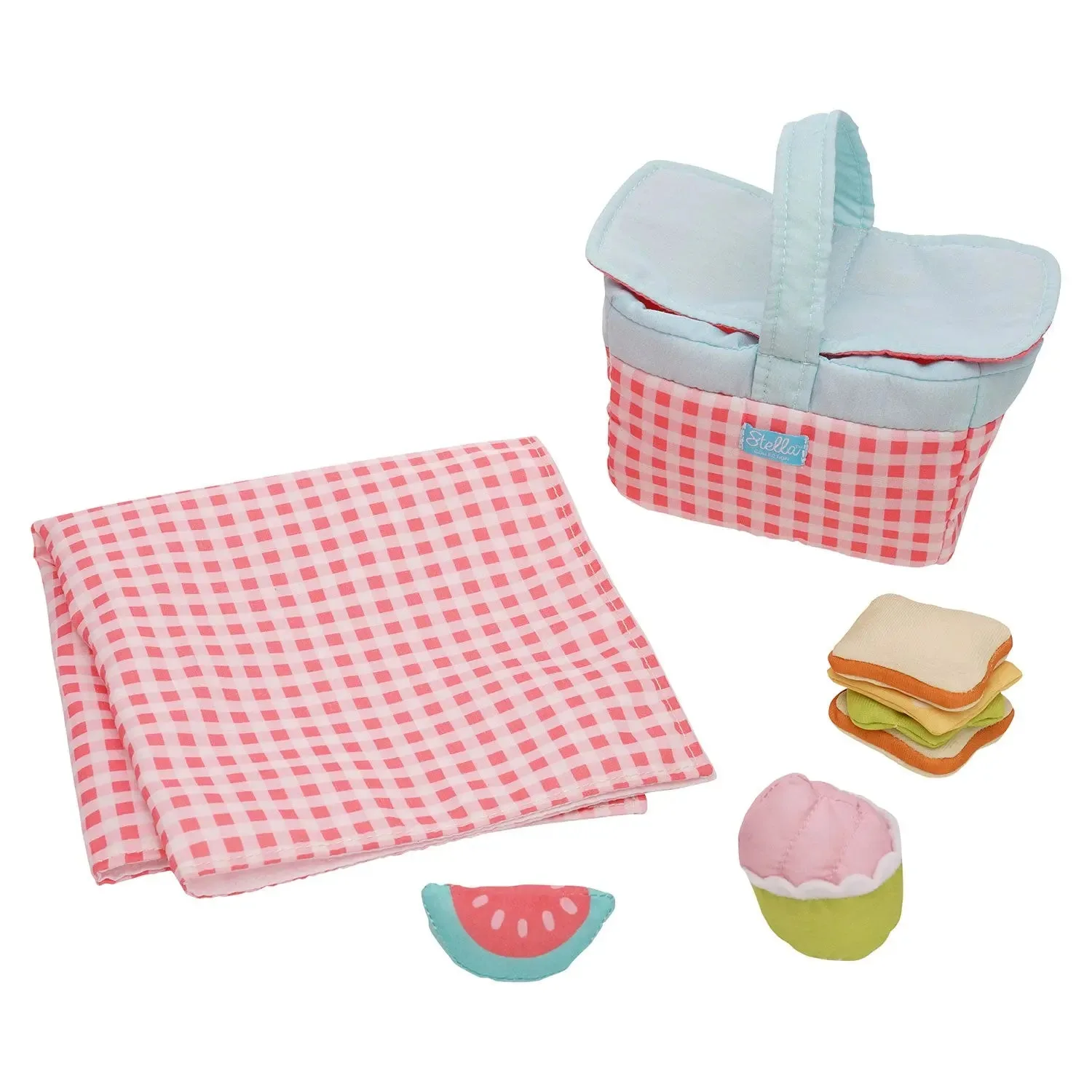
- Stella Collection Picnic: Stella Collection Picnic is a five-piece set with a picnic basket with hinged lids, a checkered blanket, a pretend sandwich, a cupcake, and a watermelon slice; the accessories are compatible with both 12-inch and 15-inch Stella dolls. The basket stores its own pieces, so the set stays contained in a carry-on, and the pretend-food play gives toddlers a repeatable, quiet role-play loop.
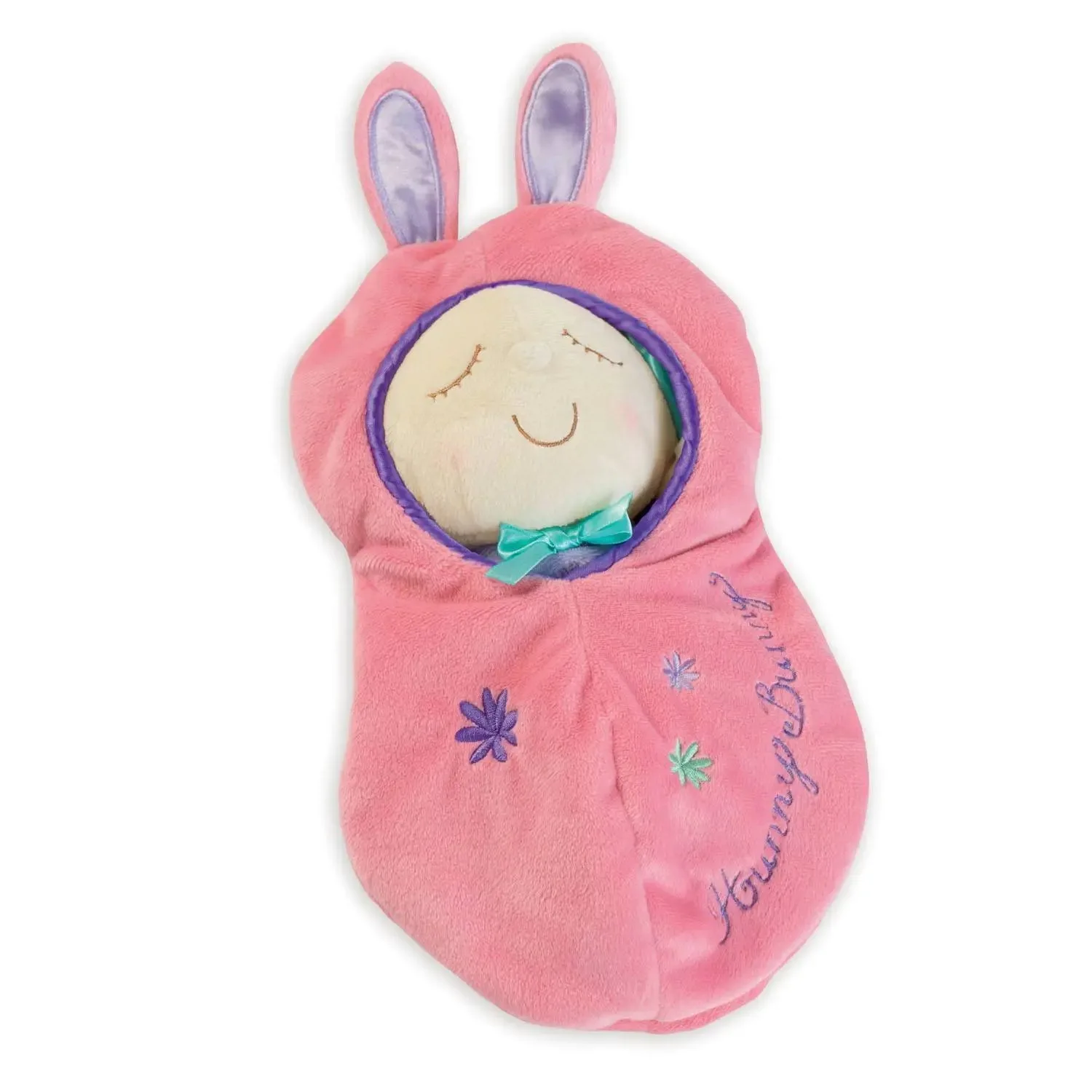
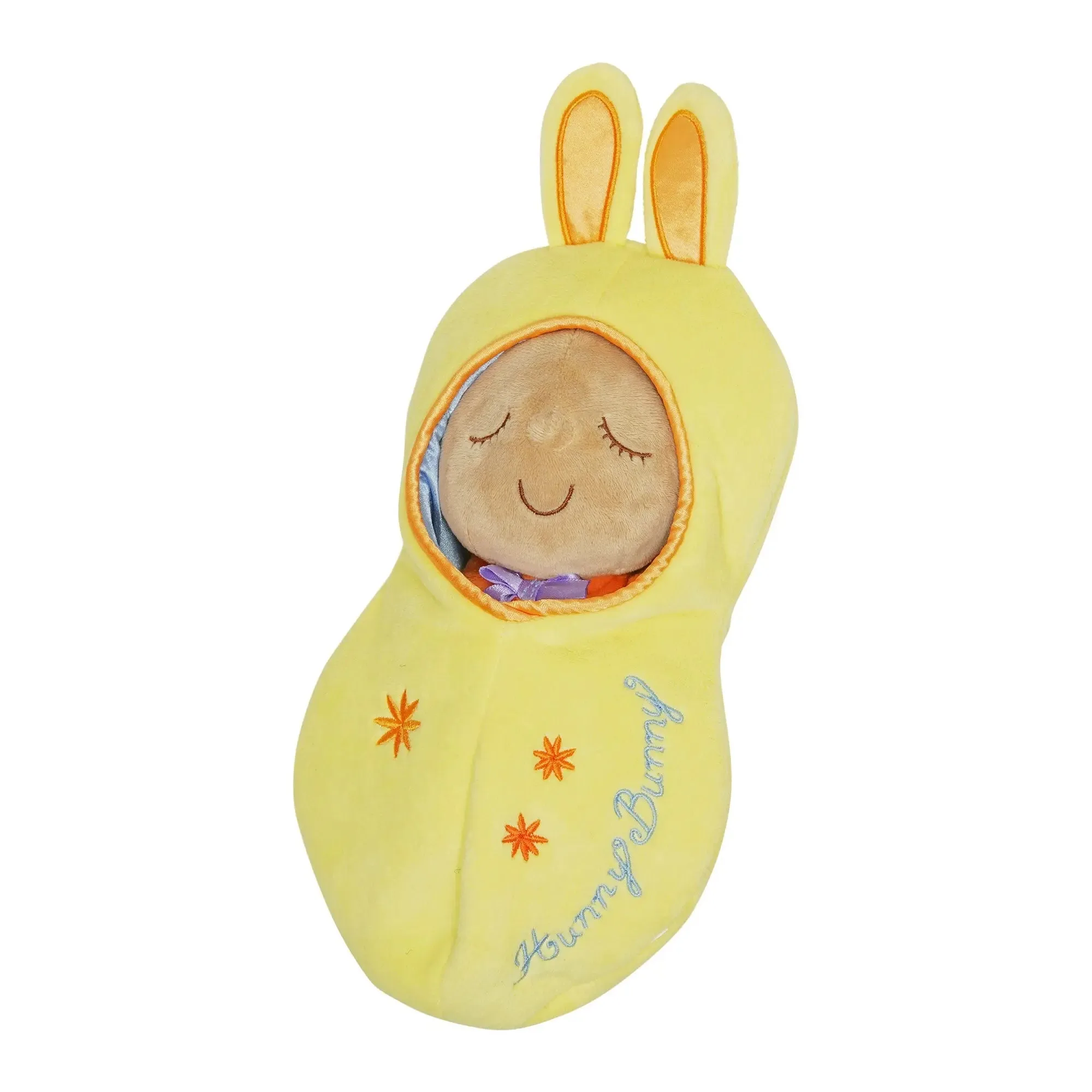
- Snuggle Pods Hunny Bunny Beige: Snuggle Pods Hunny Bunny Beige is an 8-inch baby doll with bunny ears and a cotton tail that tucks inside a pod with a satin-lined interior and velvety soft exterior, plus a satin hair tuft. The doll-and-pod format gives toddlers a put-in, take-out action that stays quiet and contained, and the small size fits easily in a personal bag.