Quick answer
Choose treads when you need maximum traction on loose or uneven surfaces and don't mind a slower, more deliberate pace. Stick with tires for smooth, hard surfaces where speed and maneuverability matter more.
Terrain and grip: the main trade-off
Treads (tracks) distribute weight over a larger contact area, which helps your Circuit Cubes vehicle climb over obstacles, grip loose dirt or carpet, and avoid sinking into soft ground. The trade-off is higher rolling resistance, which means your motor works harder and top speed drops.
Tires (wheels) concentrate the load on a smaller footprint, reducing friction and allowing higher speeds on hard, flat surfaces like tile, hardwood, or concrete. They also make turning sharper and more responsive. The downside: they can slip on loose gravel, thick carpet, or steep inclines.
Speed vs control: what to expect
If your build is a fast racer or a tight-turn robot, tires are the natural choice. The lower friction lets your Circuit Cubes motor spin the wheels quickly, and the smaller contact patch makes steering precise.
Treads excel in slow, torque-heavy applications. Think of a tank-style rover that needs to push through brush or climb over a stack of books. The extra grip comes at the cost of agility—treads are harder to turn sharply, especially on hard floors where they may scrub or skid.
Build complexity and parts
Treads typically require additional structure to keep them aligned and tensioned. You'll need guide wheels, axles, and sometimes a separate frame to prevent the treads from slipping off. This adds weight and complexity to your build.
Tires are simpler: attach them directly to a motor shaft or axle, and you're ready to roll. For quick prototypes or builds with limited space, tires are usually the easier choice.
Decision rules: treads or tires?
- Terrain is loose, soft, or uneven: Use treads. They provide better grip on dirt, carpet, grass, or obstacles like books and LEGO bricks.
- You need speed on hard, flat surfaces: Use tires. Lower rolling resistance lets your Circuit Cubes motor reach higher speeds on tile, wood, or concrete.
- Build needs sharp turns or tight spaces: Use tires. Treads are harder to steer and may require a skid-steer design, which is less precise.
- Weight or part count is a concern: Use tires. Treads require extra guide wheels and structure, adding weight and complexity. If you're new to Circuit Cubes, start with tires and experiment with treads later.
Product facts
-
Treads: Includes 2 treads and a cloth bag for parts storage. The cloth bag helps keep small parts organized, which is handy when you're experimenting with different track configurations.
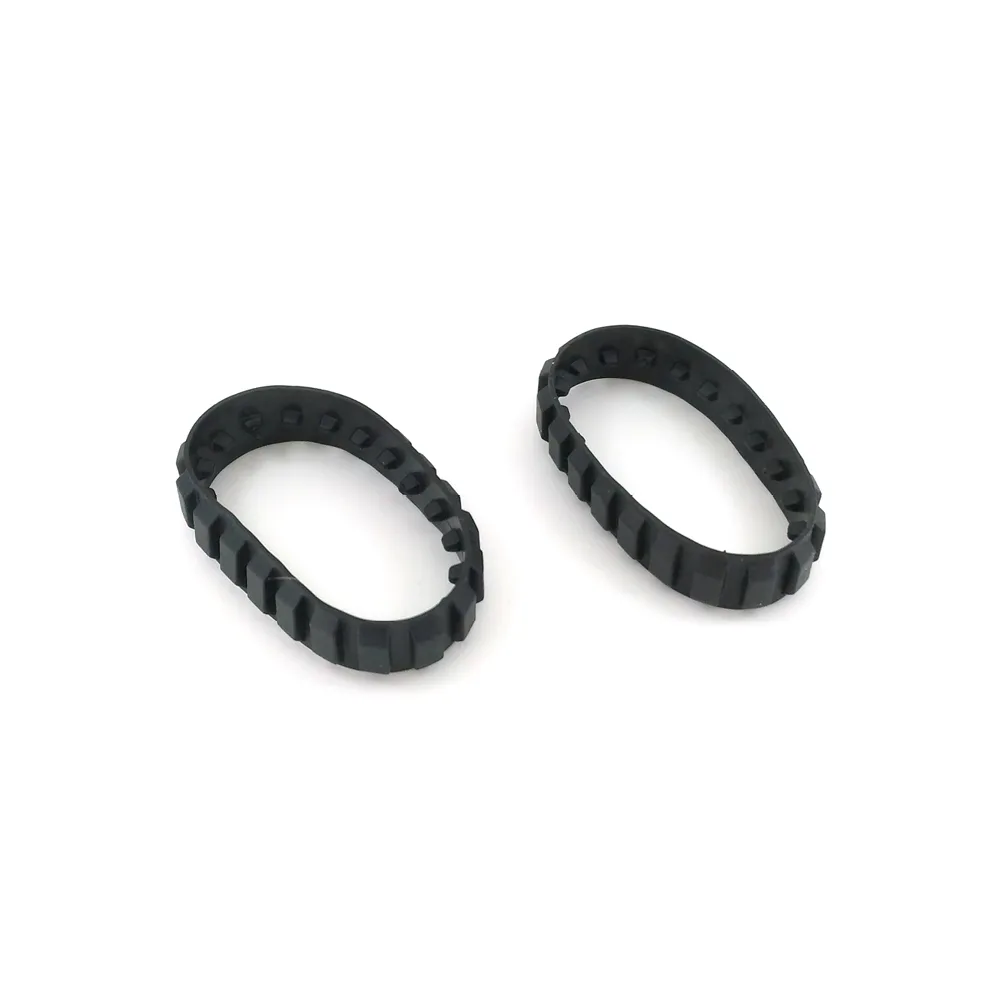
Treads
Which option fits your build?
Best for
- Builds that need to climb over obstacles or traverse loose terrain
- Slow, torque-focused rovers or tank-style vehicles
Not ideal for
- High-speed racers or builds that require sharp, agile turning
- Simple, lightweight prototypes where every gram counts