Quick answer
Set your trekking pole length so your elbow forms a 90-degree angle when you hold the grip on flat ground. Adjust shorter for uphill and longer for downhill.
Why correct pole length matters
Poles that are too long force you to hike with your shoulders hunched, reducing efficiency and straining your upper back. Poles that are too short make you stoop, which can lead to lower back pain and poor balance. Getting the length right for your height and the terrain helps you maintain a natural upright posture, reduces joint impact, and improves stability on uneven ground.
Flip-lock vs. Z-pole adjustments
Trekking poles use two main adjustment systems: telescoping poles with flip locks and Z-pole (folding) poles. Flip-lock poles let you fine-tune length in seconds by opening the lever, sliding the shaft, and closing the lock. Z-pole poles like the Dakine Aluminum Flip-Out Series collapse into a fixed length (16 inches) but do not offer on-trail length adjustment; you choose the pole size before purchase based on your height. The Dakine Aluminum Trail Series uses flip locks, giving you the flexibility to adapt length mid-hike.
How to adjust your trekking pole length in 4 steps
- 1. Stand on flat ground with your hiking shoes on: Hold both poles with your hands on the grips. Let your arms hang naturally at your sides, then bend your elbows to 90 degrees. The pole tips should rest flat on the ground. If your elbows are above or below 90 degrees, the pole is too short or too long.
- 2. Adjust the lower section of a flip-lock pole: Open the flip lock lever, slide the lower shaft until the grip sits at the height that gives you a 90-degree elbow angle, then close the lever firmly. Test by pressing down on the pole—it should not collapse. A common mistake: not closing the lever fully. Always push the lever past the midpoint until it clicks or feels snug.
- 3. For Z-pole poles, check your size before purchase: Z-pole poles like the Dakine Flip-Out Series have a fixed collapsed length. Measure from your wrist to the ground while standing; that is your ideal pole length. Choose a pole size that matches that measurement. If your height falls between sizes, choose the shorter pole—you can grip lower on the handle to compensate.
- 4. Fine-tune for uphill and downhill terrain: Shorten both poles by 2–3 inches for steep climbs to keep your elbows close to your body. Lengthen them by 2–3 inches for descents to maintain stability and reduce knee impact. A common mistake: adjusting only one pole. Always adjust both poles equally to maintain balance.
Products that help
-
Aluminum Flip-Out Series Trekking Poles - Blue / Yellow: Light yet durable 7075 aluminum poles with the Z-linked collapsing function, packs down to 16". Z-poles are ideal for hikers who prioritize packability and don't need on-trail length adjustments; choose the size that matches your height before you buy.
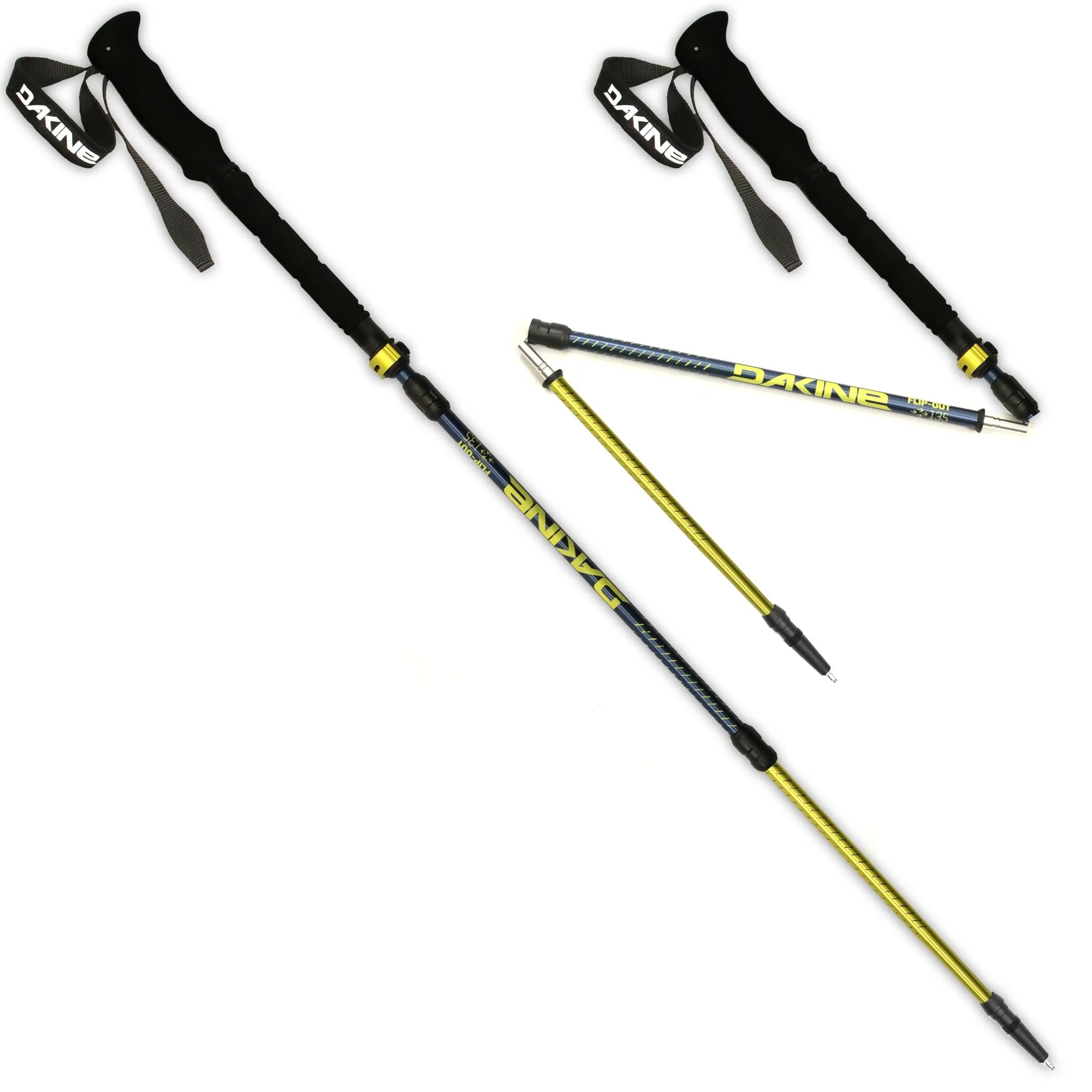
Aluminum Flip-Out Series Trekking Poles - Blue / Yellow
-
Aluminum Trail Series Trekking Poles - Castlerock: Rugged poles that are packable and easy to adjust with aluminum flip-locks. Snow and trekking baskets included. Flip-lock poles let you quickly change length for different terrain—shorten for steep climbs, lengthen for descents—making them more versatile for all-day hikes.
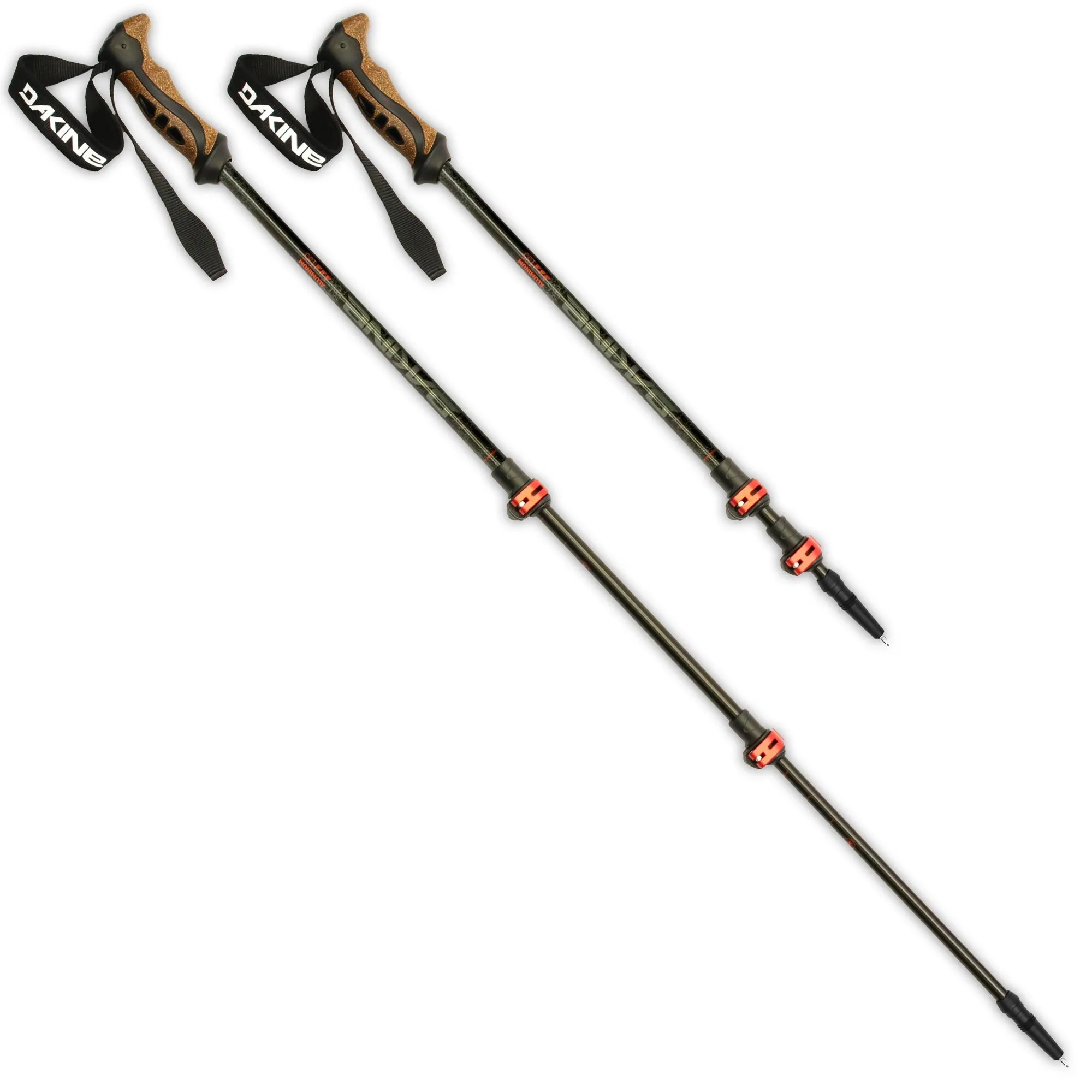
Aluminum Trail Series Trekking Poles - Castlerock