Quick answer
A triply stainless steel cookware set is worth it if you want even heating, oven-to-stovetop flexibility, and a surface that can be scraped, seared, and deglazed without worry. Choose a set with a full base-to-rim aluminum core, tight-fitting lids, and stay-cool handles that feel balanced in your hand. If you mostly cook sticky foods and want easy cleanup, a ceramic nonstick set may suit you better.
What triply construction actually means for your cooking
Triply means three bonded layers: a stainless steel cooking surface, an aluminum core, and a stainless steel exterior. The aluminum core is what spreads heat; the stainless steel layers protect it and make the pan induction-compatible and dishwasher-safe. Look for a core that runs base-to-rim, not just a disc in the bottom, because a full core heats the sides too and reduces scorching when you reduce a sauce.
Lids, handles, and the details that decide daily use
A lid that fits tightly traps steam for rice and braises; a loose lid lets heat escape and forces you to add water. Stainless steel lids are oven-safe and durable, while glass lids let you monitor without lifting. Handles matter just as much: cast stainless handles stay cooler on the stovetop than thin stamped ones, but they add weight. Pick up the pan as if it were full of potatoes; if the handle digs into your palm or the pan tips forward, you will avoid using it.
Triply vs ceramic nonstick: a practical trade-off
Triply stainless steel is not nonstick. You can sear, brown, and build fond, but eggs and sticky sauces need oil or butter and a little technique. Ceramic nonstick interiors release food easily and often use less oil, but the coating can wear over time and is not ideal for high-heat searing or metal utensils. Many home cooks keep one nonstick skillet for eggs and a triply set for everything else.
Induction compatibility and stovetop fit
Triply stainless steel with a magnetic stainless exterior works on induction, gas, electric, and ceramic cooktops. Check the base diameter against your largest burner: a pan that overhangs a small burner heats unevenly, while a tiny pan on a large burner can warp or scorch. If you have a glass-top range, flat bases matter more than weight, so avoid pans with a pronounced lip that rocks.
How many pieces do you actually need?
A 10-piece set typically includes an 8-inch and 10-inch skillet, 1.5-quart and 3-quart saucepans with lids, a 3-quart sauté pan with lid, and a 6- to 8-quart stockpot with lid. That covers most everyday cooking. An 8-piece set often swaps the sauté pan for a steamer insert or drops a skillet, which can be a better fit for small kitchens. Count your storage space before you count the pieces.
Decision rules for buying a triply set
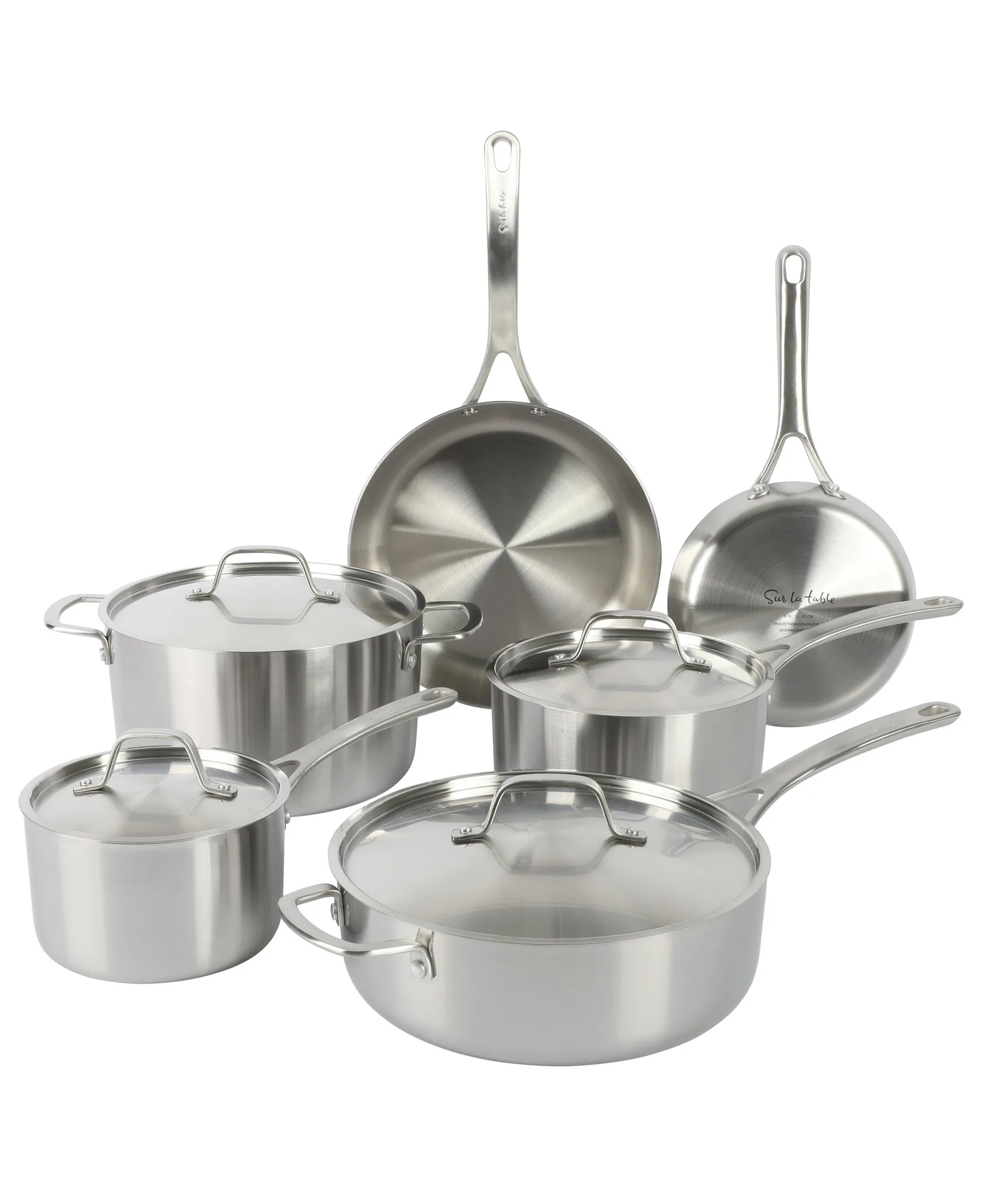
- If you sear and deglaze often: Choose a set with a base-to-rim aluminum core and stainless steel lids, like the Sur La Table Pike and Pine 10-Piece Triply Stainless Steel Cookware Set with Stainless Steel Lids and Cast Handles. The full core handles high heat and the metal lids go from stovetop to oven. Prioritize core coverage over piece count.
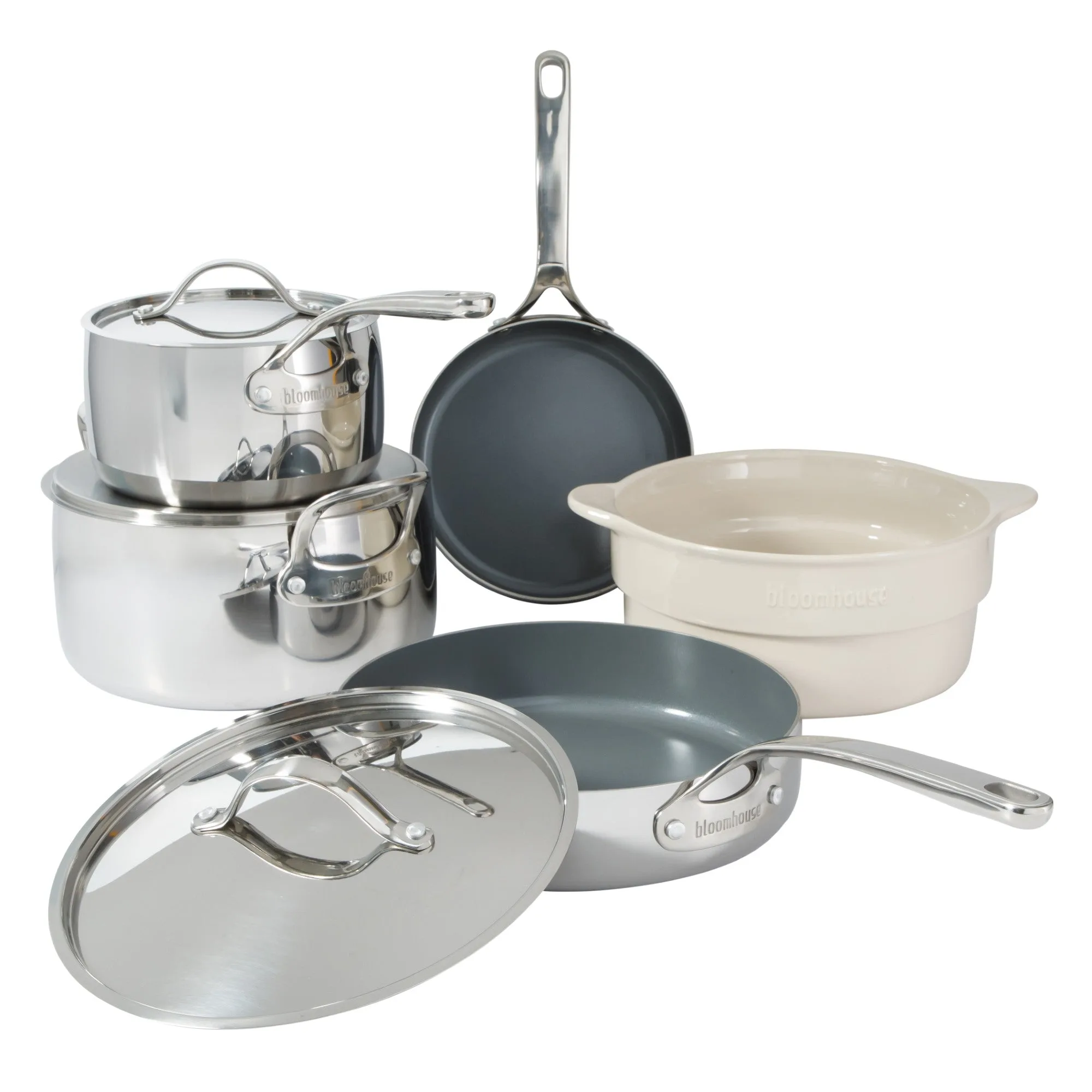
- If you want easier cleanup and lower-oil cooking: Choose a ceramic nonstick interior such as the Bloomhouse 8 Piece Triply Stainless Steel Pots and Pans Cookware Set with Non Toxic Pro Ceramic Non Stick Interior. Use silicone or wooden utensils to protect the coating. Accept that the coating will not last as long as bare stainless.
- If you have an induction cooktop: Check that the base is magnetic before buying. Both triply sets here use a stainless exterior that works on induction, but confirm the base diameter matches your burner for even heating. A magnet test at home saves a return later.
- If storage is tight: Measure your cabinet before choosing between an 8-piece and a 10-piece set. A 10-piece set with a stockpot and sauté pan takes more room than a compact 8-piece set with a steamer insert. Buy for the space you have, not the space you wish you had.
Two sets that show the trade-offs
- Sur La Table Pike and Pine 10-Piece Triply Stainless Steel Cookware Set w/ Stainless Steel Lids and Cast Handles: Crafted from tri-ply stainless steel, each piece features a base-to-rim aluminum core for even heating and cooking, with 18/8 stainless steel and stainless steel lids and cast handles. The full core and cast handles point to steadier heat and a more secure grip, which suits cooks who sear and deglaze often.
- Bloomhouse 8 Piece Triply Stainless Steel Pots and Pans Cookware Set W/ Non Toxic Pro Ceramic Non Stick Interior: A health-driven, eco-conscious suite of pots and pans with a ceramic nonstick interior, 18/8 stainless steel body, base-to-rim aluminum core, and a ceramic steamer insert. The nonstick interior and steamer insert favor lower-oil cooking and easy release, but the coating needs gentler utensils than bare stainless.
Who should buy which
Best for
- Home cooks who want one durable set for searing, braising, and oven finishing
- Induction cooktop owners who need magnetic stainless bases
- Cooks who prefer metal utensils and dishwasher cleanup
Not for
- Cooks who mainly make eggs and sticky sauces and want effortless release
- Anyone who wants the lightest possible pan for frequent tossing
- Small kitchens with very limited cabinet space