Quick answer
Raw turkey necks are a safe, natural treat for dogs when fed under supervision, with the correct size and frequency. Choose a neck that matches your dog's chewing ability and always monitor the first few sessions.
Why raw turkey necks work as a treat
Raw turkey necks are a single-ingredient, meaty bone that provides a satisfying chew. The combination of meat, connective tissue, and bone helps scrape plaque from teeth and exercises jaw muscles, supporting oral health without the brittleness of cooked bones.
Size matters: matching the neck to your dog
Turkey necks are larger than chicken necks, making them more suitable for medium to large dogs. A small dog or cat might struggle to grip them or could attempt to swallow pieces whole. If you have a small breed, consider a chicken neck instead to reduce choking risk.
Raw safety basics
Feeding raw turkey necks is generally safe, but basic hygiene helps. Thaw frozen necks in the refrigerator, not on the counter, and wash your hands and surfaces after handling. The neck itself is a raw meat product, so treat it like you would raw chicken in your kitchen.
How to feed raw turkey necks safely
- 1. Choose the right size: Select a turkey neck that is large enough that your dog must chew, not swallow whole. For most medium to large dogs, a whole turkey neck works. For small or very aggressive chewers, start with a half neck. If the neck is too small for your dog, it becomes a choking hazard.
- 2. Supervise the first session: Give the turkey neck on a clean, easy-to-clean surface like a tile floor or a mat. Stay with your dog the entire time. Watch that they chew thoroughly and don't try to gulp large pieces. Never leave a dog alone with a raw bone, especially the first time.
- 3. Adjust portion and frequency: Treats should make up no more than 10% of your dog's daily calories. A turkey neck can replace one meal or be given as a once- or twice-weekly treat depending on your dog's size and diet. Observe stool consistency; if it becomes too firm or too loose, reduce frequency. Too many raw bones can cause constipation. Adjust based on your dog's digestion.
- 4. Store leftovers properly: Refrigerate any unused portion immediately and use within 2 days. For longer storage, keep frozen and thaw only what you need. Discard any piece that has been chewed on and left out for more than an hour. Bacteria grow quickly on raw meat. When in doubt, throw it out.
Product spotlight
-
Turkey Necks: Raw and Fresh Turkey Necks are a larger version of chicken necks, intended as a treat or snack for dogs. This size difference means turkey necks are best for larger dogs that can handle the bone mass, while smaller pets need a smaller option.
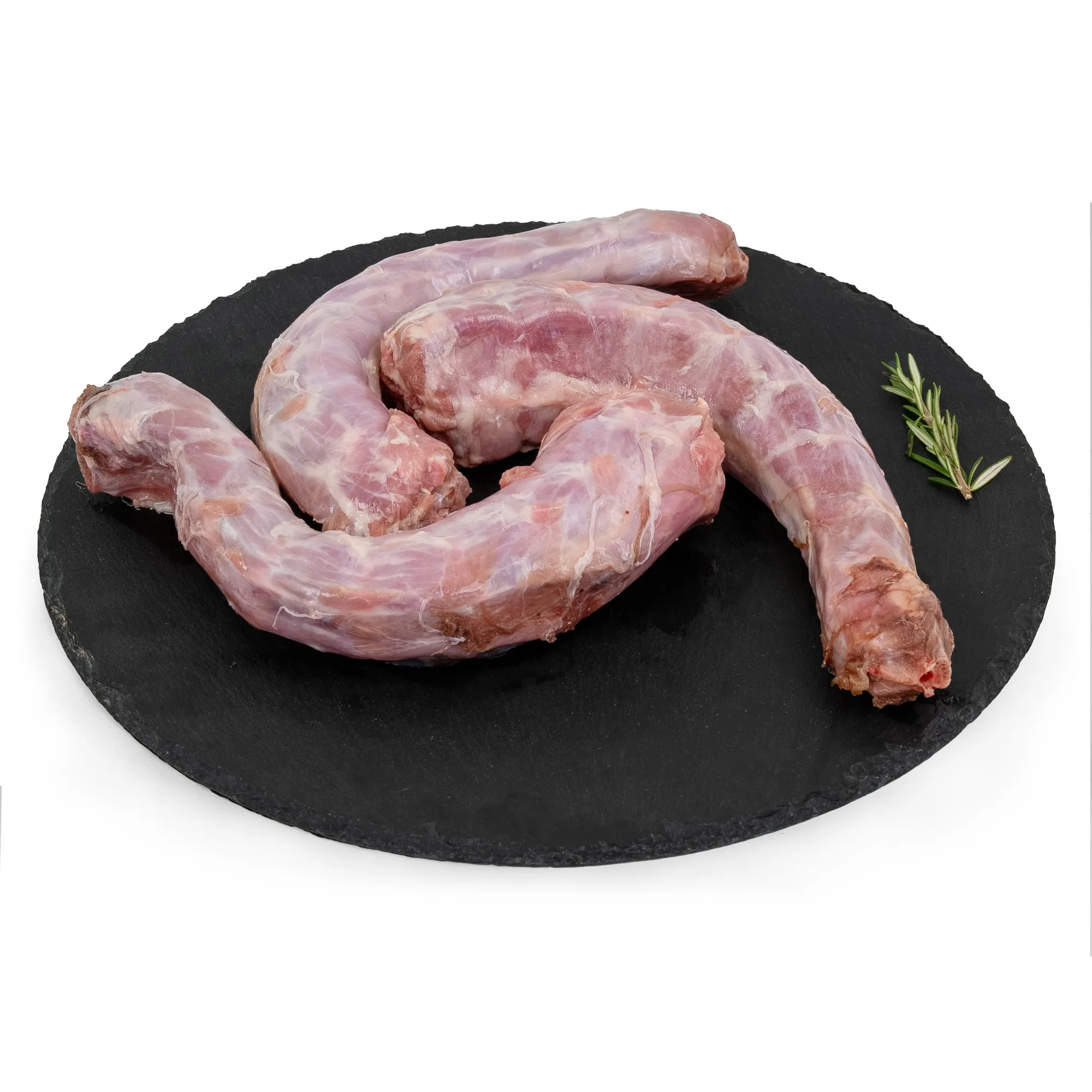
Turkey Necks