Quick Answer
Choose swivel snap hooks when you need a detachable strap or quick-release point, metal rings when you need a fixed anchor that spreads load, and rivets when you need a permanent, low-profile reinforcement at stress points. Match the finish and weight of the hardware to the bag's fabric and expected load, and buy the same metal family across all parts so wear and color stay consistent. If you are building a kit, start with the hardware the pattern specifies, then upgrade only the parts you will actually touch or load.
What Each Piece of Bag Hardware Actually Does
Hardware is not decoration; it is the load path of the bag. A strap connects to a ring, the ring connects to the bag body, and rivets or stitching hold that connection together. When one part is undersized or mismatched, the failure usually shows up at the rivet or the ring, not the strap itself.
Swivel snap hooks rotate 360 degrees, so they let a strap move without twisting the fabric. That makes them a good choice for crossbody straps, removable pouches, and any bag that converts between carry styles. Rings, by contrast, are fixed anchors. They distribute force around a curve and are often used where a strap meets the bag body or where a handle needs to pivot slightly. Rivets are permanent fasteners that reinforce a specific point, such as a strap end or a pocket corner, and they do not come apart once set.
Match Hardware Weight to Fabric and Load
Waxed canvas and leather behave differently under hardware. Waxed canvas is lighter and more flexible, so it can be overwhelmed by heavy solid brass or oversized rings that pull at the weave. Leather is denser and holds its shape, so it can carry heavier hardware without distorting, but it also requires rivets and snaps that are long enough to pass through the thickness.
A practical rule: if the bag will carry a laptop, water bottles, or tools, choose thicker rings and rivets with a wider flange. If the bag is a light market tote or a small pouch, medium-weight hardware keeps the bag from feeling clunky. The goal is to avoid a mismatch where the hardware is stronger than the fabric around it, because then the fabric tears before the metal fails.
Finish and Compatibility: Why You Should Stay in One Metal Family
Mixing metals is a common mistake. A brass swivel snap next to a nickel ring will look intentional only if you plan the contrast; otherwise it reads as a mistake. More importantly, different platings wear at different rates. If you mix them, one part may tarnish or flake while the others stay bright.
Choose one finish family, such as antique brass, nickel, or matte black, and use it across snaps, rings, and rivets. This also makes it easier to replace a single part later without redyeing or refinishing the bag. If you are working from a kit, check whether the kit already includes a coordinated hardware set before buying extras.
How to Choose Hardware for a Kit or Pattern
If you are sewing from a pattern, the pattern's hardware list is the baseline. It tells you the quantity and size the designer tested. Deviating is fine, but change one variable at a time: if you swap a swivel snap for a ring, you may also need to change how the strap is attached.
For kits, the hardware is usually chosen to match the bag's scale and the included fabric. That means you can often skip the guesswork. If you want a different look, buy a second set of hardware in the finish you prefer rather than substituting odd pieces from your stash. This keeps the load path consistent and avoids surprise fit problems.
Decision Rules for Buying Bag Hardware
- If the strap must detach or rotate: Choose swivel snap hooks. They allow 360-degree movement and let you remove the strap without unstitching anything. Check that the snap's eye fits your ring or loop width before you buy.
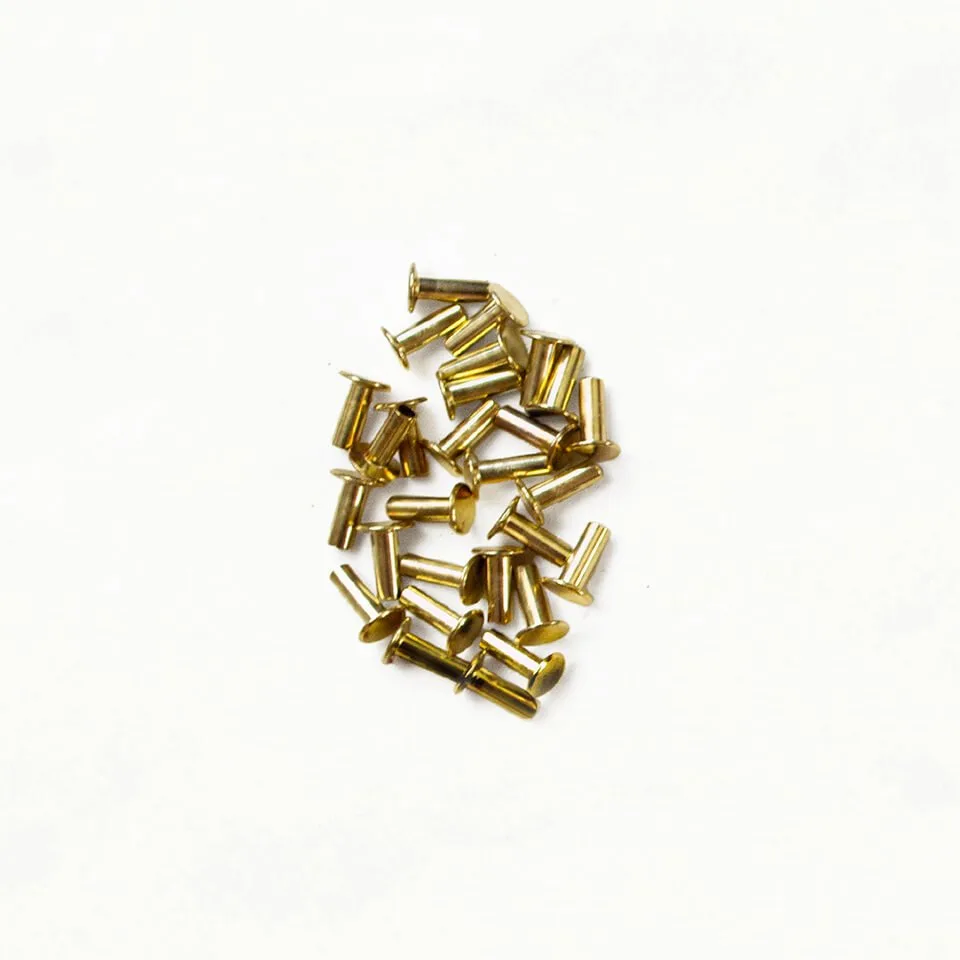
- If the connection is permanent and load-bearing: Choose rings and rivets. Rings spread force around a curve, and rivets lock a strap end or pocket corner in place. Use rivets long enough for your fabric stack, especially with leather.
- If you are mixing finishes: Stick to one metal family across snaps, rings, and rivets unless you are deliberately designing a contrast. Mismatched platings wear differently and can look accidental.
- If the bag will carry heavy or shifting loads: Size up the rings and rivets rather than the snaps. The anchor points take the most stress. A stronger snap on a weak ring still fails at the ring.
Hardware in Real Klum House Kits
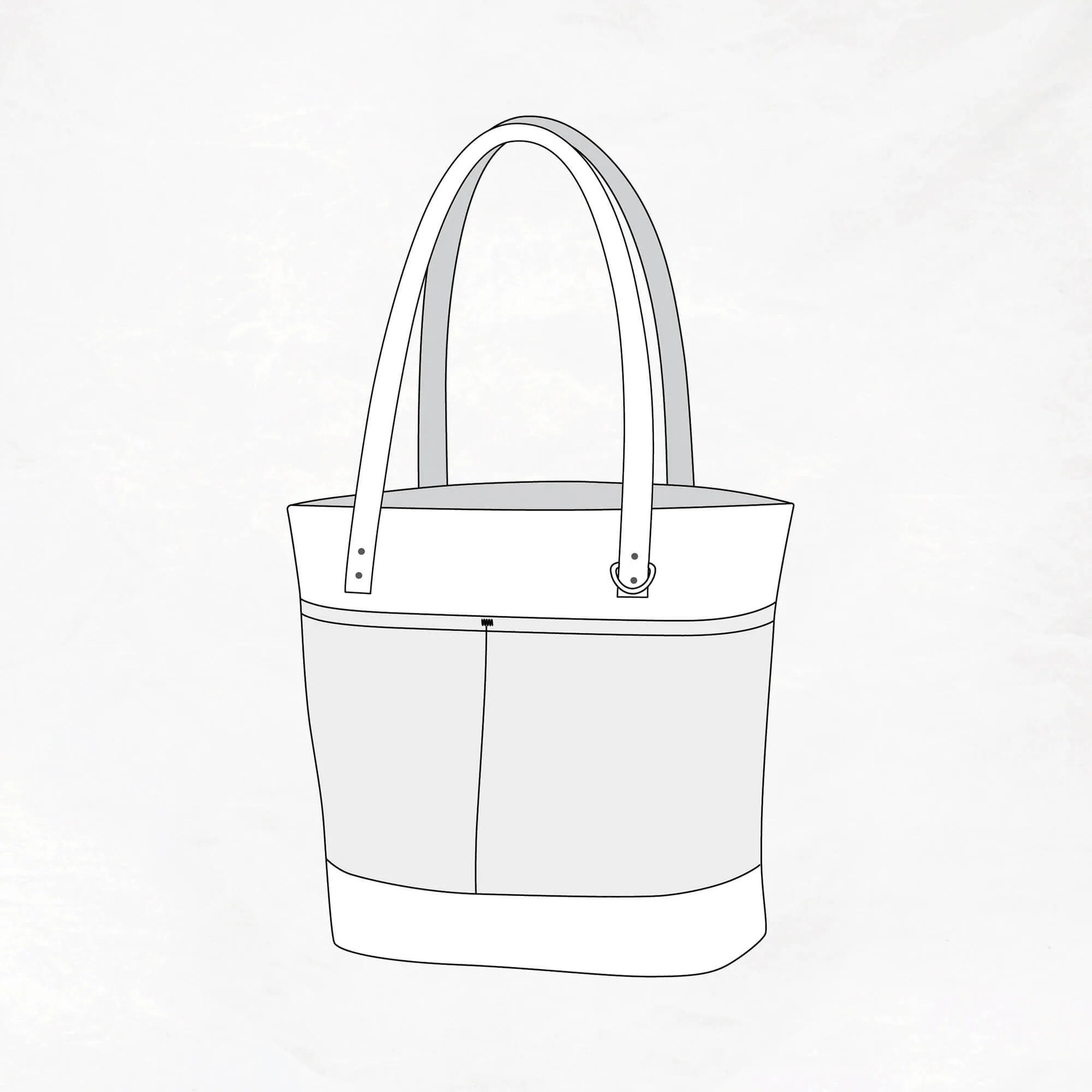
- Oberlin - Bag Maker Kit (Seconds): The Oberlin - Bag Maker Kit (Seconds) includes sturdy leather straps, a magnetic snap closure, an interior zipper pocket, exterior pocket compartments, and an extra-strong reinforced base. These B-Grade kits have minor imperfections on the leather and waxed canvas, and cut fabric pieces might be slightly shy of the pattern dimensions. This kit shows how hardware and reinforcement work together: the magnetic snap and reinforced base handle the load, while the leather straps provide the anchor points. If you want to practice setting snaps and rivets without worrying about cosmetic perfection, a seconds kit is a low-risk option.
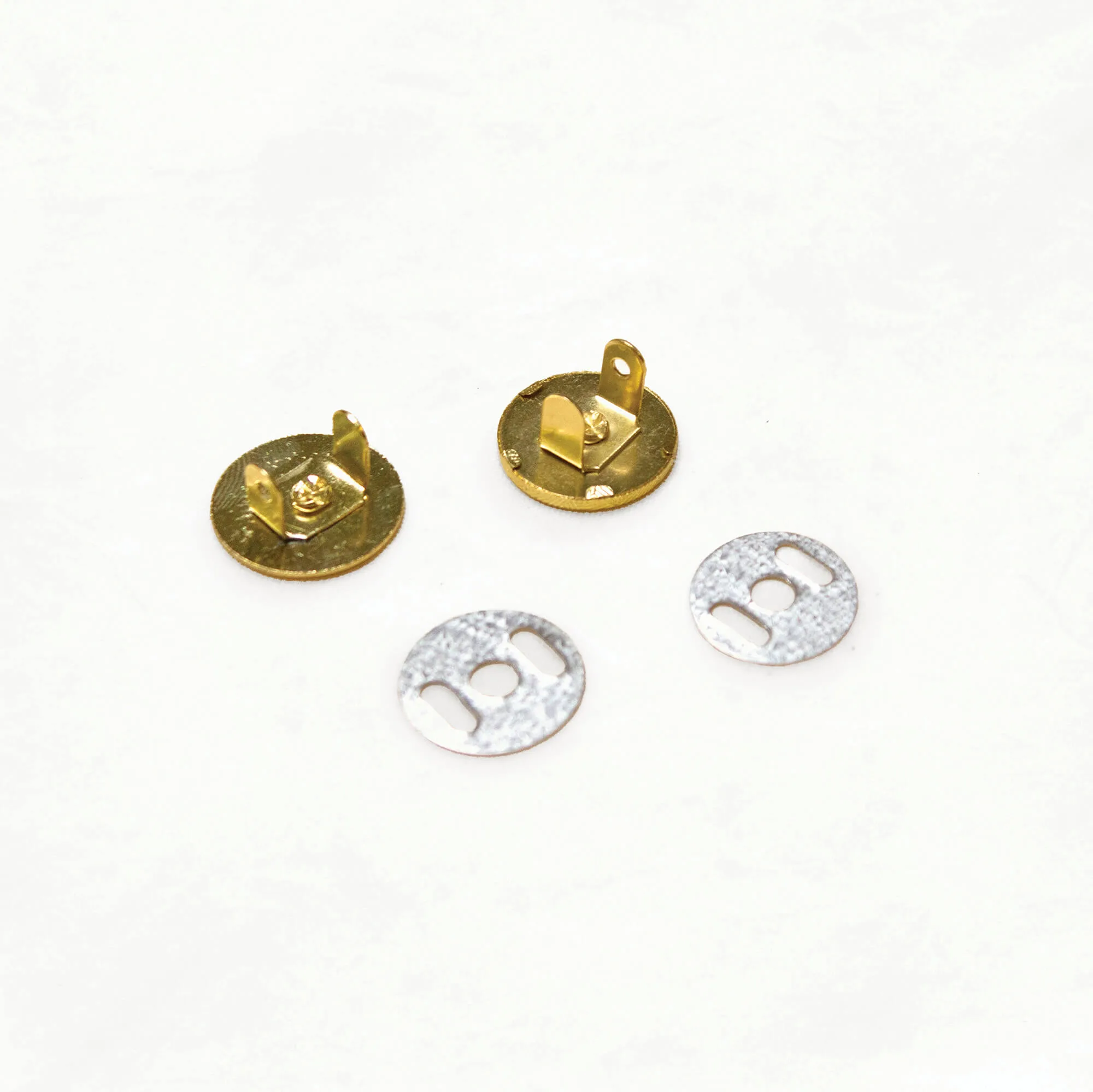
magnetic snap
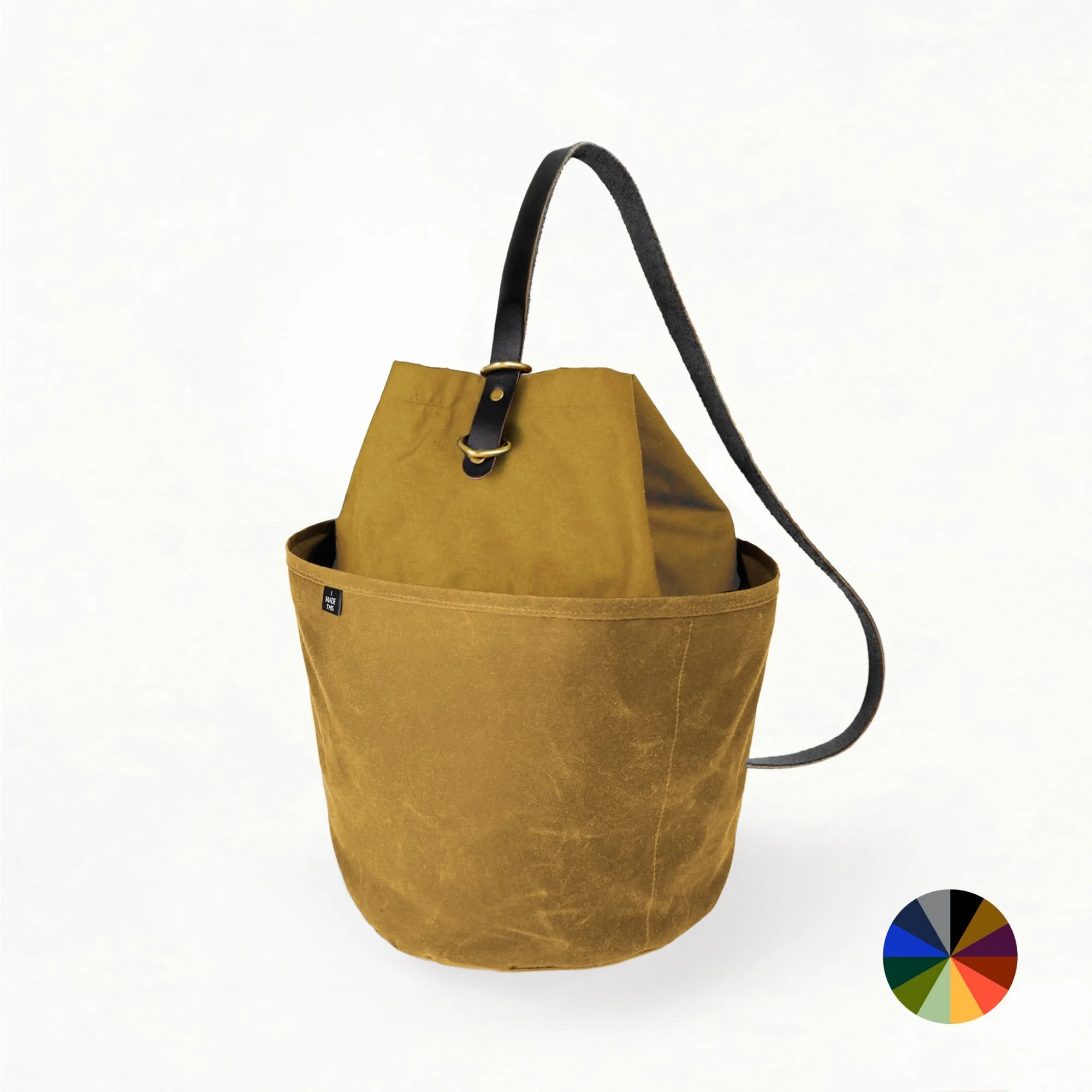
- Naito - Mustard Custom Bag Maker Kit: The Naito - Mustard Custom Bag Maker Kit is a pocket-filled bucket bag that converts from tote to crossbody sling. It features a cylindrical body with a sturdy, sit-flat base, 360 degrees of interior and exterior pockets, a magnetic snap rivet, extra-strength tubular rivets, and a closure that cinches into pleats with the pull of a strap. The Naito uses rivets and a snap as functional hardware, not just trim. The extra-strength tubular rivets are specified for a bag that changes carry style, which is exactly where you want stronger fasteners. This is a good example of matching hardware to movement and load.
Who Should Choose Which Hardware
Best for
- Makers sewing a convertible or crossbody bag who need detachable, rotating strap points
- Sewists working with leather or heavy waxed canvas who need permanent reinforcement at stress points
- Anyone building a kit who wants coordinated hardware without guessing sizes
Not for
- Sewists who want a fully sewn-in strap with no metal at the connection point
- Makers using very lightweight fabrics where heavy hardware would distort the bag
- Anyone who prefers to avoid setting rivets or snaps and wants a simpler closure