Quick answer
Choose a USB-C to Lightning cable if you want faster charging from a modern USB-C charger and a flexible silicone build. Choose a USB-A to Lightning cable if your existing chargers and ports are all USB-A and you prefer a durable nylon exterior.
Connector type determines charging speed and compatibility
USB-C to Lightning cables support fast charging with compatible USB-C power adapters, while USB-A to Lightning cables are limited to standard charging speeds. If you have a newer USB-C wall charger or power bank, a USB-C to Lightning cable will charge your iPhone faster.
USB-A to Lightning cables remain widely compatible with older chargers, car USB ports, and laptop USB-A ports. They are a safe choice if you haven't upgraded all your power sources to USB-C yet.
Cable material affects durability and feel
Nylon braided cables like the Anker 331 USB-A to Lightning Cable are tough and resist tangling. They hold up well in bags and drawers, making them a good everyday workhorse.
Silicone cables like the Anker 641 USB-C to Lightning Cable are soft, flexible, and less likely to kink. The 6-foot length gives you extra reach, but the silicone surface can attract dust more easily than nylon.
Trade-offs at a glance
- USB-C to Lightning (e.g., Anker 641): Supports faster charging when paired with a USB-C power adapter. Silicone cable is soft and flexible, but the 6-foot length may be more than you need for a nightstand.
- USB-A to Lightning (e.g., Anker 331): Works with any USB-A port, from old wall chargers to car adapters. Nylon braiding is more durable and tangle-resistant, but charging speed is limited to standard rates.
- Length and portability: The Anker 641 is 6 feet long, offering extra reach. The Anker 331 length is standard (not specified), but its nylon build is better for tossing in a bag without worrying about kinks. Consider where you'll use the cable most: a short, tough nylon cable for travel or a long, soft silicone cable for home.
Cable comparison at a glance
-
Anker 331 USB-A to Lightning Cable (Nylon): Nylon braided construction for added durability and tangle resistance. The nylon jacket makes this cable last longer in high-use environments like a desk or car, and it won't tangle as easily as a standard rubber cable.
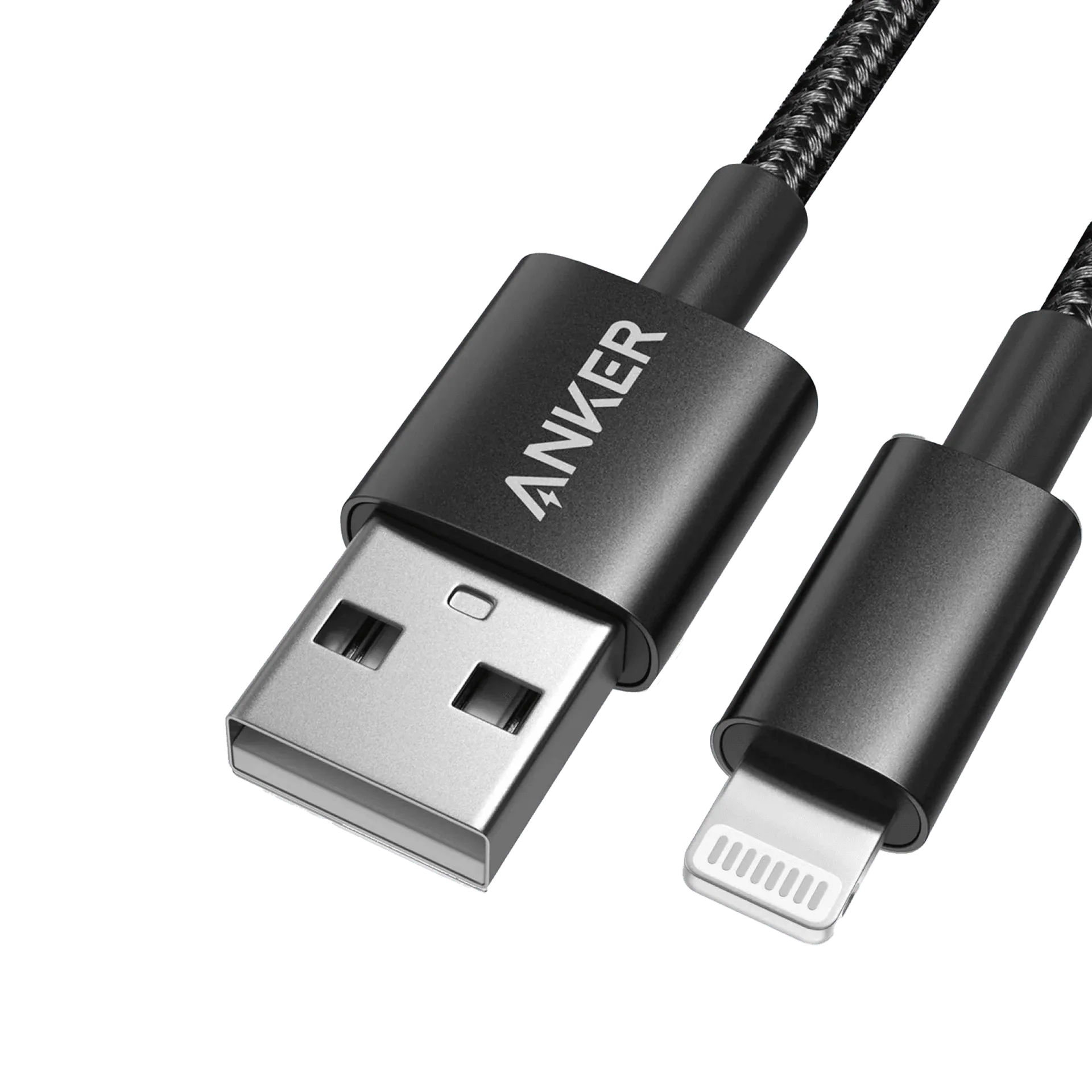
Anker <b>331</b> USB-A to Lightning Cable (Nylon)
-
Anker 641 USB-C to Lightning Cable (Flow, 6ft Silicone): Silicone construction offers a soft, flexible feel. The silicone material is gentle on your hands and devices, and the 6-foot length gives you freedom to use your phone while it charges from a distant outlet.
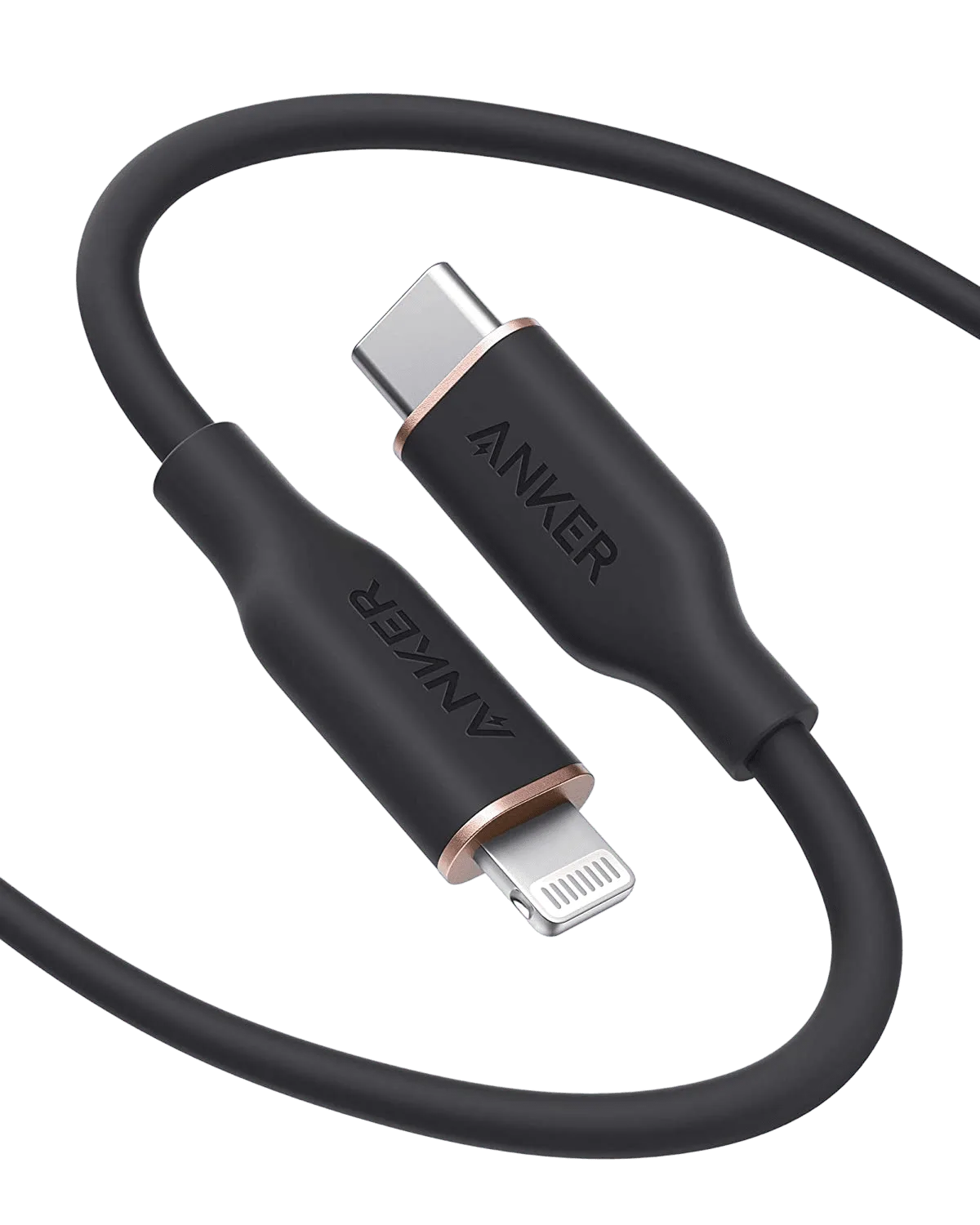
Anker <b>641</b> USB-C to Lightning Cable (Flow, 6ft Silicone)
Which cable fits your setup?
Best for
- Users with a USB-C power adapter who want faster iPhone charging and prefer a soft, flexible cable.
- Anyone who needs extra reach from a 6-foot cable for bedside or couch use.
Not ideal for
- Users who rely on USB-A chargers or ports—they should choose a USB-A to Lightning cable instead.
- Those who want maximum durability in a daily carry cable—a nylon braided cable is a better choice.