Quick answer
For a smooth basecoat on your miniatures, shake the colour primer can thoroughly, spray from the correct distance in short bursts, and work in a controlled environment to avoid dust and humidity issues.
Why colour primers save you time
Colour primers combine the priming and basecoating steps into one. Instead of applying a grey or black primer and then painting your base colour, you spray on a primer that is already the colour you want. This is especially useful for armies with a dominant uniform colour, like Space Wolves or historical regiments.
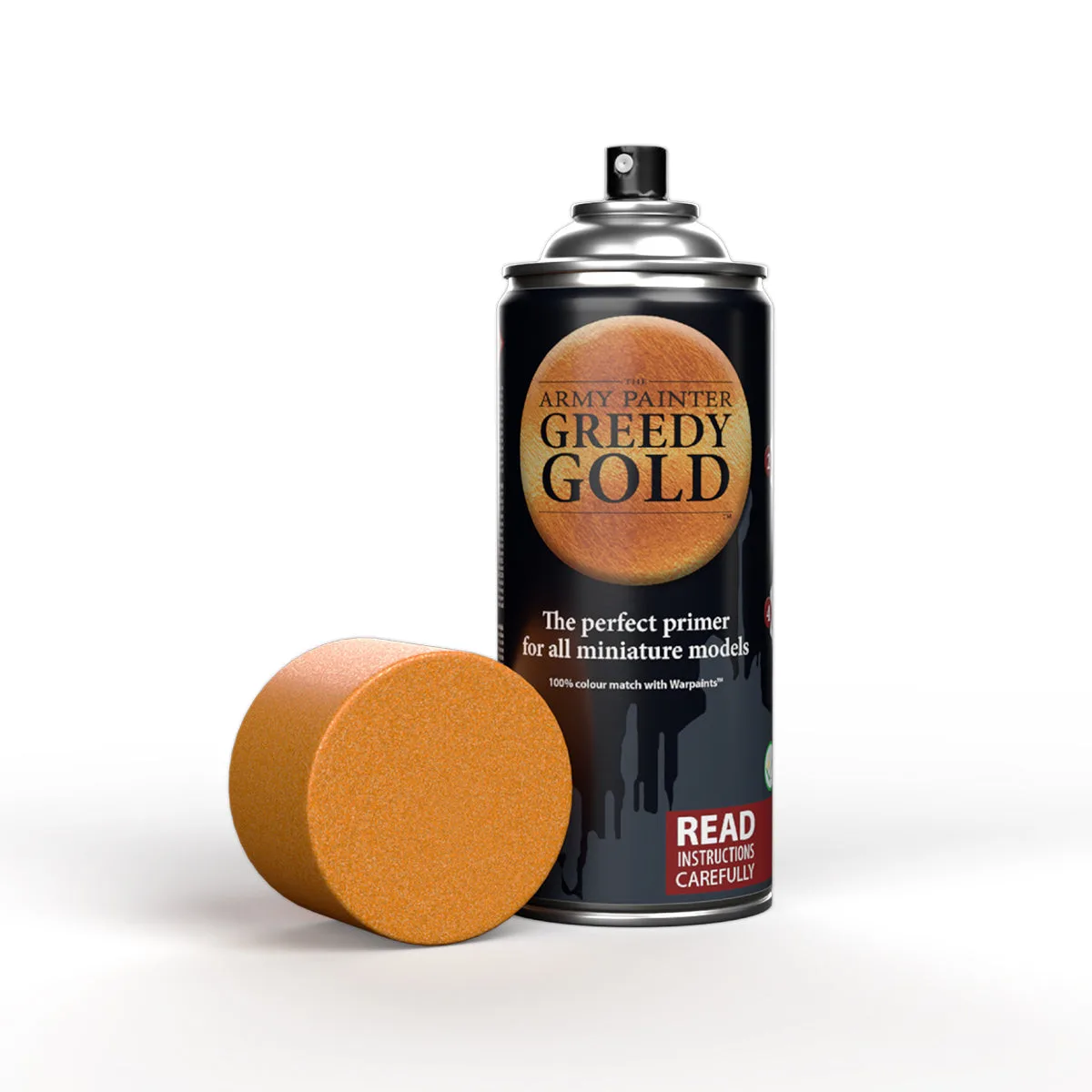
The trade-off is that you need to choose your colour carefully. A light grey primer like Colour Primer: Ash Grey works well for bright schemes, while a darker tone like Colour Primer: Uniform Grey is better for neutral or muted palettes. Metallic primers like Colour Primer: Greedy Gold have a special formulation with fine metal flakes that need extra care to avoid clogging.
Common issues and how to avoid them
The most common problem with spray primers is an uneven or gritty finish, often called orange peel. This happens when the spray is too close, the can is not shaken enough, or the weather is too humid or cold.
Another issue is the primer pooling in recesses or obscuring fine detail. This is usually caused by spraying too much product in one pass. Short, controlled bursts are the key.
Step-by-step guide to a smooth colour primer basecoat
- Prepare your workspace and miniature: Work in a well-ventilated area with low humidity (below 60% is ideal) and a temperature between 60-75°F (15-24°C). Clean your miniature with warm soapy water to remove mold release agents, then let it dry completely. Skipping the cleaning step is the most common cause of primer peeling later.
- Shake the can thoroughly: Shake the colour primer can for at least 2 minutes after you hear the mixing ball rattle. For metallic primers like Greedy Gold, shake for 3-4 minutes to ensure the metal flakes are fully suspended. If you hear the ball rattle but stop shaking too soon, the primer may come out thin or uneven.
- Test spray on a scrap surface: Before spraying your miniature, give a quick test burst onto a piece of cardboard or sprue. This clears any dried primer from the nozzle and lets you check the spray pattern. A sputtering or spitting nozzle means the can needs more shaking or the tip is clogged.
- Spray from the correct distance: Hold the can 8-12 inches (20-30 cm) from the miniature. Spray in short, controlled bursts, moving the can across the model in a sweeping motion. Do not spray continuously on one spot. Spraying too close (under 6 inches) causes pooling and orange peel; too far (over 15 inches) gives a dusty, rough finish.
- Apply thin, even coats: Apply one light coat, rotate the miniature, and apply another. Aim for 2-3 thin coats rather than one thick coat. Let each coat dry for 5-10 minutes before the next. If you see the primer pooling in recesses, you are spraying too much per pass.
- Let the primer cure fully: After the final coat, let the miniature cure for at least 24 hours before handling or painting. This ensures the primer bonds properly and won't scratch off. Painting too early can cause the primer to lift or the paint to react poorly.
Primers that help you get a smooth basecoat
-
Colour Primer: Uniform Grey: Uniform Grey is an ideal spray for historical miniatures and Space Wolves or guardsmen. It saves time by priming your model with your chosen base colour. This neutral grey works as a versatile base for most colour schemes, giving you a consistent foundation without needing an extra basecoat layer.
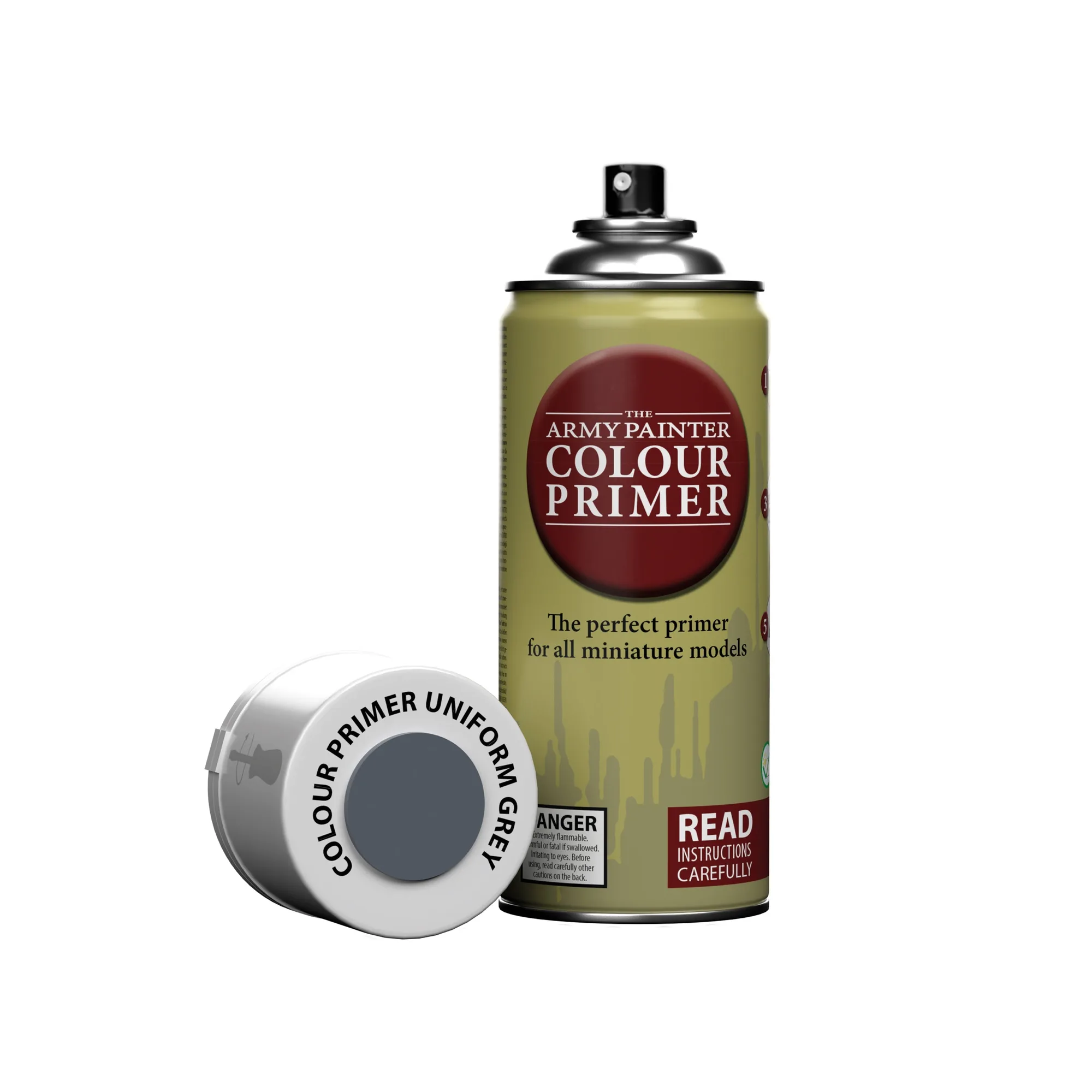
Colour Primer: Uniform Grey
-
Colour Primer: Ash Grey: Ash Grey is a light grey tone perfect as a basecoat for historical uniforms and vehicles, and even chaff infantry of far-off futuristic forces. Its light shade helps bright colours pop, making it a great choice for armies with white, yellow, or light blue as their primary colour.
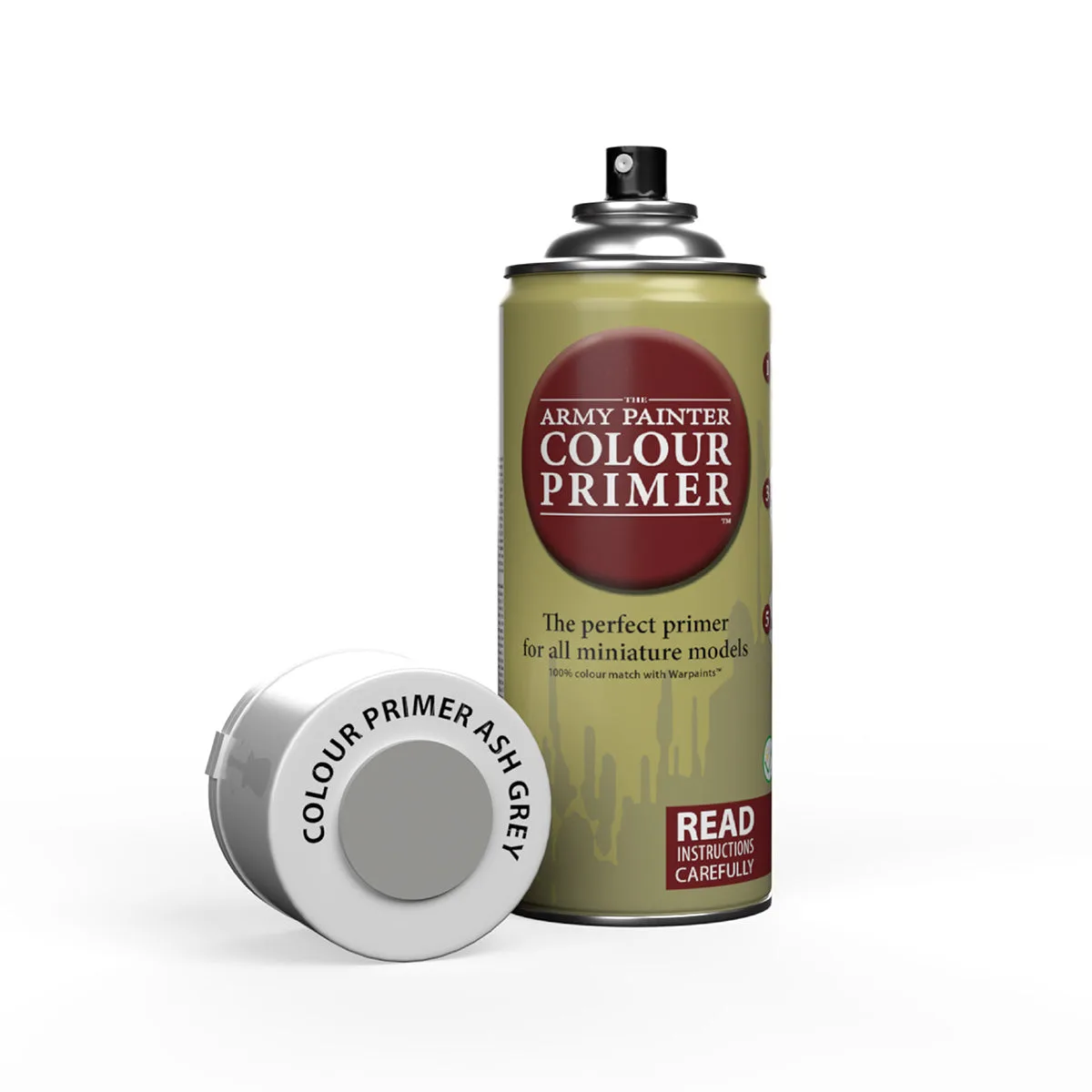
Colour Primer: Ash Grey
-
Colour Primer: Greedy Gold: Greedy Gold features a unique formulation specially designed to make the fine golden metal flake shimmer. If you want a metallic gold basecoat, this primer saves you the step of painting gold over a neutral primer, but you must shake it longer to suspend the metal flakes evenly.