Quick answer
Use the Meebie Play Pack to give children a concrete way to represent feelings, create stories, and practice social roles during play therapy sessions.
Why the Meebie Play Pack works in therapy
The Meebie Play Pack includes flower, leaf, bow crown or necklace, and shell shapes that attach to a Meebie doll. These simple accessories let children quickly change a character's look or mood, making abstract emotions visible and discussable.
Because the pieces are purely decorative and open-ended, they do not prescribe a specific story. This flexibility encourages the child to project their own feelings onto the doll, which is a core goal of play therapy.
How to use the Meebie Play Pack in a therapy session
- Introduce the Meebie and Play Pack as a feelings helper: Place the Meebie doll and the Play Pack shapes on the table. Say, 'This is Meebie. Today we can dress Meebie in different ways to show how Meebie feels.' Let the child explore the pieces freely first. Common mistake: jumping into instructions too quickly. Give the child a few minutes of free play before directing the activity.
- Ask the child to choose a shape for Meebie's feeling: Invite the child to pick one shape (e.g., the flower or the bow) and attach it to Meebie. Ask, 'What feeling does this shape give Meebie?' Accept any answer—there is no wrong choice. The goal is to link an external object to an internal state. Checkpoint: if the child says 'I don't know,' model an example: 'Maybe the flower makes Meebie feel happy. What do you think?'
- Build a short story around the chosen shape: Once a shape is attached, prompt the child to tell a one-sentence story. For example, 'Meebie is wearing the leaf because…' or 'The bow crown means Meebie is the boss today.' This turns the shape into a narrative anchor. Common mistake: making the story too long or complex. Keep it to one or two sentences so the child stays engaged.
- Switch shapes to explore different emotions: After the first story, ask the child to remove the shape and try a different one. Repeat the feeling and story steps. This shows the child that feelings can change and that they have control over how Meebie expresses them. Checkpoint: if the child resists changing the shape, respect that choice and explore the current shape more deeply. Forcing change can reduce trust.
- End the session by connecting Meebie's feelings to the child: Ask, 'Has Meebie ever felt like you feel today?' or 'What would Meebie say to a friend who felt this way?' This bridges the play to the child's real experience and reinforces coping language. Common mistake: skipping this step. Without the bridge, the activity stays purely imaginative and loses its therapeutic value.
Product facts
-
Meebie Play Pack: Includes flower, leaf, bow crown or necklace, and shell shapes that coordinate with Meebie for added play possibilities. Each shape can represent a different emotion or role, giving the child a simple vocabulary for emotional expression without needing words.
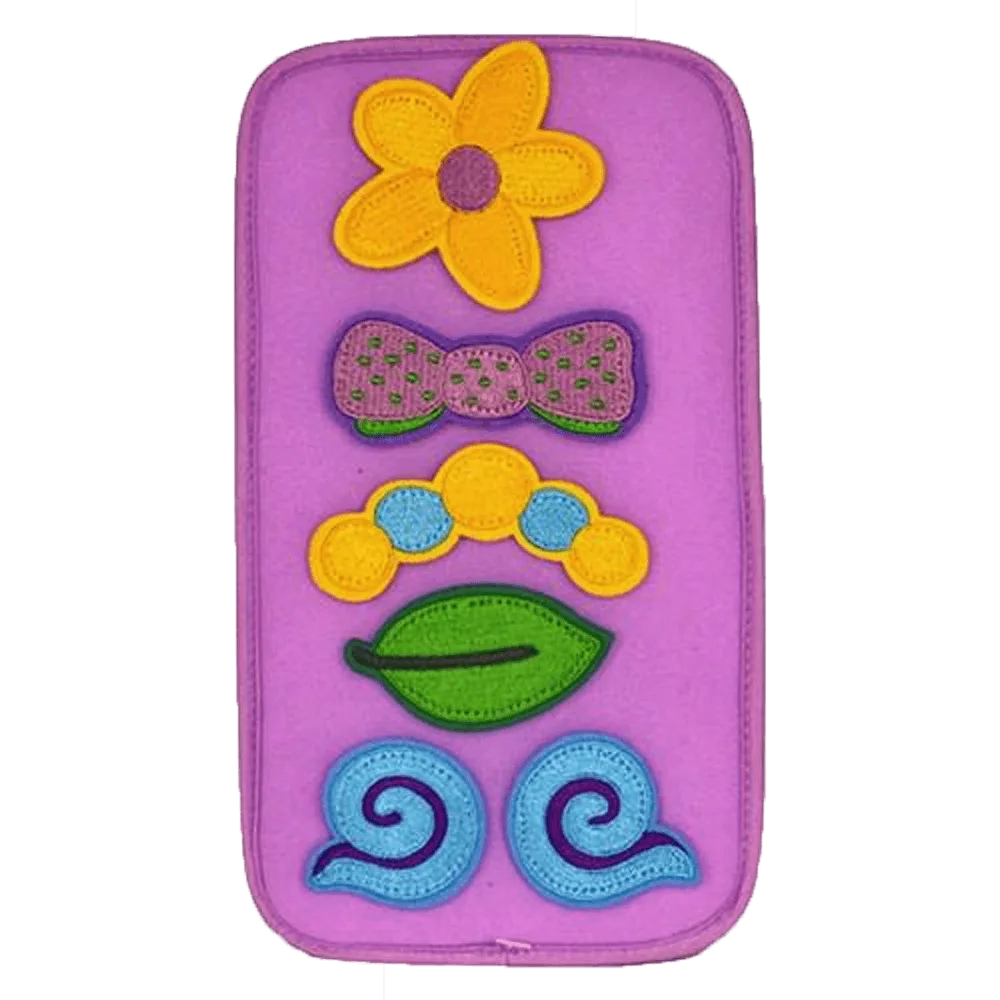
Meebie Play Pack