Quick answer
Start by introducing Yak's story about mistakes and perfectionism, then guide students through three structured lessons that build self-acceptance and perseverance.
Why focus on self-acceptance in the classroom?
Many students struggle with the pressure to be perfect, which can hinder learning and emotional well-being. The Self-Acceptance Unit Plan addresses this by helping kids understand that mistakes are part of growth. It's designed for elementary classrooms but adaptable for older students who need support with self-criticism.
What you need before starting
You'll need the Self-Acceptance Unit Plan digital download (available from Slumberkins), a way to display or print lesson materials, and optional art supplies for hands-on activities. The plan includes lesson scripts, discussion prompts, and student worksheets.
Step-by-step classroom guide
- Introduce Yak and the concept of the inner critic: Read the provided story about Yak, who learns that his inner critic can be loud but doesn't define him. Discuss times students have felt they had to be perfect. Check for understanding: ask each student to share one thing their inner critic says.
- Lesson 1: Exploring mistakes as learning tools: Use the first lesson plan to guide a group activity where students share a mistake they made and what they learned from it. Emphasize that mistakes help us grow. Common mistake: students may feel embarrassed. Create a safe norm by sharing your own mistake first.
- Lesson 2: Building perseverance through challenges: Work through the second lesson, which uses a problem-solving scenario. Have students brainstorm multiple solutions and reflect on the effort, not just the outcome. Watch for students who give up quickly; pair them with a partner to encourage persistence.
- Lesson 3: Crafting a self-acceptance affirmation: In the final lesson, each student creates a personal affirmation (e.g., 'I am enough even when I make mistakes'). Display these in the classroom as a daily reminder. If a student struggles, offer sentence starters like 'I am proud of...' to spark ideas.
- Reinforce with ongoing practices: After completing the unit, revisit the affirmation wall and hold weekly check-ins where students share one small win or mistake they learned from. Consistency matters: set a regular time each week to keep self-acceptance top of mind.
About the Self-Acceptance Unit Plan
-
Self-Acceptance Unit Plan: Yak's lessons help students understand that making mistakes and not being perfect is a part of learning and growing. This reframes failure as a normal step, reducing anxiety and encouraging risk-taking in class.
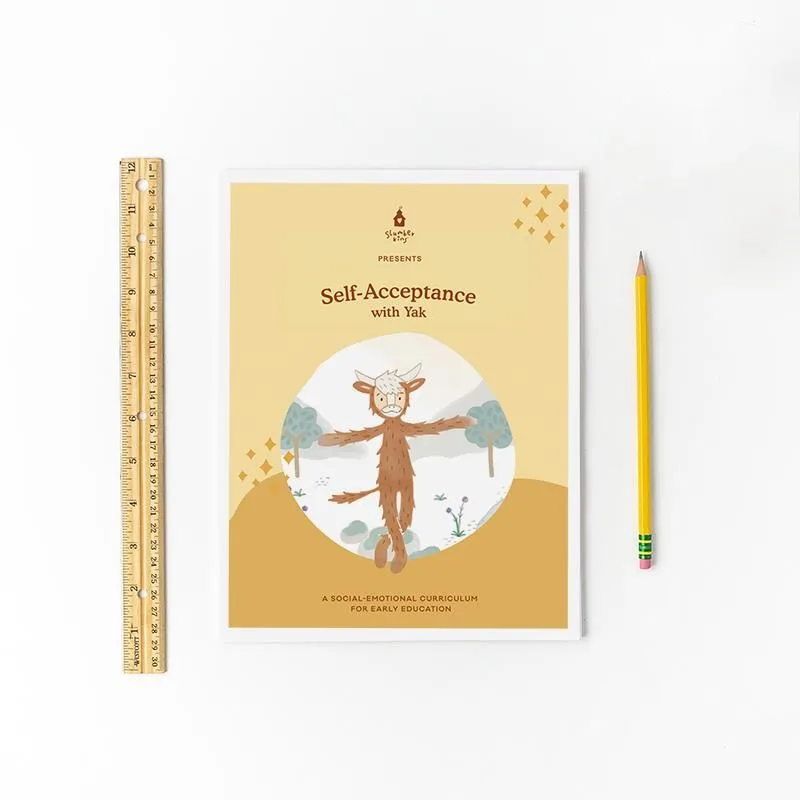
Self-Acceptance Unit Plan