Quick answer
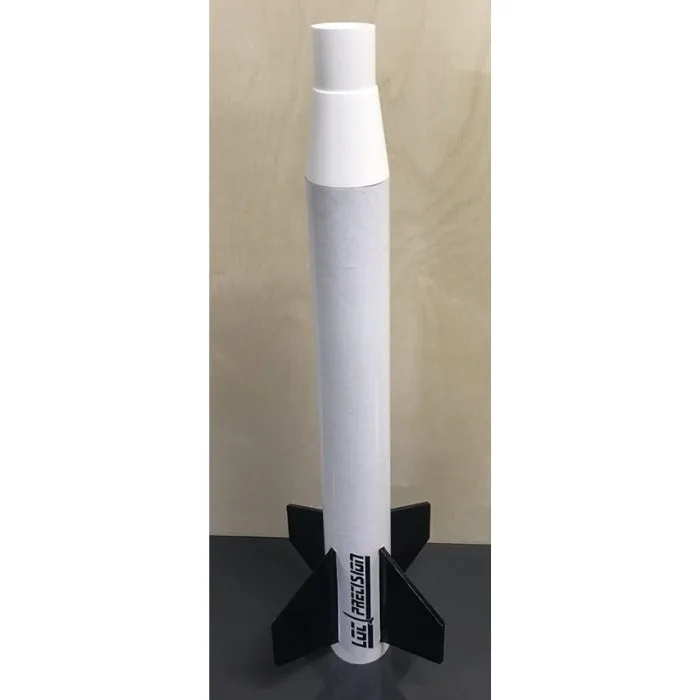
The Terrier Booster is a 3-inch, 24-inch add-on that turns compatible 2.26" rocket kits into two-stage flyers. Attach it permanently for a stable stack or use drag separation for a cleaner recovery, and confirm your chosen kit's motor mount before committing.
Why staging changes your rocket's handling
Adding a booster changes the center of gravity and total weight of your rocket. The Terrier Booster adds a 24-inch airframe and a 38mm motor tube below your sustainer, which shifts the stack's balance point rearward. That shift affects stability margin, so a kit that flies fine as a single stage may need a different motor choice or a small amount of nose weight after you add the booster.
Staging also changes recovery. The booster carries its own 28-inch parachute and NW-12, so it recovers separately from the sustainer. That means you are managing two descent events, not one. If you prefer a simpler flight, you can attach the booster permanently, but you lose the option of drag separation for a cleaner two-stage profile.
Staging options and what changes
The Terrier Booster is designed for the 2.26" Sandhawk 38mm, 2.26" BBX 38mm, 2.26" IRIS 38mm, and 2.26" Nike Zeus 38mm kits. You can attach it permanently or set it up for drag separation. Permanent attachment is simpler and keeps the stack together for recovery. Drag separation gives you a cleaner two-stage look but adds a recovery point you need to plan for.
Because the booster carries its own 28" parachute and NW-12 recovery, it does not rely on the sustainer's recovery system. That means you have two separate parachutes to track and two separate landing zones to manage. Plan your field size and recovery layout before the first flight.
Terrier Booster Setup Diagnosis
- Symptom: booster separates but the sustainer does not ignite: Check the booster's motor tube and the sustainer's motor mount for a clean, straight alignment. The Terrier Booster's AR-3.00-2.14 transition and 38 mm motor tube must seat squarely against the sustainer's 2.26" tube. If the joint is loose or angled, the ignition charge can vent before reaching the sustainer motor. Dry-fit the booster and sustainer before loading motors to confirm the mating surfaces sit flush.
- Likely cause: A loose fit or misaligned motor tube lets the ejection charge or booster gas escape instead of igniting the sustainer. Drag separation can also occur too early if the joint is not secure.
- Corrective action: Check the shoulder fit of the Terrier Booster against your 2.26" Sandhawk, BBX, IRIS, or Nike Zeus 38mm kit. If you plan to fly with drag separation, confirm the booster's 28" parachute and NW-12 recovery are packed so the booster comes off cleanly. If you prefer a rigid stack, attach the booster permanently with the included hardware and follow the kit's recommended adhesive. Dry-fit the booster to your airframe before applying any adhesive to confirm the AR-3.00-2.14 coupler seats fully.
- Check motor fit and staging clearance: The Terrier Booster uses a 38mm motor tube and is sized for 2.26" Sandhawk, BBX, IRIS, and Nike Zeus 38mm kits. Verify that your rocket's motor mount and airframe match these dimensions before you start assembly. If your kit is not one of the listed models, confirm the coupler geometry yourself; the booster is not a universal adapter. Measure the booster's top coupler against your airframe before committing to the build.
- Decide between permanent attachment and drag separation: You can attach the Terrier Booster permanently or allow drag separation for two-stage flight. Permanent attachment simplifies alignment and recovery, while drag separation reduces weight and complexity at the cost of a more involved build and a second recovery event to manage. Choose permanent attachment for your first staged flight; switch to drag separation only after you are comfortable with the booster's recovery.
- Check your kit compatibility: The Terrier Booster is designed for 2.26" Sandhawk 38mm, 2.26" BBX 38mm, 2.26" IRIS 38mm, and 2.26" Nike Zeus 38mm kits. Confirm your kit's airframe diameter and motor mount before ordering. If your kit is not on the compatibility list, stop and choose a different booster or plan a custom adapter.
- Plan the staging method: Decide between permanent attachment and drag separation before assembly. Permanent attachment is simpler and keeps the booster and sustainer together; drag separation gives a cleaner two-stage look but requires a proper separation charge and recovery setup for the booster. If you choose drag separation, verify that your launch field allows the booster to drift separately and that you have room for two recovery events.
Terrier Booster at a glance
-
Terrier Booster: The Terrier Booster is a 3-inch-diameter, 24-inch-long airframe with a specially cut AR-3.00-2.14 on top and a 38mm motor tube, and it includes a 28-inch parachute and NW-12 for its own recovery. The dedicated recovery gear means the booster comes down on its own, so you don't have to modify your sustainer's recovery setup for staging.
Terrier Booster