Quick answer
For most optical profilers and interferometers, a 4' x 10' x 12" table with 1/4-20 tapped holes offers the best balance of working area and mounting flexibility. Choose a 3' x 8' smooth top if your lab space is tight and you don't need frequent component repositioning.
Why size matters for optical profilers
Optical profilers and interferometers are sensitive to vibration. A table that is too small forces you to crowd components, which can couple vibrations through the tabletop. A table that is too large may not fit through standard doorways or leave room for other lab equipment.
The two most common sizes are 3' x 8' and 4' x 10'. The 4' x 10' provides 67% more surface area, which is helpful when you need to mount a beam expander, multiple mirrors, or a laser source alongside the profiler. The 3' x 8' is easier to fit in smaller labs but may limit future expansion.
Smooth top vs. tapped holes
Smooth-top tables are less expensive and easier to clean, but you lose the ability to securely bolt down components. Tapped holes on 1" centers let you mount optical posts, translation stages, and enclosures directly to the table without clamps.
If you frequently reconfigure your setup or use heavy components, a tapped-hole table is worth the extra cost. For a fixed, permanent setup where components rarely move, a smooth top can work fine.
Legs and isolation
All tables listed include legs, but not all legs provide the same level of vibration isolation. Passive isolation legs use elastomeric or pneumatic elements to dampen floor vibrations. If your lab is on a lower floor or near heavy machinery, confirm that the table's legs are rated for your frequency range.
For 24" beam expanders, the 4.3 m x 1.5 m table is purpose-built with eight passive isolation legs and a valve kit. This is a specialty size; standard 4' x 10' tables can also work if you use additional isolation under the legs.
Decision rules for table sizing
- Measure your largest component envelope: Lay out your optical profiler, laser, beam expander, and any other equipment on the floor or a mock-up. Add 12 inches of clearance on all sides for cabling and access. This gives you the minimum table footprint. If your envelope exceeds 2.5' x 7', choose the 4' x 10' table.
- Check your lab's door and elevator dimensions: A 4' x 10' table will not fit through a standard 36" door. Measure your delivery path. If the table cannot be moved in as a single piece, consider a 3' x 8' table or a modular table system. Verify door width and hallway turns before ordering a 4' x 10' table.
- Decide on tapped holes vs. smooth top: If you need to mount components that weigh more than 5 lbs or require frequent repositioning, choose a table with 1/4-20 tapped holes on 1" centers. For a permanent, simple setup, a smooth top saves money and is easier to clean.
- Account for future expansion: Buy the largest table that fits your space and budget. Adding a second profiler or a larger beam expander later is much easier if you already have the surface area and tapped holes. A 4' x 10' table with tapped holes is the most future-proof choice for most labs.
Product facts
-
TMC Vibration Isolation Table , 3' x 8' x 8", smooth top: This TMC table measures 3' x 8' x 8" with a smooth top and no tapped holes. It includes legs. The 8" thickness provides good rigidity for smaller setups, but the smooth top means you cannot bolt down components directly.
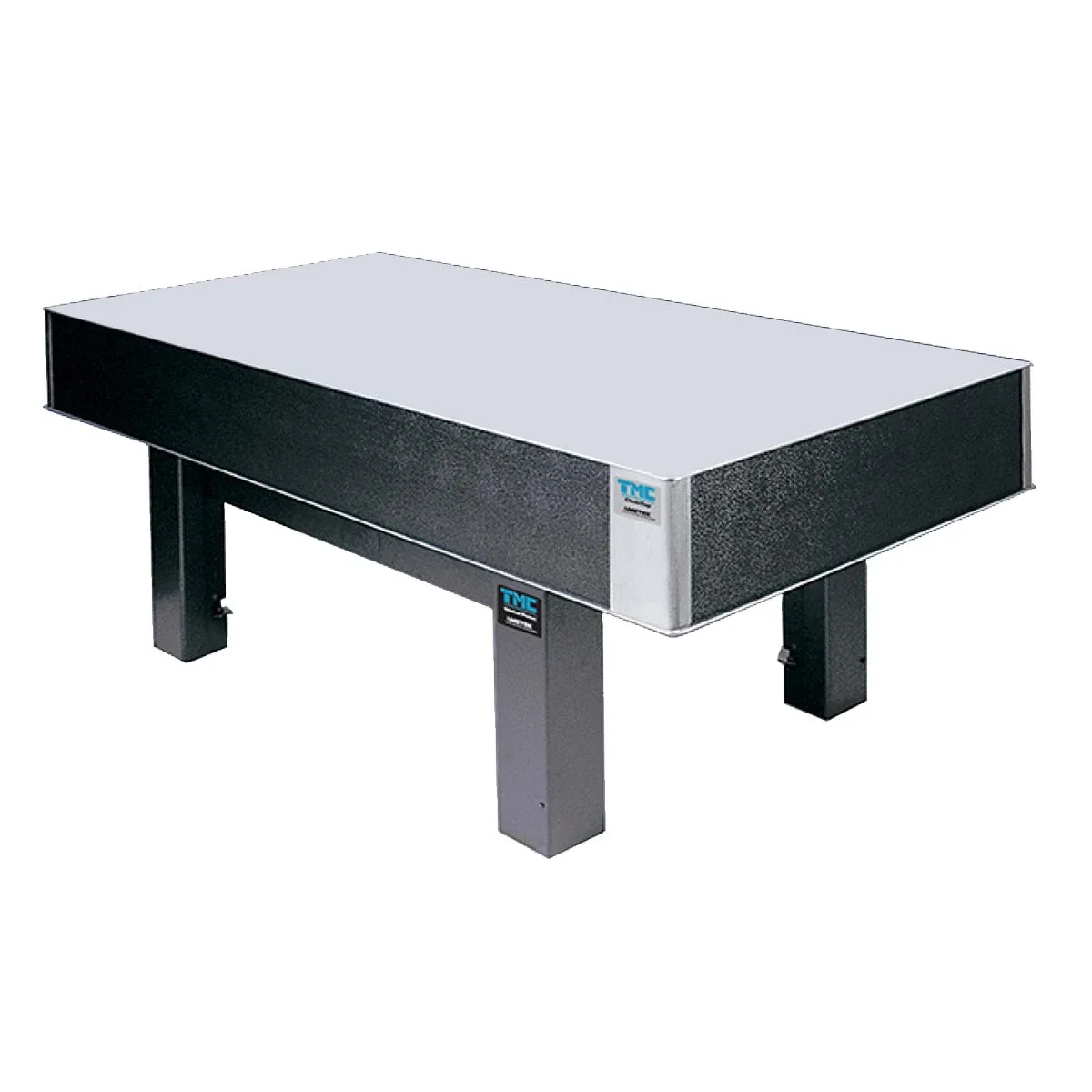
TMC Vibration Isolation Table , 3' x 8' x 8", smooth top
-
Vibration Isolation Table , 4' x 10' x 12", 1/4-20 tapped holes(6068-0405-02): This Zygo table measures 4' x 10' x 12" with 1/4-20 tapped holes on 1" centers. It includes legs. The 12" thickness and tapped hole pattern offer maximum stiffness and mounting flexibility for complex interferometer or profiler setups.
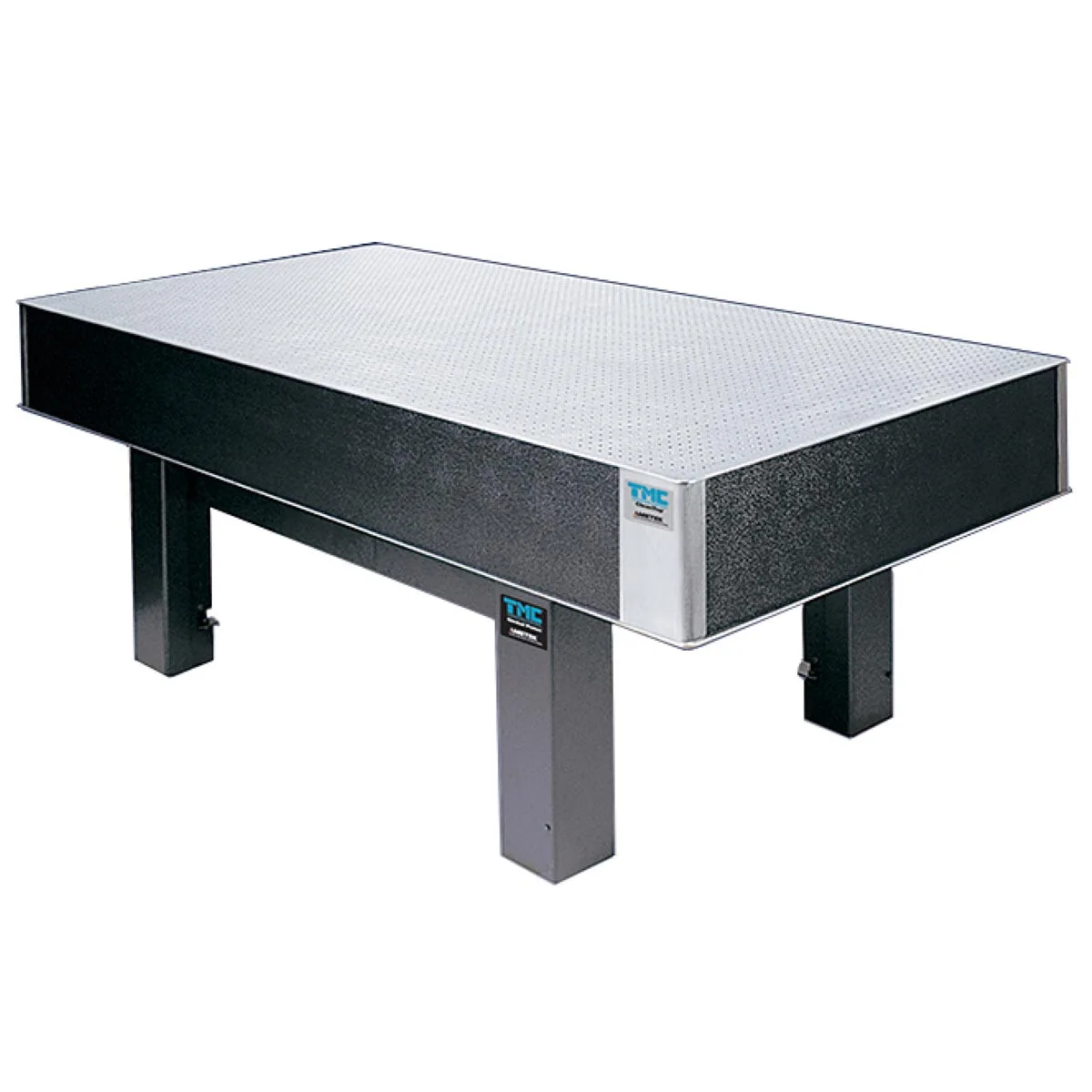
Vibration Isolation Table , 4' x 10' x 12", 1/4-20 tapped holes(6068-0405-02)
Which table is right for you?
Best for
- Labs with a single optical profiler and limited bench space: 3' x 8' smooth top
- Labs with complex interferometer setups or beam expanders: 4' x 10' with tapped holes
Not ideal for
- Labs that need to mount heavy components but choose a smooth top table
- Labs with doorways narrower than 36 inches trying to fit a 4' x 10' table