Quick Answer
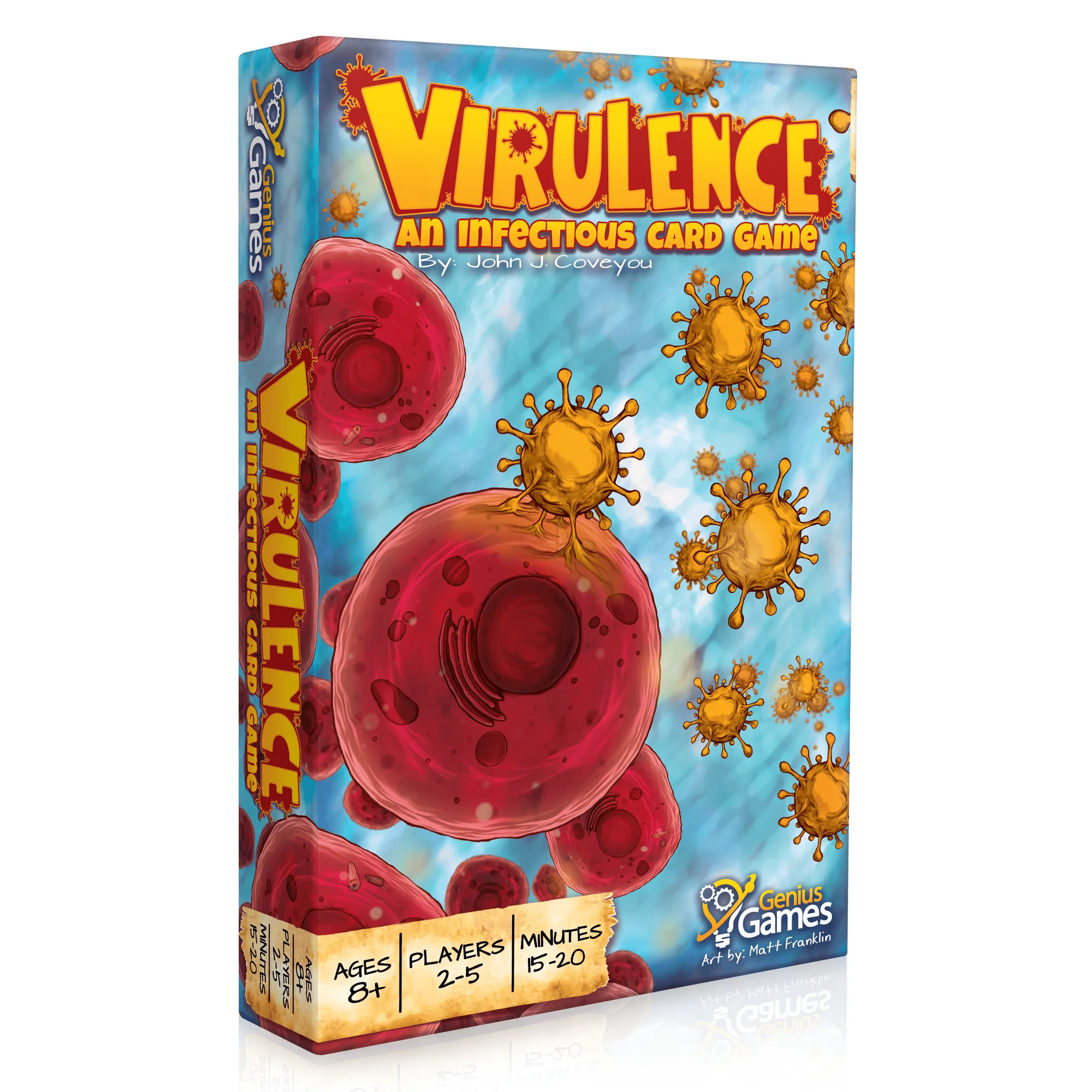
Virulence is a blind bidding and set collection card game for 2-5 players ages 8 and up, and it plays in 15-20 minutes. Each round, players secretly bid cards from their hand to win virus component cards, then collect matching sets to score. The key is to bid enough to win the cards you need without overspending your hand for later rounds.
What You Need Before You Start
Virulence comes with a deck of virus component cards and bidding cards. You do not need any extra pieces. The game is designed for 2-5 players, so it works for a small family or a classroom group. Each player gets a hand of bidding cards, and the virus component cards are placed in the center as the pool for each round.
Because the game uses blind bidding, you will also need a way to keep bids secret. Players typically hold their bid card face down or in a closed hand, then reveal simultaneously. A table with enough space for each player to have a small personal area works best.
How a Round Unfolds
A round starts with a set of virus component cards revealed in the center. Each component card shows a part of a virus, such as a genome, capsid shape, or envelope. Players look at their hand of bidding cards and choose one to play face down. When everyone has chosen, all bids are revealed at the same time. The highest bid wins the first pick of the component cards, the next highest picks next, and so on. If there is a tie, the tied players compare a secondary bid or use a tiebreaker described in the rulebook.
After all players have picked, the won component cards go into their personal collection. The round ends when all revealed component cards have been claimed. Then players check their collections for sets. A set is a group of matching virus components, and completing a set earns points. The game continues for a set number of rounds, and the player with the most points wins.
Why Blind Bidding Matters
Blind bidding is the heart of Virulence. Because you do not know what others are bidding, you have to guess how badly they want the same cards you do. If you always bid your highest card, you will win early but run out of strong bids later. If you always bid low, you will lose the cards you need to complete sets.
The game also teaches real biology concepts. The virus components represent actual structures like helical and icosahedral capsids, spherical envelopes, and genomes. Vaccines and mutations appear as special cards that can change the flow of a round. Players learn how these parts fit together while they play.
How to Play Virulence: Step by Step
- Set up the component pool: Shuffle the virus component deck and deal a set number of cards face up in the center. The rulebook specifies how many cards to reveal based on player count. Give each player a hand of bidding cards. Checkpoint: Make sure every player has the same number of bidding cards to keep the game fair.
- Choose your bid in secret: Look at your bidding cards and the component cards available. Pick one bidding card and place it face down in front of you. Do not show it to anyone. Common mistake: Bidding your highest card too early. Save strong bids for rounds where you can complete a set.
- Reveal and resolve bids: When all players are ready, flip your bidding cards at the same time. The highest bid takes the first pick from the component pool, then the next highest, and so on. Ties are broken according to the rulebook. Checkpoint: If two players tie, resolve the tie before anyone picks a card.
- Collect and check for sets: Place the component cards you won into your personal collection. After all cards are claimed, look for matching sets of virus components. A complete set scores points. Common mistake: Forgetting that some cards, like vaccines or mutations, may have special effects. Read their text before scoring.
- Repeat for the set number of rounds: Gather all bidding cards back into your hand and start a new round with a fresh pool of component cards. The game ends after the number of rounds listed in the rulebook. Checkpoint: Keep your collection organized so you can quickly count sets at the end.
- Score and declare a winner: Add up points from your completed sets and any bonus points from special cards. The player with the highest total wins. Next step: Play again and try a different bidding strategy, such as saving high bids for the final round.
Product Facts
- Virulence: An Infectious Virus Card Game - Educational Bidding Game for Kids 8+ - Perfect Biology Board Game: Virulence is a blind bidding and set collection game for 2-5 players, ages 8+, with a 15-20 minute play time. This makes it a quick option for a school night or a classroom break, and the player range fits small groups without needing extra equipment.
- Virulence: An Infectious Virus Card Game - Educational Bidding Game for Kids 8+ - Perfect Biology Board Game: The game covers science concepts including virus structure, genome, helical, icosahedral, spherical envelope, virus replication, vaccines, and mutations. Each round reinforces real vocabulary and ideas, so it works as a light educational tool alongside a biology lesson.