Quick answer
VS4-10 skid plate fitment is determined by your specific platform and transmission, not by wheelbase alone, so match the part to your kit or transmission before buying. For chassis braces, material matters less than how the brace is loaded: aluminum resists bending at the cost of weight, while plastic flexes and eventually cracks. Inspect the underside after every few runs and replace a brace or skid once it is bent, cracked, or has worn through at a mounting hole.
Most VS4-10 underside questions come down to one of three things: will this part bolt to my truck, what should it be made of, and how do I know when it is worn out. The answers depend on your platform and transmission more than on the part name, so it helps to know exactly what you are running before you order.
Below are the questions we get most often about skid plates, chassis braces, and underside protection, answered directly. Where a spec is not published for a given part, we say so rather than guess.
How do I know a skid plate will fit my VS4-10?
Fitment follows the chassis and transmission, not the body or wheelbase. A skid designed around one transmission family will not line up with the mounting pattern of another, and drilling new holes weakens the plate and shifts your link geometry. Before ordering, confirm which kit or transmission your truck uses and check that the part lists that same platform.
Some Vanquish parts list their compatible kits directly in the product description, which is the fastest way to confirm fit. If a listing does not name a compatible kit or transmission, treat that as an unknown rather than assuming it fits.
- Photograph your current skid mounting pattern before ordering so you can compare hole spacing.
- If the listing names a transmission or kit, match it exactly instead of matching by eye.
Does chassis brace material actually matter?
It matters in how the brace fails, not in whether it lasts forever. Aluminum braces resist bending and hold shape under impact, which keeps suspension and link mounts consistent, but they add weight and transfer shock into the screws and chassis instead of absorbing it. Plastic or composite braces flex, which can soak up light hits, but they eventually crack or wallow out at the holes.
The practical rule: run aluminum where you need geometry to stay true, and accept the weight. Run composite where you want light weight and are willing to inspect more often. Neither choice removes the need to check hardware after hard landings.
- Check brace screws for looseness after every hard impact regardless of material.
- A brace that has taken a bend is no longer holding your geometry where you set it.
What does skid plate wear look like, and when should I replace it?
Normal wear is a polished, scratched contact area where the plate drags over rock. That is cosmetic and does not require replacement. Wear that matters shows up as a groove deep enough to thin the material, a crack radiating from a mounting hole, or a plate that has bent and no longer sits flat against the chassis.
Replace the plate when material loss reaches the point where you can flex it by hand, or when a bend prevents the plate from sitting flush. A bent skid changes how the truck slides over obstacles and can preload the chassis, so it is worth swapping rather than straightening repeatedly.
- Mark the deepest wear point with a paint pen and compare it after a few runs.
- If a mounting hole has elongated, the plate is moving under load and needs replacement.
How much underside clearance should I expect to give up?
Any skid or brace you add sits below the chassis rail, so it reduces clearance by roughly its own thickness plus any standoff. Thicker, heavier plates protect more but hang lower; thin plates preserve clearance but deform sooner. There is no published number that applies to every VS4-10 build, because ride height, tire size, and link setup all change the result.
Measure your current lowest point at ride height, then measure again after installing the plate. If the new low point is the plate itself, that is normal, but it also means the plate is now your wear item.
- Measure clearance at ride height, not with the suspension fully extended.
- If the plate becomes the lowest point, plan on inspecting it more often than the chassis.
When should I replace chassis braces instead of just tightening them?
Tightening fixes a loose brace; it does not fix a deformed one. Replace a brace when it is visibly bent, when it cracks at a bend or hole, or when the mounting holes have enlarged enough that the screw no longer clamps it firmly. Also replace it if you can rock the brace by hand with the screws tight.
If you keep chasing the same loose screw on the same brace, the hole is likely worn and the brace is the problem, not the hardware. That is a replacement, not a re-torque.
- Compare a suspect brace against a new one on a flat surface to check for twist.
- Replace braces in pairs when they share a load path so the chassis stays evenly supported.
Do I need a skid plate and braces, or just one?
They do different jobs. The skid plate takes the abrasion from dragging over rock, while braces tie the chassis together and hold mounting points where you set them. A truck that only sees light trail use can often get by with a skid alone, while a build that takes hard landings or runs tight technical lines benefits from both.
If you have to choose one first, start with the skid, since that is the part actually contacting the ground. Add braces when you notice the chassis flexing or mounting points shifting.
- Add protection in the order the truck actually gets hit: skid first, then braces.
- Recheck link and shock mounting points after adding braces, since they change how the chassis loads.
Underside inspection checklist
Confirm platform and transmission before ordering
Match the skid or brace to the exact kit or transmission named in the listing, not to the body or wheelbase. If compatibility is not stated, treat it as unconfirmed.
Check for bends, not just scratches
Scratches on a skid are normal. A bend, crack, or elongated mounting hole is not. Replace bent or cracked parts rather than straightening them repeatedly.
Re-torque after every hard run
Hard landings loosen brace and skid hardware regardless of material. A brace that still rocks with tight screws needs replacing.
Re-measure clearance at ride height
Any added plate lowers your lowest point by its thickness plus standoff. If the plate is now the low point, it is your new wear item.
Parts that come up in these questions
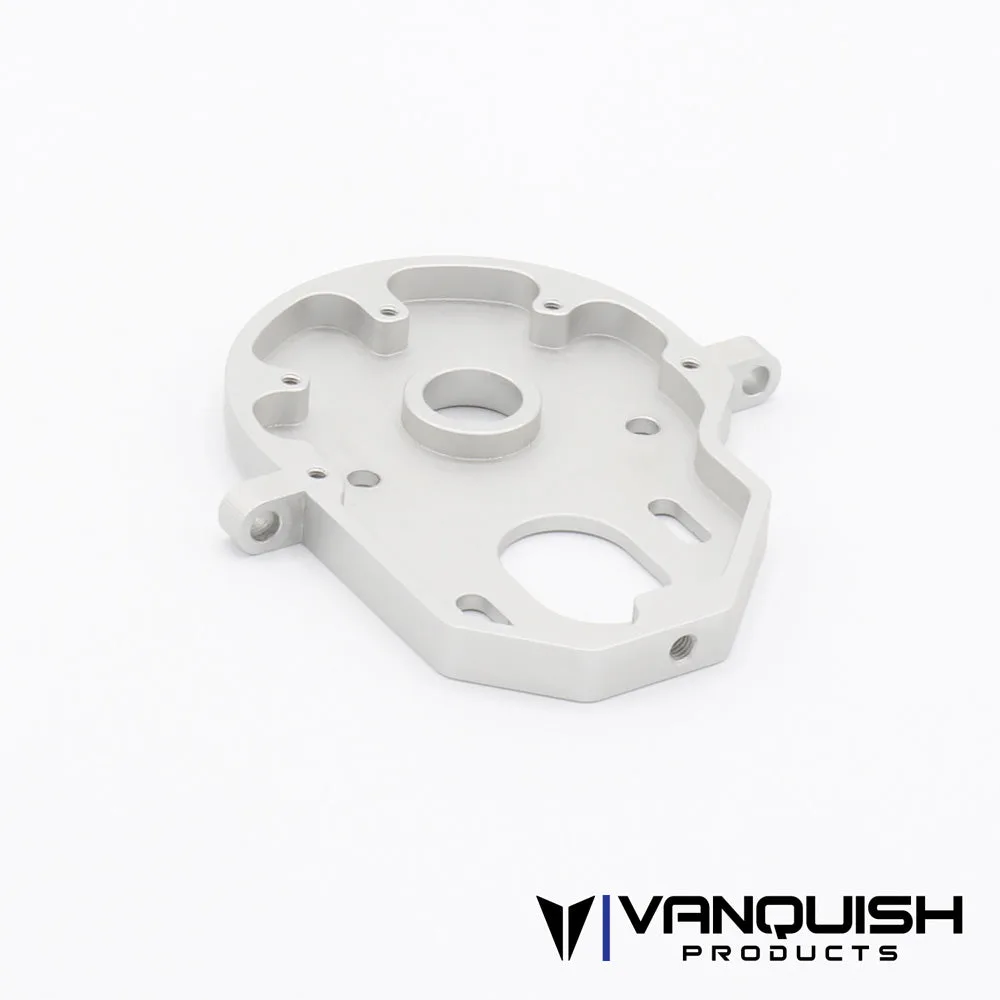
- VFD Light Weight Aluminum Motorplate: Machined from 6061 aluminum, clear anodized, with additional material removed to reduce weight; fits VPS09003 and VPS09004 Pro Kits and the VPS10152 VFD Transmission Kit. The listed kit compatibility is the kind of fitment detail to look for on underside parts. If a listing does not name a compatible kit or transmission, do not assume it fits your VS4-10.
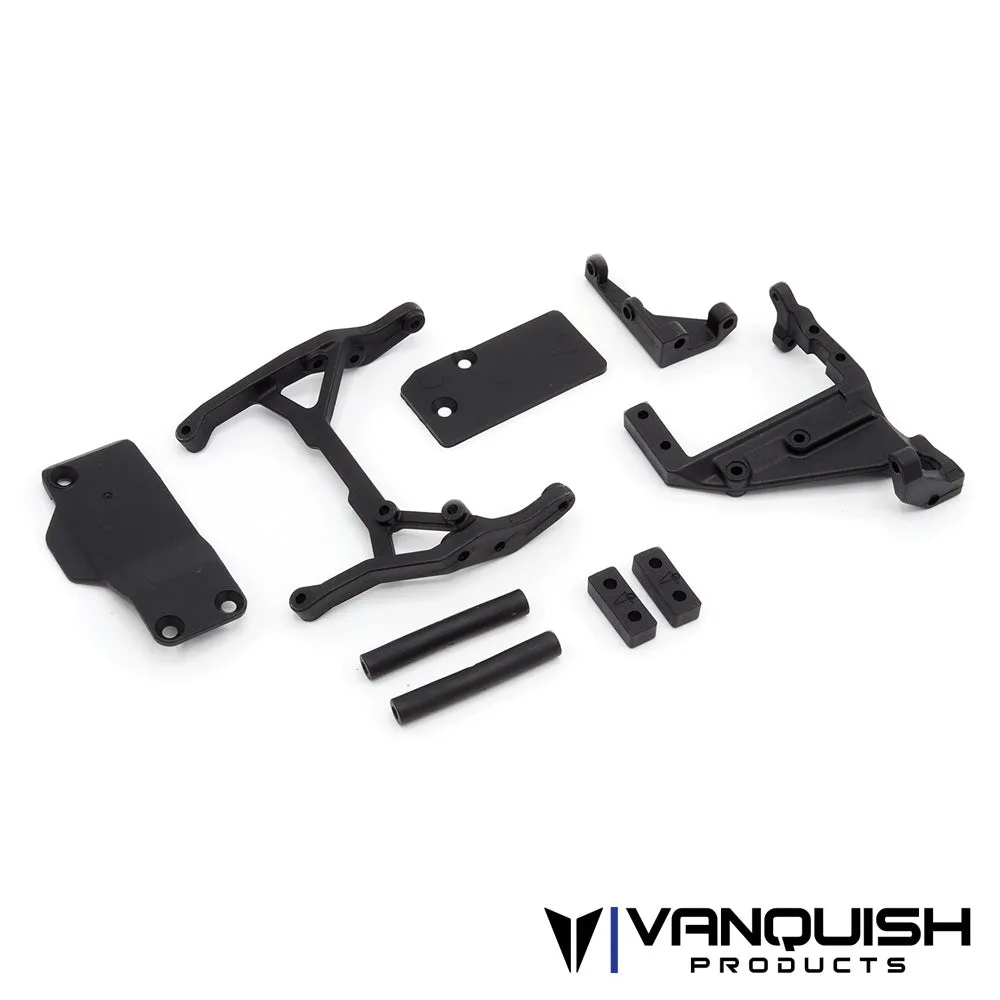
- VFD Stubby F10 BTA Servo Components: Replacement plastic components for the VPS10402 VRD Stubby kit, and not a complete VRD stubby kit. A good reminder that some parts are replacements for a specific assembly rather than standalone upgrades, so check whether you are buying a complete kit or a service part.
- Incision SCX10-II 12.3" 1/4 Stainless Steel 10pc Link Kit: A 10-piece stainless steel link kit intended to replace stock links on an SCX10-II with a 12.3-inch wheelbase, including drag link, Panhard link, upper and lower links, and tie rod. Links and skids share mounting real estate underneath, so if you are changing links at the same time as a skid, verify both are specified for the same wheelbase and platform.
Fitment, material, and wear are three separate decisions, and getting each one right keeps your VS4-10 tracking straight over rock instead of flexing under it. Confirm the platform first, pick the material based on how you drive, and inspect the underside after hard runs so a worn skid or brace never becomes a broken chassis.